You reach for your beautiful bone china plate after reheating dinner, expecting it to be cool like usual. Instead, it’s burning hot and you nearly drop your expensive dish. Sound familiar?
This happens to many people who own fine china dinnerware. You want to use your nice dishes for everyday meals, not just special occasions. But you’re worried about damaging them or burning your fingers.
The big question on your mind is: Does bone china get hot in the microwave? You need a clear answer because your safety matters, and so does protecting your investment in quality dinnerware.
DOES BONE CHINA GET HOT IN THE MICROWAVE?
Yes, high-quality bone china stays cool in the microwave. However, not all bone china is created equal. The key factors are manufacturing quality, decorative elements, and the age of the pieces.
WHAT MAKES BONE CHINA DIFFERENT FROM REGULAR DISHES?
Bone china contains 30-50% bone ash mixed with china clay and feldspar. This unique recipe creates dishes that are:
The bone ash comes from cattle bones. This ingredient makes bone china naturally resistant to microwave heating because it creates a non-porous surface, for example is the Mikasa Bone China Brand.
HOW MICROWAVES HEAT DIFFERENT MATERIALS
Understanding microwave science helps explain why some dishes get hot while others stay cool.
Microwaves work by exciting water molecules in food. Materials with high water content heat up quickly. Materials with low water absorption stay cooler.
Materials that get hot in microwaves:
Stoneware (absorbs moisture over time)
Earthenware (naturally porous)
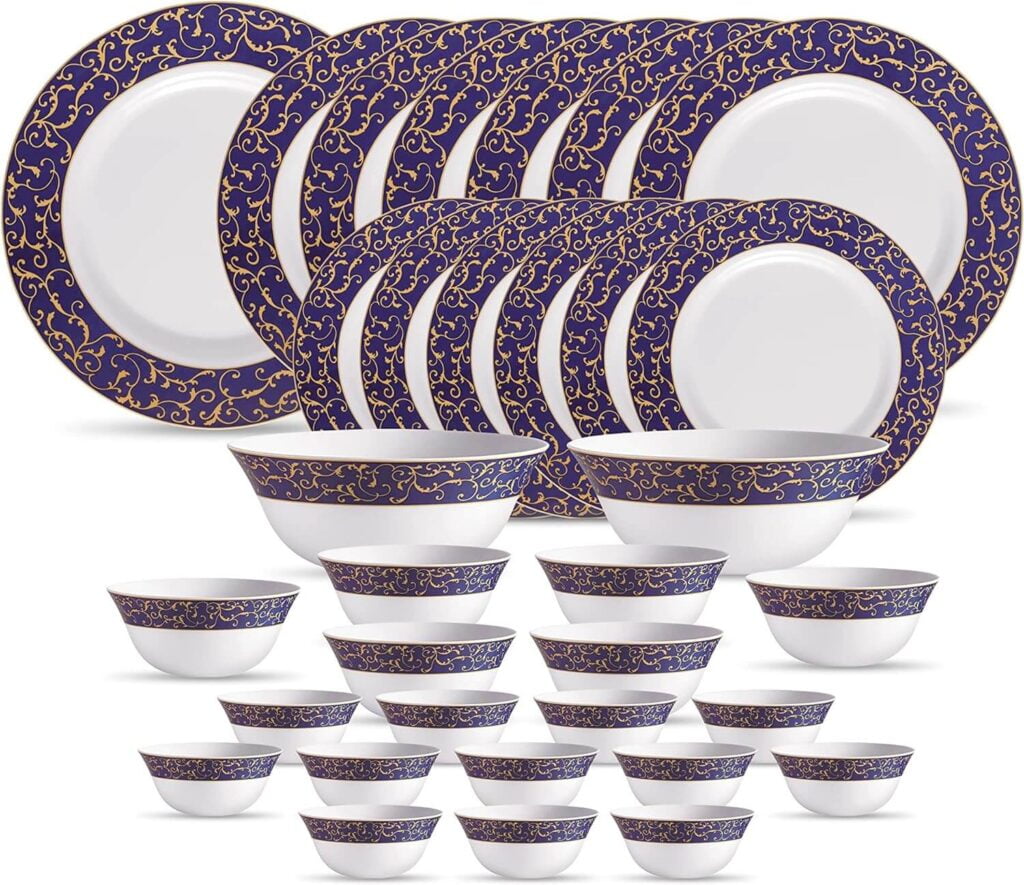
Dishes with metallic decorations
Cracked or damaged ceramics
Materials that stand a higher chance of staying cool in the microwave:
It is not all Bone china dinnerware brands that are recommended and safe for oven use because generally, bone china dinnerware is susceptible to thermal shock, and sudden temperature changes can cause Bone china to shatter or break.
To be safe, kindly read the manufacturer’s recommendation regarding your Bone china dinnerware oven use guidelines.
Most ceramics get warm in the microwave, but the heating level varies greatly by type. High-quality ceramics with microwave-safe glazes stay cooler, while porous ceramics like earthenware, as we have explained, can get very hot.
DOES PORCELAIN GET HOT IN THE MICROWAVE?
High-quality porcelain stays relatively cool in the microwave, but it may get slightly warmer than bone china. The heating depends on the porcelain type, glaze quality, and manufacturing process.
Updated testing standards for microwave compatibility.
RED FLAGS: WHEN TO STOP USING BONE CHINA IN MICROWAVES
Stop microwave use immediately if you notice:
Dishes are getting warmer than before
New cracks or chips appearing
Color changes in decorative elements
Strange sounds during heating
Uneven food heating patterns
These signs indicate potential safety issues that could worsen over time.
THE BOTTOM LINE: MAKING SMART CHOICES
High-quality bone china offers the best combination of elegance and microwave safety for most home cooks.
However, success depends on choosing the right pieces and using them correctly.
Key takeaways for safe microwave use:
Buy from reputable manufacturers
Avoid any metallic decorations
Test new pieces before regular use
Inspect dishes regularly for damage
Keep decorated pieces for special occasions only
Best practices for daily use:
Heat food in 30-second intervals
Never microwave empty dishes
Allow gradual temperature changes
Clean gently to maintain surface integrity
By following these guidelines, you can enjoy beautiful bone china dinnerware while maintaining kitchen safety and protecting your investment.
Whether you’re reheating leftovers or preparing fresh meals, the right knowledge helps you use your fine dinnerware confidently every day.
Remember: when in doubt, use the transfer method. Heat food in a microwave-safe container, then serve on your beautiful bone china. This approach gives you the best of both worlds – convenience and elegance.
You’re standing in a kitchen store or scrolling through an endless product page, trying to decide between two options that both look perfectly capable of handling daily life.
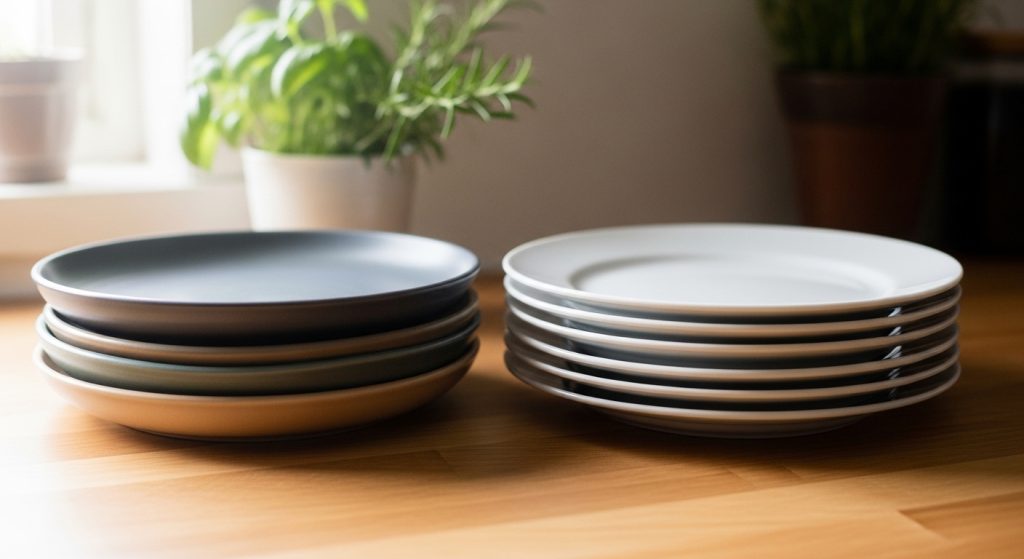
One is elegant and refined. The other is thick, chunky, and built like it means business. Is porcelain stronger than stoneware?
It’s a question worth getting right before you spend money on a full dinnerware set you’ll use every single day for years.
And here’s the thing that surprises most buyers: the material that looks tougher isn’t always the one that performs better under pressure.
The technical answer is a little more complex than it appears, and it changes depending on what kind of “strong” you actually need.
Is Porcelain Stronger Than Stoneware?
Yes, porcelain is technically stronger than stoneware.
Porcelain is fired at higher temperatures (between 1,200°C and 1,400°C), which causes complete vitrification of its clay body, resulting in a denser, harder, and less porous material than stoneware.
On the Mohs hardness scale, porcelain typically scores between 6 and 7, compared to stoneware’s 5 to 6.
This means porcelain resists scratching and surface abrasion better than stoneware.
However, stoneware’s greater thickness gives it superior impact resistance in real-world use — it absorbs the force of drops and knocks more forgivingly than thinner porcelain pieces.
So while porcelain wins on material hardness and density, stoneware often holds its own in everyday durability through sheer build and bulk.
What Is Porcelain?
Composition and Raw Materials
Porcelain starts with kaolin — a highly refined, white-burning clay prized for its purity and low iron content.
This is blended with feldspar, which acts as a flux to lower the melting point of the mixture, and quartz or silica, which adds structural stability.
The precise ratios of these three components vary between manufacturers and porcelain types, but the defining characteristic is always the high kaolin content and the refined nature of the raw materials.
This refined starting point is what separates porcelain from earthenware and stoneware at a fundamental compositional level before a single piece ever enters a kiln.
Manufacturing and Firing Process
Porcelain is fired at extreme temperatures — typically between 1,200°C and 1,400°C, depending on the type.
At these temperatures, the feldspar in the clay body melts and fills the spaces between clay particles, creating a dense, glassy structure through a process called vitrification.
The result is a material that is essentially a ceramic glass hybrid: hard, non-porous, and translucent in thin sections.
Understanding vitrified porcelain in detail is useful if you want to appreciate exactly why porcelain behaves differently from other ceramics at the material science level.
The firing process is where its exceptional properties originate.
Key Characteristics of Porcelain
Porcelain is dense, non-porous, and exceptionally smooth.
Its non-porous surface means liquids, oils, and food pigments cannot penetrate it, making it highly resistant to staining and easy to clean.
Despite often being produced in thinner profiles than stoneware, it achieves comparable or superior strength through material density rather than physical mass.
The surface has a fine, refined texture with a bright white or near-white appearance.
It resists scratching from cutlery better than most other ceramic types and holds its finish well over years of regular use.
What Is Stoneware?
Composition and Raw Materials
Stoneware is made from natural clay blends that are less refined than kaolin-based porcelain clays.
The clay body often includes a mix of different clay types — silica-rich clays, earthen clays, and various mineral additives like iron oxide, which gives many stoneware pieces their characteristic warm gray, tan, or brown tones.
The raw materials are more abundant and less processed than porcelain ingredients, which is one reason stoneware is generally more affordable to produce.
The mineral content in the clay body also contributes to stoneware’s characteristic visual variation and the earthy, organic aesthetic that many people find appealing.
Manufacturing and Firing Process
Stoneware is fired at high temperatures — typically between 1,180°C and 1,280°C — which is lower than the peak temperatures used for porcelain but still high enough to produce significant sintering of the clay body.
This firing produces a dense, stone-like ceramic that is partially vitrified but not to the same degree as porcelain.
The result retains more of the natural texture and character of the original clay.
Stoneware pieces are typically cast or thrown with thicker walls than porcelain, which compensates for their slightly lower density with physical mass and bulk.
Key Characteristics of Stoneware
Stoneware is heavy, solid, and visually substantial. It has an opaque, earthy appearance with a matte or semi-matte texture that suits casual, rustic, and contemporary table settings.
When properly glazed, it is non-porous and stain-resistant.
Unglazed stoneware retains some porosity, which can make it more vulnerable to staining and moisture absorption, something to be aware of with decorative or partially unglazed pieces.
Its thick walls and dense body make it remarkably resistant to everyday impacts, and its thermal mass means it holds heat well, making it a favorite for baked dishes, soups, and slow-cooked meals.
Is Stoneware Ceramic?
Yes, stoneware is absolutely a type of ceramic. The term “ceramic” is a broad category covering all materials made from clay that have been shaped and hardened by heat.
This includes earthenware, stoneware, porcelain, bone china, and terracotta.
Stoneware sits in the middle of the ceramic spectrum: fired at higher temperatures than earthenware (giving it superior density and durability) but at lower temperatures than porcelain (resulting in slightly less vitrification).
So when you see stoneware marketed separately from “ceramic” dinnerware, that’s a branding distinction rather than a scientific one.
Technically and compositionally, stoneware is ceramic through and through.
Porcelain vs Stoneware: Strength Comparison
Density and Material Structure
Porcelain’s compact ceramic structure, achieved through high-temperature vitrification, gives it a denser, harder material body than stoneware.
At the microscopic level, porcelain has fewer voids and air pockets within its structure because the feldspar has melted and filled those spaces.
Stoneware’s thicker physical body compensates for its slightly less complete vitrification with mass.
Think of it this way: porcelain achieves strength through material quality, while stoneware achieves durability through material quantity.
Both approaches work; they just produce different real-world performance profiles.
Resistance to Chips and Cracks
Porcelain’s hardness makes it resistant to surface scratching and abrasion, but its typically thinner profile means it can chip at the rim or crack if dropped on a hard surface.
The harder a material, the more brittle it tends to be under sharp impact — this is a fundamental trade-off in material science.
Stoneware’s impact resistance comes from its thickness and the slight flexibility that its less-vitrified structure provides.
It absorbs the energy of a knock or drop better than thin porcelain, which is why many households find stoneware survives the day-to-day realities of family kitchens more forgivingly.
Heat Resistance and Thermal Stability
Both porcelain and stoneware handle heat well, but with different strengths.
Porcelain’s dense, non-porous structure makes it excellent for oven use and resistant to thermal shock in controlled conditions.
Stoneware’s thermal mass, the ability to absorb and retain heat slowly, makes it particularly valuable for baking, casseroles, and dishes that benefit from even, sustained heat.
Neither material should be subjected to sudden extreme temperature changes (moving directly from freezer to oven, for example), but stoneware is generally considered more forgiving of the temperature variations that occur in normal everyday cooking.
Stoneware vs Porcelain Scratches
Porcelain wins clearly on scratch resistance. Its higher Mohs hardness rating means cutlery, serving utensils, and general contact are less likely to leave marks on a porcelain surface than on stoneware.
The glassy, vitrified surface of porcelain is simply harder than stoneware’s slightly softer ceramic body.
Stoneware, particularly in matte or unglazed finishes, can show cutlery marks and surface scratches more readily over time.
That said, a quality glaze on stoneware significantly improves its scratch resistance — the glaze acts as a protective layer over the softer clay body underneath.
For households that notice and care about surface marks, porcelain’s scratch resistance is a meaningful practical advantage.
Stoneware vs Porcelain Microwave
Both porcelain and stoneware are generally microwave-safe, but with important caveats.
Plain, undecorated porcelain and stoneware handles microwave use well.
The issue arises with metallic glazes, gold or silver trim, or metallic oxide pigments in the decoration, which can cause arcing in a microwave and should never be used in one regardless of the base material.
Stoneware’s thermal mass means it can get significantly hotter in a microwave than porcelain of similar size, so handle stoneware pieces with care after microwaving.
Always verify the manufacturer’s microwave-safe labeling on your specific set before use, as glaze formulations vary enough that general rules don’t always apply universally.
Ceramic Dinnerware vs Stoneware
Since stoneware is technically a ceramic, this comparison is most useful when “ceramic” refers to standard earthenware or lower-fired ceramic pieces commonly sold as everyday dinnerware.
Here are the key differences:
Firing temperature: Stoneware is fired at significantly higher temperatures than standard earthenware ceramics, producing a denser, more durable body. Lower-fired ceramics are more porous and fragile.
Strength and durability: Stoneware is considerably stronger and more chip-resistant than standard low-fire ceramics. Earthenware chips and break more easily under impact.
Porosity: Unglazed stoneware has low porosity. Unglazed earthenware is highly porous and absorbs moisture readily, which can lead to cracking and bacterial retention.
Weight: Stoneware is heavier than most standard ceramics, which contributes to its robust, substantial feel.
Appearance: Standard ceramics often have a more rustic, handcrafted look and feel. Stoneware can range from rustic to refined, depending on the glaze and finish treatment.
Price: Standard ceramics are generally cheaper. Quality stoneware commands a mid-range to premium price depending on the brand and craftsmanship.
Ceramic vs Porcelain
Again, technically porcelain is ceramic, but here’s how the two compare in the practical dinnerware context, where “ceramic” typically means earthenware or standard mid-fire clay products:
Material refinement: Porcelain uses highly refined kaolin clay. Standard ceramics use coarser, less refined clay blends that produce a more variable, less predictable result.
Firing temperature: Porcelain fires at the highest temperatures of any common dinnerware ceramic — 1,200°C to 1,400°C. Standard ceramics fire considerably lower.
Density and hardness: Porcelain is denser and harder. Standard ceramics are softer, more porous, and less scratch-resistant.
Appearance: Porcelain has a smooth, bright, refined finish. Standard ceramics have more texture, variation, and an earthier visual quality.
Weight: Porcelain is lighter for equivalent piece sizes due to its density; thinner walls achieve comparable strength. Standard ceramics are often thicker and heavier.
Price: Porcelain is generally more expensive than standard ceramics at comparable quality tiers. The raw materials and manufacturing precision required drive the cost up.
Which Is Better, Ceramic or Porcelain Dinnerware?
For most everyday households, porcelain outperforms standard ceramics on nearly every practical measure: it’s harder, less porous, more stain-resistant, lighter, and easier to maintain.
Standard ceramics have their appeal, the handcrafted aesthetic, the earthy warmth, the lower price point, but they compromise on durability and maintenance compared to porcelain.
If you’re looking for dinnerware that handles daily use well, cleans up easily, and holds its appearance over time, porcelain is the stronger functional choice.
Pure practicality favors porcelain, while aesthetic warmth and budget consciousness might favor standard ceramics or stoneware.
Is Stoneware Stronger Than Ceramic?
Yes, stoneware is significantly stronger than standard earthenware ceramics.
The higher firing temperature of stoneware produces a denser, more vitrified body with considerably less porosity than earthenware.
This makes stoneware more resistant to chipping, cracking, and moisture absorption.
For everyday dinnerware use, stoneware’s practical durability far exceeds that of lower-fired standard ceramics.
The trade-off is weight and cost — stoneware is heavier and more expensive than basic ceramic options.
But if durability in daily use is the priority, stoneware is the clear winner over standard earthenware ceramics.
Which Is More Durable for Everyday Use?
Resistance to Breakage
For breakage resistance in real-world household use, stoneware has a practical edge over standard porcelain profiles.
Its thick walls absorb the energy of drops and knocks better than thinner porcelain pieces, which are more susceptible to cracking on impact despite their superior hardness.
Thick-walled porcelain or vitrified porcelain designed for commercial use can match stoneware’s impact resistance, but standard consumer porcelain dinnerware typically has thinner walls that trade some impact tolerance for elegance and lighter weight.
Weight and Handling
Stoneware is considerably heavier than porcelain; a full stoneware dinner service for four can weigh noticeably more than a comparable porcelain set.
For most adults, this is simply a handling preference, but it’s a meaningful consideration for older users or anyone with reduced grip strength.
Porcelain’s lighter weight makes it easier to handle during service and washing.
The weight question connects directly to the broader dinnerware choice discussion covered in our guide on which is better for daily use, bone china or porcelain — weight is a recurring theme across all premium ceramic comparisons, and it affects daily usability more than most buyers anticipate before they start using a set regularly.
Longevity in Daily Kitchens
Both materials are capable of lasting decades with appropriate care.
The limiting factor for both is usually chipping at the rim rather than cracking through the body, and both porcelain and stoneware accumulate rim chips over years of dishwasher cycles and cabinet storage.
Stoneware tends to show wear more visibly in terms of surface scratching on matte glazes, while porcelain holds its polished appearance longer.
For pure longevity, porcelain’s non-porous, scratch-resistant surface gives it a slight edge in maintaining its appearance, while stoneware’s thickness gives it an edge in surviving physical knocks.
Stoneware or Porcelain for Everyday Use?
Both are excellent choices for everyday use, and the right answer genuinely depends on your household.
If you have a busy kitchen with children, frequent drop incidents, and a preference for a casual, warm aesthetic, stoneware is your material.
It handles rough treatment with good grace, and its earthy look suits relaxed daily dining beautifully.
If you want dinnerware that’s lighter, easier to stack, scratch-resistant, and works seamlessly with the dishwasher and microwave while also looking refined enough for guests, porcelain delivers that.
Many households end up with both: porcelain for everyday use and stoneware for baking dishes, mugs, and casual weekend dining.
Pros and Cons of Porcelain
Advantages
Porcelain packs significant strength into a thinner, lighter profile than stoneware its dense, vitrified structure is genuinely strong despite the elegant, refined appearance.
The non-porous surface resists staining exceptionally well, making it one of the easiest dinnerware materials to keep looking clean and bright over years of use.
Its smooth, refined finish suits both everyday meals and more formal settings without looking out of place in either context.
Most quality porcelain sets are microwave and dishwasher-safe, making them genuinely convenient for modern kitchens.
Disadvantages
Porcelain’s thinner typical wall thickness makes rim chipping a more common failure mode than with stoneware — the edges are the most vulnerable point on any porcelain piece.
Quality porcelain is also more expensive than stoneware at comparable quality tiers, and cheap porcelain can deliver disappointing durability that undermines the material’s reputation.
The stark white surface shows staining from tea, coffee, and some spices more visibly than darker stoneware glazes, requiring consistent cleaning to maintain its bright appearance.
Pros and Cons of Stoneware
Advantages
Stoneware’s thick, substantial construction gives it excellent resistance to the physical impacts of daily kitchen life.
It handles drops, stacking, and rough treatment more forgivingly than thinner ceramic alternatives.
Its thermal mass makes it outstanding for baking and serving dishes that need to retain heat.
The earthy, organic aesthetic of stoneware suits a wide range of interior styles and table settings from rustic farmhouse to modern organic.
At mid-range price points, quality stoneware represents strong value for its durability.
Disadvantages
Stoneware is noticeably heavier compared to porcelain. Over a day of frequent handling, serving, and washing, that weight adds up physically.
Matte-glazed stoneware can show cutlery marks and surface scratches more readily than polished porcelain.
Some stoneware pieces are not dishwasher-safe, particularly those with reactive or artisan glazes that can fade or break down under the detergent and heat cycles of a dishwasher.
Unglazed or partially glazed stoneware retains some porosity, requiring more careful maintenance to prevent moisture absorption and staining.
When to Choose Porcelain vs Stoneware
Best Choice for Everyday Dinnerware
For a household that uses the same set for daily meals, wants dishwasher and microwave convenience, and values a clean, versatile aesthetic — porcelain is typically the stronger recommendation.
It handles the demands of daily use reliably, maintains its appearance well, and is light enough for comfortable everyday handling.
Stoneware is also a solid everyday choice, especially for households that prefer its aesthetic and don’t mind the weight.
Best Choice for Formal Table Settings
Porcelain wins clearly for formal dining. Its refined, bright appearance and elegant proportions create the table presentation that more formal occasions call for.
Fine porcelain or bone china is the standard material for hospitality settings, special occasion dinnerware, and anything where the look of the table is as important as the food on it.
Stoneware’s casual, earthy character is charming, but it’s not the material that elevates a formal table.
Best Choice for Baking and Cooking
For baking, casseroles, and oven-to-table cooking, stoneware is the better choice.
Porcelain bakeware exists and performs well, but stoneware’s thermal properties give it a genuine advantage in this specific application.
What Is the Strongest Type of Dinnerware?
Across all common dinnerware materials, vitrified porcelain and high-fired stoneware are among the strongest options available to consumers.
However, if the category is expanded beyond ceramics, tempered glass and melamine-based materials offer exceptional impact resistance that ceramics cannot match.
Within the ceramic family, commercial-grade vitrified porcelain, the type used in restaurants and hotel settings, is engineered for maximum strength through complete vitrification and controlled thickness, making it the strongest everyday ceramic dinnerware option.
For consumers who want the highest possible durability at home, looking for dishwasher-safe, chip-resistant vitrified porcelain from a manufacturer that caters to the hospitality industry often yields the toughest consumer-grade product available.
Care Tips for Porcelain and Stoneware
Preventing Chips and Cracks
The rim is the most vulnerable point on both porcelain and stoneware.
Place felt or silicone pads between stacked pieces to prevent rim contact during storage. This single habit dramatically reduces the rate of chipping over time.
Avoid stacking too many pieces vertically; the cumulative weight increases pressure at the rim of each underlying piece.
Don’t place either material directly from a cold environment into a hot oven; allow pieces to reach room temperature first to avoid thermal shock cracking.
Safe Cleaning and Dishwasher Use
Most quality porcelain and glazed stoneware is dishwasher safe, but always verify on the manufacturer’s label.
For dishwasher use, load pieces so they don’t contact each other during the cycle — this is the most common cause of dishwasher-related chipping.
Use a quality but gentle detergent and avoid maximum-temperature drying cycles where possible, particularly for stoneware with reactive or artisan glazes.
For hand washing, warm soapy water with a soft sponge is all either material needs.
Avoid abrasive scrubbers on both; they damage glazes over time regardless of the base material.
Proper Storage of Ceramic Dinnerware
Store porcelain and stoneware with padding between pieces, felt dividers, paper towels, or foam separators; all work well.
Vertical storage in a plate rack is gentler on rims than horizontal stacking.
Keep heavier stoneware pieces at the bottom of any storage stack and lighter porcelain pieces above to reduce pressure at contact points.
Conclusion
Porcelain is technically stronger than stoneware at the material level, denser, harder, and more scratch-resistant thanks to its high-temperature vitrification.
But stoneware’s greater thickness makes it more resistant to the everyday impacts that actually break dishes in real kitchens.
The honest answer is that both are excellent dinnerware materials, and the better choice depends entirely on your priorities.
Choose porcelain for elegance, lighter weight, and superior scratch resistance.
Choose stoneware for robust impact tolerance, outstanding baking performance, and a warm, casual aesthetic.
Neither will let you down if you buy quality and care for it properly, and knowing the difference means you can choose exactly what your kitchen and lifestyle actually need.
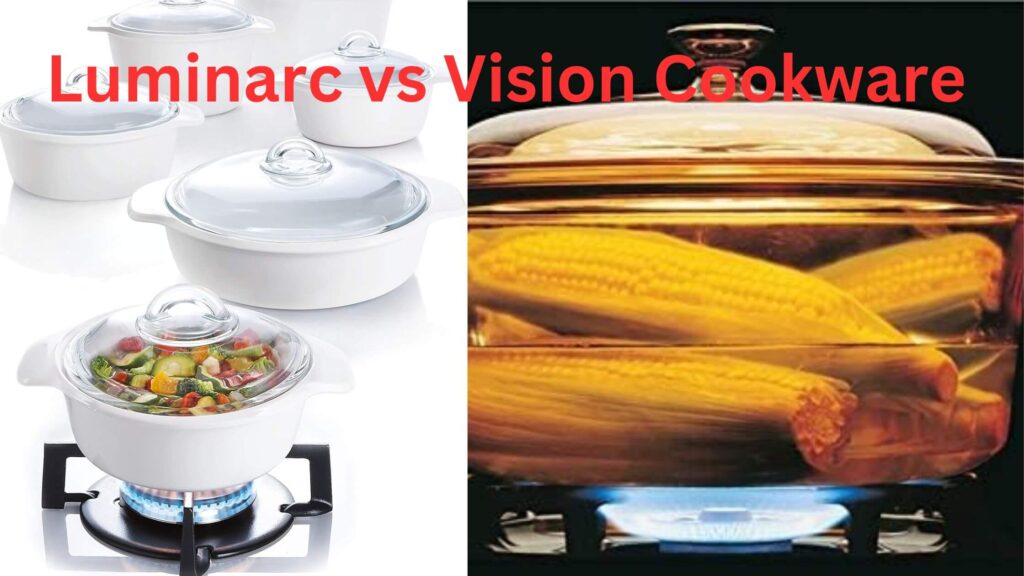
Are you curious about the distinguishingfactor between Luminarc vs Vision cookware? We can’t deny the kitchen magic behind the Luminarc and Vision cookware, as it is no longer a secret.
These two brands have distinct traits that we can’t deny, but do they genuinely live up to our expectations?
Imagine with me for a minute where pots and pans aren’t just tools but the secret ingredients to a perfect meal, right?
What is it about Luminarc’s elegant looks that is attractive? And why do others brag about Vision’s cookware transparency?
Is it the durability, the aesthetics, or the allure of stress-free cooking? Let us unravel the mysteries of these brands as we explore the realm of kitchenware.
What are the true deal-breakers for users when deciding between Luminarc and Vision?
Join us on this cooking adventure to learn why these cookware options are important and what makes them necessary in the heart of every kitchen.
VISIONS COOKWARE SET
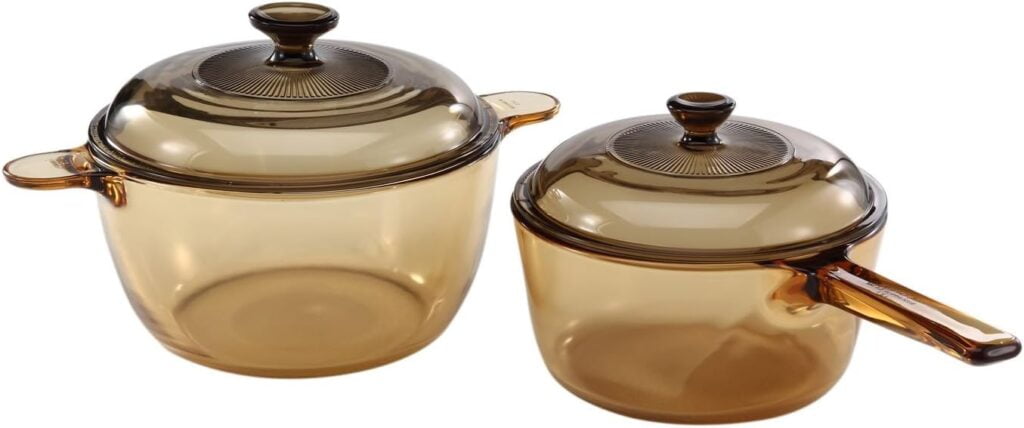
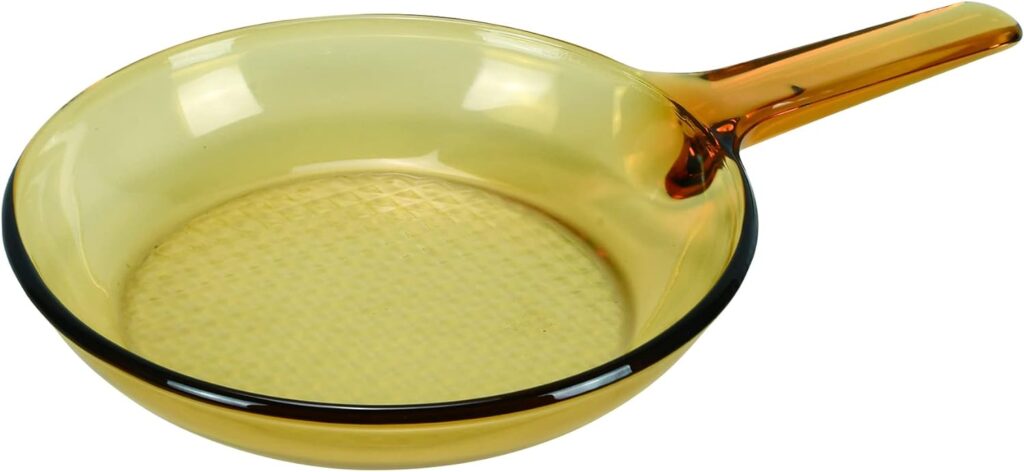
Vision cookware set is made up of Pyroceram material, which is glass-ceramic.
They are known for one outstanding quality, which is a high thermal shock, and they can comfortably withstand heat of 850 degrees Celsius or 1,560 degrees Fahrenheit.
It all started in France in 1970, formally owned by CorningWare, and was later introduced in the USA in the 1980s with their breathtaking commercial showing metal melting inside a Vision cookware.
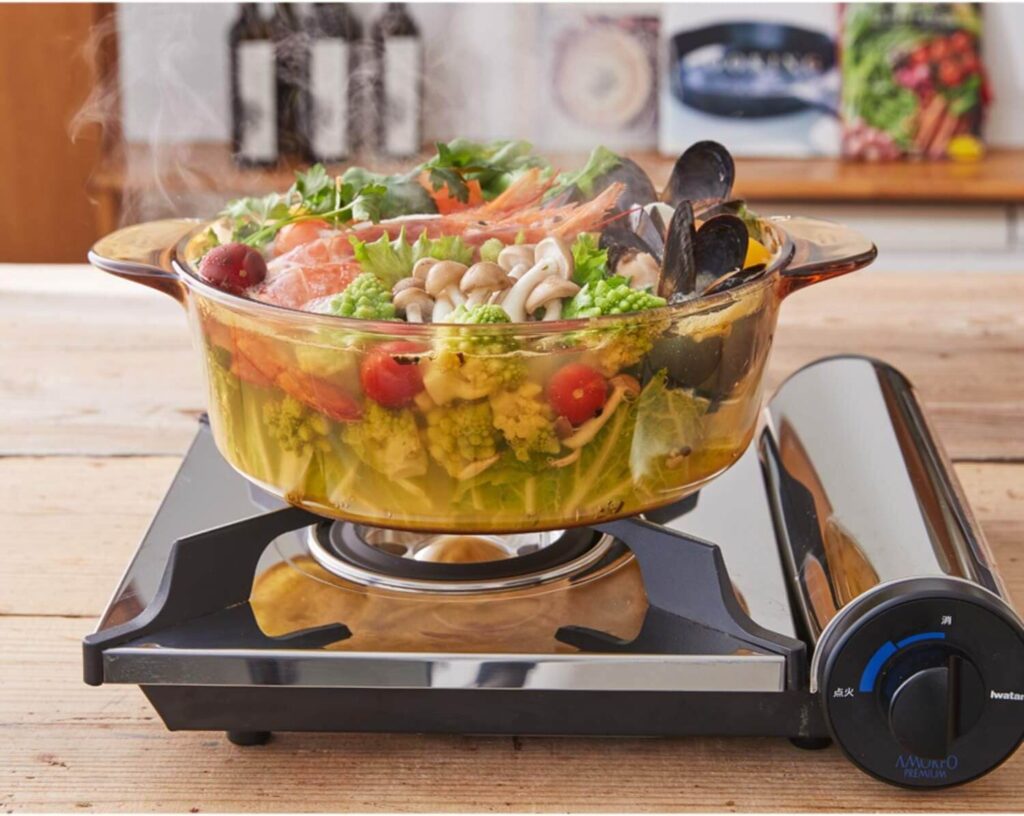
Another beautiful feature about Visions cookware is that it can store food in the freezer, and you can also immediately take it to the stovetop or oven for baking or cooking without fear of shattering.
I have done it several times when preparing food for my family.
Visions cookware’s Pyroceram material is non-porous and will not harbor your food odor or even leach harmful chemicals into your meals, unlike other low-quality glass cookware.
One thing I love about Vision cookware is that I can see what I am cooking, so I don’t need to open the cover of the pot several times to monitor my food.
Since oven use for the visions cookware is a goal, microwave use is a breeze, warm or reheat your food with ease, and this cookware can also hold your food for a while (retaining heat ability is awesome).
Although Luminarc and Vision cookware are somewhat similar in terms of material makeup (vitro ceramic and Pyroceram glass-ceramic), thermal shock resistance, and suitability for use on direct heat sources, below are a few differences:
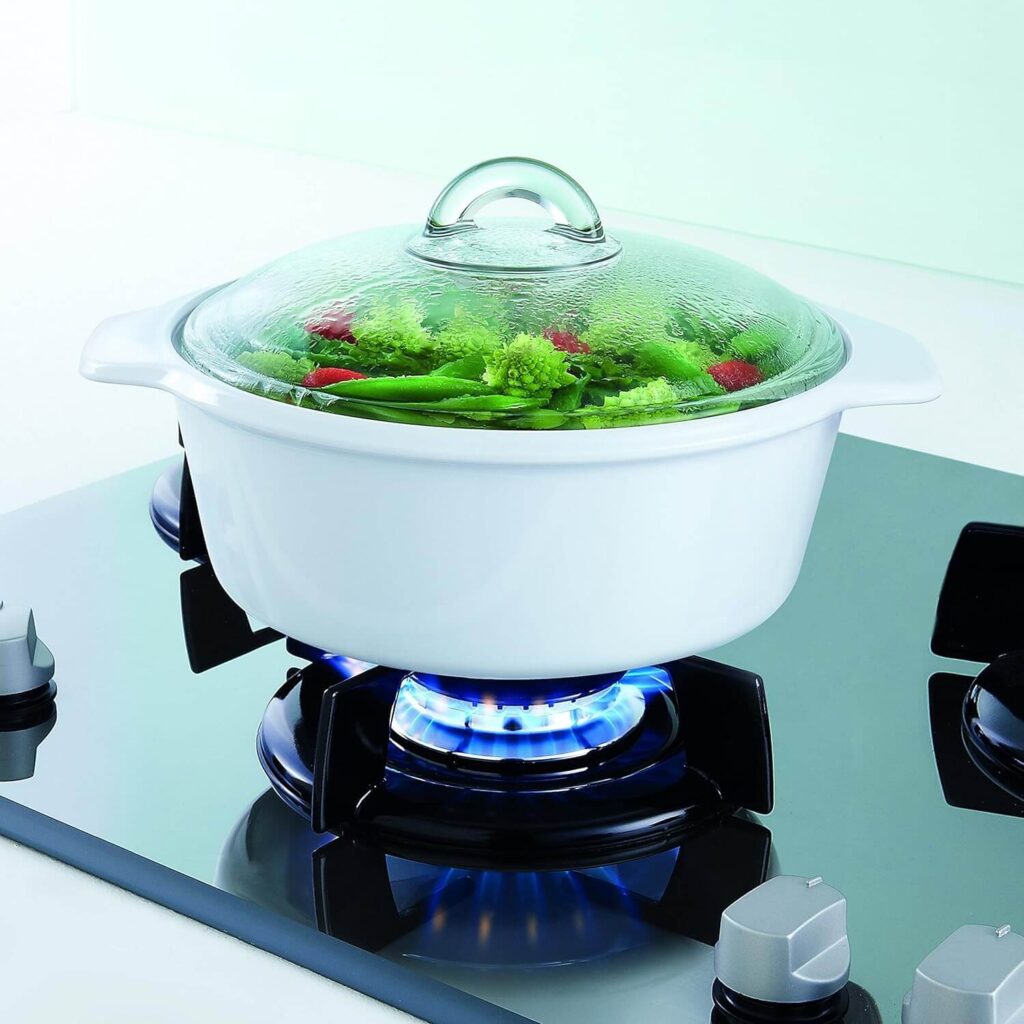
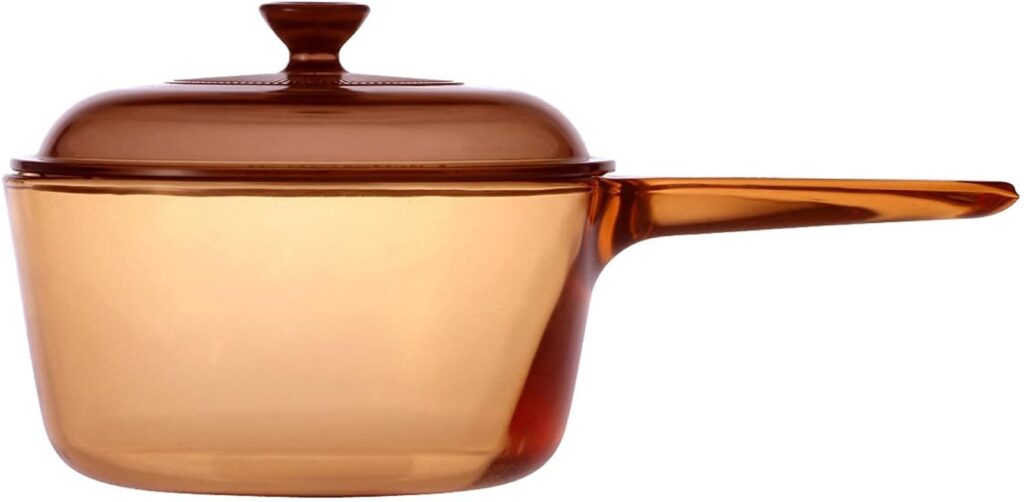
Luminarc cookware comes in white, but the Visions cookware predominantly comes in either amber or yellow colors.
The Visions cookware is transparent, while the Luminarc cookware isn’t.
Finally, we must note here that the Arc International France brand sells cookware that is equivalent to Visions cookware under various brand names, including Luminarc, Vitroflam, Arcoroc, and Arcoflam – they are sold under the Visions cookware brand name.
News has it that Visions cookware is manufactured in the ARC International plant and redistributed by Instant Brands.
LUMINARC COOKWARE
One of my favorite dishes I enjoy preparing with my Luminarc vitro ceramic casserole dish cookware is the Beef stew because of its unique thermal resistance.
Once I am done preparing all the ingredients, I first of all sear the beef on the stove, add vegetables, broth, and seasoning, then heat it fast and evenly.
The reasons I enjoy preparing the beef stew with the Luminarc ceramic casserole dish are that it is non-porous, stain and odor-free, free from Nickel, and safe from allergies.
The moment I’m done cooking, I can easily wash them with my hands or use a dishwasher; they hardly scratch and have corrosion-resistant properties.
After cooking the beef stew on my gas stove, I seamlessly transferred my Luminarc casserole vitro ceramic dish to the oven to slow-cook.
After the beef stew is ready, this is my best part, the Luminarc vitro ceramic dish goes seamlessly from the oven to the freezer or from the oven right to the serving table without stress or breaking/exploding.
Another feature I enjoy with this dish is that it has a durable and comfortable handle, enabling me to carry my food easily without harm; it also comes with a Lid cover that protects my food from spillover.
After eating, I can also store the leftovers in the fridge. I highly recommend this heat-retaining and versatile Luminarc casserole dish that is cold-resistant up to -35 degrees Celsius and heat-resistant up to 800 degrees Celsius.
Yes, Visions cookware is 100% safe and contains no traces of Lead, impurities, or cadmium; they are one of the healthiest and safest cookware.
PYREX VISIONS COOKWARE
People often ask if Vision is the same as Pyrex. No, they are not the same, to begin with; the thermal properties aren’t the same, so they are different.
Pyrex is either made up of Borosilicate glass or soda lime glass, which is highly susceptible to thermal shock when exposed to sudden temperature changes, but Vision cookware, made up of Pyroceram transparent glass ceramic material, has a higher thermal shock than Pyrex glass.
Secondly, when Visions cookware was first shipped to the USA, the cooking cover was made of Pyroceram material, but after a while, when they built the US factory (closed in 2002), Pyrex glass was used for the Lids, even presently they are made in China.
Lastly, the reason consumers say “Pyrex visions cookware” is because presently, Visions cookware is owned by Instant Brands, owners of the CorningWare, Corelle, and Pyrex product lines.
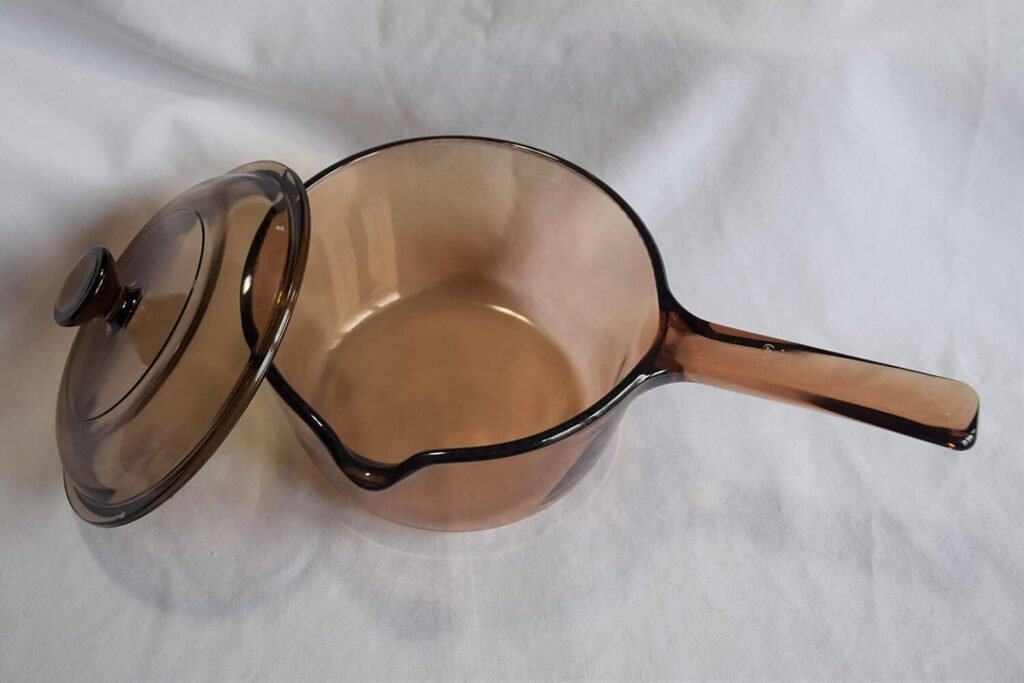
All Vintage Vision Cookware was made in the late 20th century and was produced by Corning. They are known mostly for their amber-colored glass, and they became popular in the 1970s and 1980s.
The glass is known for its ability to withstand high temperatures, making it suitable for stovetop cooking and oven use. It’s also transparent, allowing users to monitor the cooking process.
An example of the Vintage Visions cookware is the Vintage CorningWare Visionware Amber Glass Saucepan with Built-in Pour Spout plus a cover Lid.
Most of the vintage Visions cookware is either made in France or the USA.
The non-porous glass material is made in such a way that it doesn’t absorb food odors or flavors, nor react with acid-based foods.
To care for your vintage vision cookware, simply wash it by hand, although it is dishwasher safe, hand washing makes CorningWare cookware last longer.
Some are no longer in production, but the vintage Vision cookware is still sought after by collectors for its unique aesthetic and durability.
Finally, they are safe for use in the Oven, Range top, Microwave, Refrigerator, and Freezer.
VISIONS COOKWARE DISCONTINUED
Visions cookware is still in production, and I will also tell you why most people think they stopped making Visions cookware.
So, one of the reasons consumers thought it was discontinued or why they stopped making Visions cookware was that there was a reduction in use in the United States after a few users reported explosions.
However, one thing to keep in mind is this: most consumers still prefer the classic Visions cookware that was introduced in France at the initial stage of manufacturing in the 1970s and in the 1980s, especially when it entered the USA.
Finally, one Visions cookware that has been discontinued is the Pyrex Corning Amber Vision, which has a non-stick finish; it was manufactured by the Corning brand in France, but it doesn’t mean that you can’t get it; it is still readily available. Click the link above to get it now!
VISIONS COOKWARE EXPLODE
I know it’s fascinating and scary at the same time, cooking with glass. Who would have thought that you could confidently cook rice, chicken, and other delicacies using glass cookware?
However, let me remind you that you can’t just use any kind of glass cookware on direct heat because it will explode, but what about Vision’s cookware?
Is it safe on a direct heat source? Will Visions cookware explode?
Am sure you are aware of the numerous incidents surrounding visions of cookware exploding, but is it true? While the usage and care of kitchen equipment entirely depend on the user, we mustn’t refute such claims.
I inherited Visions cookware from my Grandparents, and it has always performed well in the microwave, oven, or cooking on a gas stove.
Here are a few things that I have noticed: the Visions cookware I inherited is made in France, and has no hidden cracks on the body or the rim. I guard them jealously so they don’t fall mistakenly or are pressed(under stress) when stored.
Secondly, I mostly cook using medium heat, though most times I start with high heat, and as the cooking progresses, I switch to medium heat.
We all know that Visions cookware began in Europe before it gained wide acceptance in the USA.
Presently, manufacturers have changed hands, so maybe the quality has changed and has resulted in most users reporting explosions.
It is good to note that the Old Pyroceram Visions cookware might be stronger and more thermal shock absorbent than the new Corelle Pyroceram Visions cookware.
Here is what I generally recommend to prevent your Visions cookware from exploding: make sure they are not glass cookware made up of Borosilicate glass, but transparent Pyroceram material.
If you see any deep cracks (some invisible or obvious) or chipping, please do not use them on the stovetop for cooking.
Handle with caution: do not slam it on metal, as this may result in an explosion when exposed to heat.
As for me, I’m still enjoying my Visions cookware and haven’t had any problems with it – the choice is entirely yours!
WHAT ARE THE BENEFITS OF VISIONS COOKWARE
Using Visions cookware has a lot of advantages, see them below:
Vision’s cookware can handle daily cooking without wear and tear; they are long-lasting and tough.
Vision’s cookware is very flexible and versatile; it can work on various stovetop ranges, ovens, and microwaves.
See-Through Cooking: The transparent material lets you see your food as it cooks, helping you avoid overcooking or burning.
Easy to Clean: Non-porous surface makes cleaning a breeze; no stubborn stains or odors linger.
Chemical-Free Cooking: Visions cookware is made of glass, eliminating concerns about harmful chemicals leaching into your food.
Even Heat Distribution: The glass material ensures even heating, preventing hot spots that can lead to unevenly cooked dishes.
Freezer Safe: You can store leftovers or pre-prepared meals in the freezer without worrying about the cookware cracking.
Attractive Presentation: The sleek and clear design adds a touch of elegance to your kitchen and allows for stylish serving directly from the pot or dish.
Stackable Design: Convenient storage as the cookware can be stacked, saving cabinet space.
No Metallic Taste: Unlike some metal cookware, Visions doesn’t impart any metallic taste to your food.
Choosing the proper dinnerware for your house or that special occasion may seem daunting, but it doesn’t have to be if you know the food to be served, your budget, and the kind of occasion.
While there are many other brands of dinnerware available today, we will be focusing on three popular Indian dinnerware brands that are similar: La Opala, Cello, and Larah by Borosil.
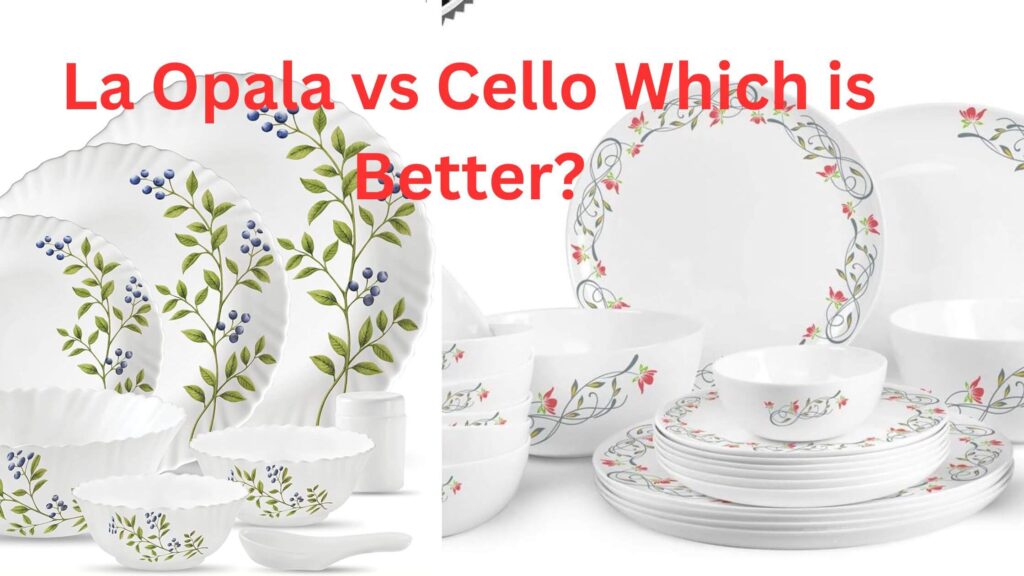
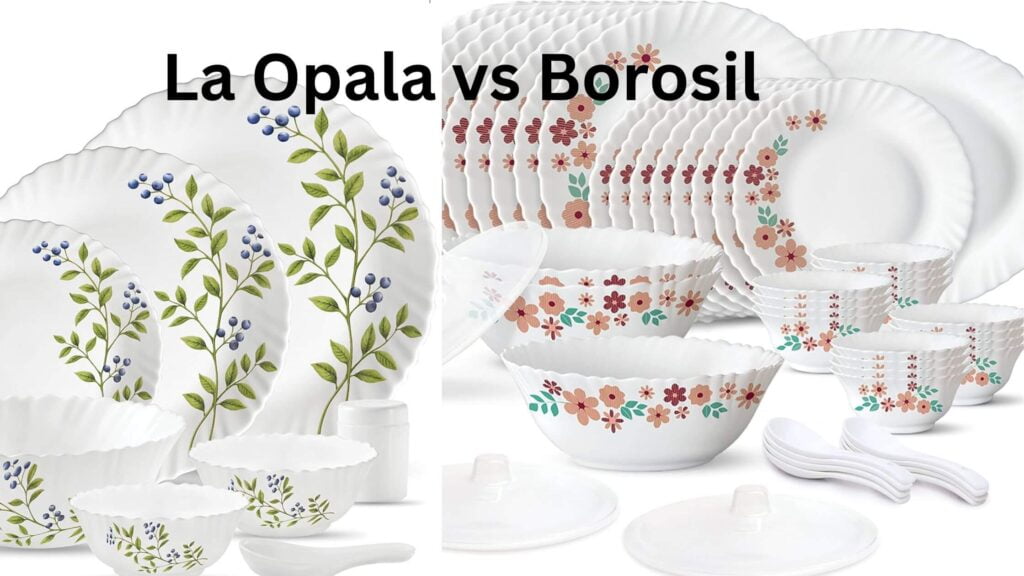
Today, we will determine whether La Opala vs Cello which is better and also see if there is any tangible difference between La Opala and Borosil.
We can all agree that our lives are going at a breakneck pace, but we should be cautious about the food we eat and, more importantly, the tableware we use, because living a healthy Life requires a combination of the dinnerware and the food.
You may wonder why this is significant and what it has to do with me. One of the primary reasons consumers like La Opala, Cello, and Borosil dinnerware products is that, unlike most manufacturers, they provide safe and healthy dinnerware.
So, hang on whilst we compare all of these similar dinnerware pieces that originate from the same country and are made of the same material – Opalware.
LA OPALA DINNER SET
The goal of the La Opala dinner set brand is to provide elegant, safe, and everyday dinnerware for the Indian home at an affordable price.
Truly, every moment you spend at the dining table with your family, colleagues, and friends should be special, and that’s what La Opala dinnerware is made to do!
La Opala is the first flagship brand of the company and was introduced in 1988, using Opal glass technology in manufacturing.
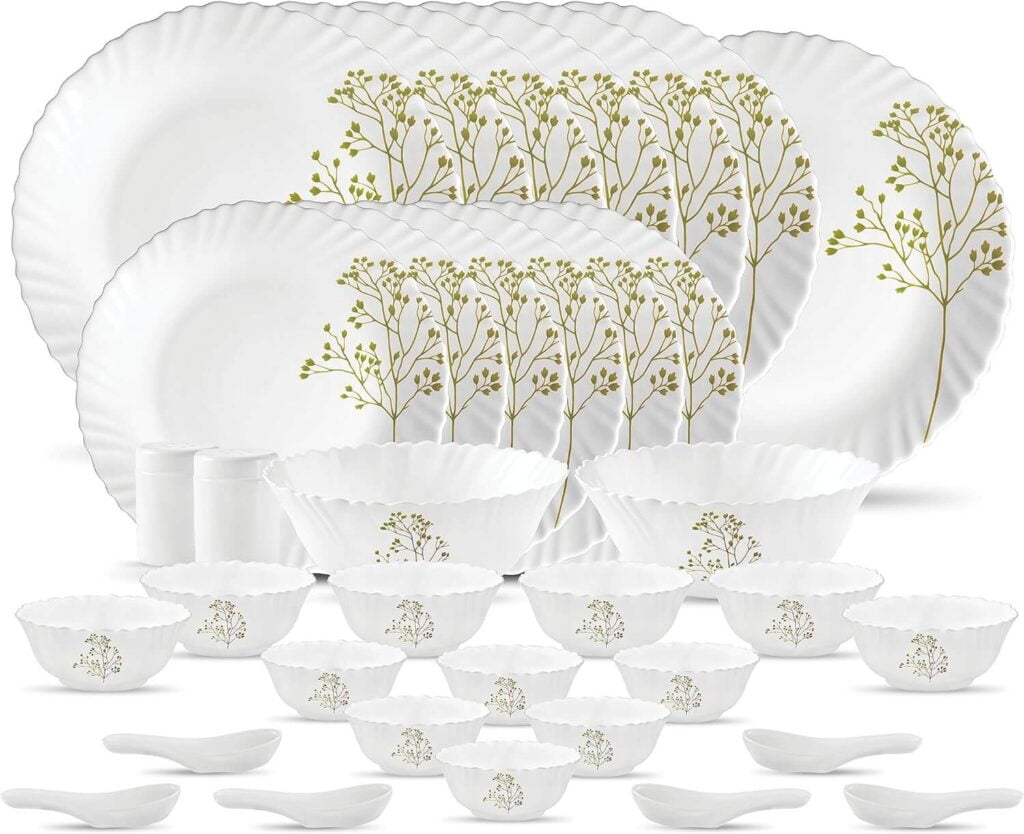
One feature we love about the La Opala dinner set is that they come in simple designs (floral on a white background), and contoured edges that make them appear modest, modern, classic, and contemporary.
There are many collections of the La Opala dinner set, including Novo, Classique, Ivory, Cosmo, Quadra, Sovrana, and Velvet collections (their designs and color combinations differ, but the quality and features remain the same.
For example, the popular Novo collection of the La Opala dinner set includes the following patterns: Autumn flowers, Trinity green, Vivid green, Eros, English Lavender, Blissful green, and Radiant Curves, etc.
The following are the outstanding features of the La Opala dinner set:
They are dishwasher safe and can withstand thermal shock, pressure, and impact because of the opal tempered glass process involved during manufacturing.
They come in beautiful designs with floral settings and intricate patterns that can fit all kinds of table settings and occasions.
The Cello dinner set has high thermal resistance, backed by German glass technology.
In addition, the Cello dinnerware is easy and quick to wash by hand, and they are also dishwasher and microwave-safe.
Furthermore, they are break, chip, and scratch-resistant dinnerware, non-porous, and come in various shapes, designs, and capacities such as Serving bowls, soup bowls, dinner plates, quarter plates, and oval platters.
Finally, the Opal glass Cello dinnerware sets are perfect for gifting purposes at weddings, anniversaries, or special events.
LARAH BY BOROSIL DINNER SET
Larah by Borosil gets its name from Borosilicate Glass; they are a pioneer in Borosilicate glass product manufacture, aside from the Opal glass dinnerware they produce.
Borosil Dinner set by Larah is an Indian glassware brand that began in 1962; their vision is to make every meal special.
Their makeup gives the Borosil dinner set the ability to survive day-to-day use.
They come in beautiful, simple designs that have floral patterns and would match any table setting, especially when you mix them with other dinnerware brands.
Furthermore, Borosil dinner sets are lightweight, easy to handle, chip-resistant, scratch-resistant, odor-resistant, and stain-resistant.
There is no regret in investing in dinnerware that requires slow maintenance; the Borosil dinnerware by Larah is a recommended option.
The popular Larah by Borosil dinnerware is the 35-piece Borosil Dinner set, the Borosil Dinner set 33 Pieces, the Borosil Dinner set 44 Pieces, and others.
Finally, Borosil dinnerware is dishwasher and microwave-safe, easy to stack, and versatile and multifunctional dinnerware that is appropriate for holidays, indoor home parties, weddings, Christmas, housewarmings, outdoor parties, and many other occasions.
BOROSIL OR CELLO, WHICH IS BETTER?
Larah by Borosil and Cello dinnerware brands possess similar qualities and features, so selecting the better one boils down to what aspect of dinnerware is most important to you.
Is it design? Function? Durability? Budget friendliness or resilience? Your choice will depend on your individual needs and preferences.
So, the final verdict is this: for the Borosil and Cello dinnerware, neither is better than the other, as it is largely dependent on your decision to select what best suits your taste and lifestyle.
BOROSIL OR LA OPALA, WHICH IS BETTER?
Both the Borosil and La Opala dinnerware can be used every day, and are microwave and dishwasher-safe, non-porous, break and scratch-resistant, which means they will meet your kitchen and home goals in mind.
Therefore, we can agree that either of them will perform excellently well in our dining experience; neither is better than the other by a wide margin.
We only recommend you care for them according to the manufacturer’s instructions so they last genuinely.
CELLO VS MILTON, WHICH IS BETTER?
Cello and Milton dinnerware brands are both made in India, so before we give a verdict on which is better, let’s first understand the differences between them.
First, Cello dinnerware is made up of opal tempered glass, while Milton dinnerware is made up of Melamine.
Cello dinnerware is safe for microwave use and can withstand heat, but the Milton dinnerware isn’t safe for use in the microwave and can’t withstand heat.
Cello dinnerware is safe for serving hot meals, while Milton isn’t safe for serving hot meals, as it could leach harmful chemicals into your food because of the makeup of the melamine material.
Cello dinnerware has a translucent or opaque look, while Milton dinnerware comes in various colors and appearances depending on the brand.
So, based on the differences above, Cello dinnerware is a better option than Milton dinnerware because they offers a healthier and more versatile function than the Milton dinner brand.
IS LA OPALA UNBREKABLE?
Although La Opala has some degree of break-resistivity, it doesn’t mean that it is unbreakable.
La Opala will break when smashed against a sharp object intentionally or unintentionally, and if it is dropped from a height, it may break, but won’t break into sharp shreds, thereby causing injury.
Curiosity about where products are made often leads us to explore the origins of everyday items.
One such common household item is Pfaltzgraff dinnerware. So, is Pfaltzgraff made in USA? Many are still confused about its origin. If you are, then stick around for the answer.
One certain thing is this: consumers attach the originality, superiority, and quality of items based on their origin, and the Pfaltzgraff dinnerware brand isn’t left out.
In addition, we can’t deny the fact that every gathering adorned with classic and contemporary Pfaltzgraff dinnerware designs tells a story.
I’m sure you’d like to be a part of that story. So, supporting your country’s commodities is a definite method to boost the economy, create jobs, and promote locally made items.
Join me, and let’s embark on a journey to uncover where Pfaltzgraff is manufactured, exploring the subtle narratives etched into each piece and discovering if they weave a tale of American craftsmanship.
PFALTZGRAFF DISHES/PLATES
The Pfaltzgraff dinnerware brand started over 200 years ago as a small pottery shop but has, over the years, blossomed into one of the best-known designers of ceramic dishes, drinkware, and other ceramic accessories.
In the past, the Pfaltzgraff dinnerware brand was made up of earthenware, bone china, stoneware, and porcelain, but presently, they are made with either stoneware or porcelain.
Their goal is simple, which is to bring quality dinnerware to our homes, beginning in America and then going all over the world.
Pfaltzgraff dinnerware is known for its high-quality craftsmanship.
As said above, since they are made from stoneware or porcelain, they are durable and sturdy and also come in various gorgeous designs (having various colors and design patterns).
For example, the stoneware collections often feature hand-painted designs, while the porcelain sets boast more classic and elegant designs and patterns that capture the eye and blend with any table setting.
The Pfaltzgraff dinnerware is safe for dishwasher use, microwave use, and even conventional oven to warm and bake foods, especially the stoneware Pfaltzgraff dinnerware brand, because it is fired at 2200 degrees Fahrenheit.
In addition, because the stoneware Pfaltzgraff dinnerware is fired at high temperatures, it can be chip-resistant and withstand daily use.
They often have a glazed and smooth finish, making them ideal for all kinds of occasions, like casual and formal settings.
One distinct feature bout the Pfaltzgraff dinnerware brand is that they have various price ranges suitable for every family, which means that no matter your budget, you can have access to quality and versatile dinnerware without breaking the bank.
IS PFALTZGRAFF MADE IN USA?
No, the Pfaltzgraff dinnerware brand is presently made in China.
WHERE WAS PFALTZGRAFF ORIGINALLY MADE?
The Pfaltzgraff dinnerware was originally made in York County, Pennsylvania, USA, by potters from the Pfaltzgraff family in 1811, its founding date.
WHEN DID PFALTZGRAFF MOVE TO CHINA?
The Pfaltzgraff brand moved to China in 2005 when it was bought over by Lifetime Brands.
The Pfaltzgraff silverware products are made in China.
WHEN WAS PFALTZGRAFF VILLAGE MADE?
The Pfaltzgraff village pattern product lines were made or introduced in 1970.
PFALTZGRAFF VILLAGE PATTERN HISTORY
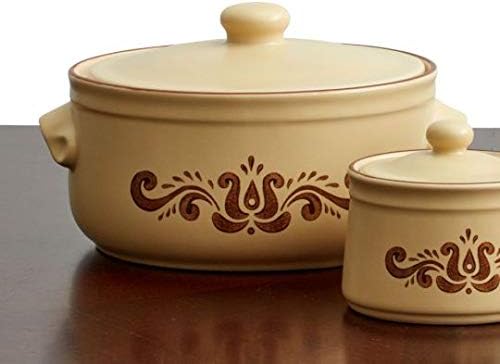
The Pfaltzgraff Village pattern is a classic stoneware design introduced in 1970. It features a rustic, earthy motif inspired by traditional Pennsylvania Dutch folk art.
The pattern includes various illustrations like barns, roosters, and trees.
Pfaltzgraff, a well-known American pottery company at that time, produced this pattern, and it became quite popular for its charming and nostalgic aesthetic.
Examples of the Pfaltzgraff village pattern collections are:
Pfaltzgraff village Soup Cup & Saucer
Pfaltzgraff Village Luncheon Plate 8 ½ inch service for 4 dinnerware
USA-Made Pfaltzgraff Village Salad Plate
Pfaltzgraff village stoneware Butter Dish
Pfaltzgraff Village Art Serving Bowl
Pfaltzgraff Coffee Mug
Pfaltzgraff Snow Village 14-inch Oval Platter
IS PFALTZGRAFF HIGH QUALITY?
Yes, Pfaltzgraff is considered high quality because it’s crafted with durable, high-quality materials that undergo thorough testing for lead concern, sturdiness, and versatility for home, kitchen, and various occasion uses.
The brand’s commitment to quality craftsmanship and independent lab testing for safety and longevity contributes to its reputation for reliable and attractive dinnerware.
PFALTZGRAFF YORKTOWNE
Pfaltzgraff Yorktowne refers to a popular dinnerware pattern produced by the pottery company Pfaltzgraff.
There is hardly any brand of dinnerware that has one pattern or collection; the same goes for the Pfaltzgraff dinnerware brand, which comes in various patterns or collections, giving the power of choice to the consumer.
These patterns come in various colors and designs and can fit various occasions. One takeaway is this: no matter your budget, you can purchase one or more patterns without much stress.
In addition, the Pfaltzgraff dinnerware brand has more than 65 patterns or even more. Below are a few examples:
Pfaltzgraff Winterberry pattern
Pfaltzgraff Amelia Cream pattern
Pfaltzgraff Janelle Pattern
Pfaltzgraff Sadie pattern
Pfaltzgraff village pattern
Pfaltzgraff Venice Pattern dinnerware
Pfaltzgraff Gabriela Gray/Blue pattern
Pfaltzgraff Sylvia pattern
Pfaltzgraff Arlie Gray pattern
Pfaltzgraff Kenna pattern
Pfaltzgraff Painted Poppies pattern
Pfaltzgraff Havana pattern
Pfaltzgraff Trellis White pattern
Pfaltzgraff Evergreen Ernie pattern
Pfaltzgraff Adina pattern
Pfaltzgraff Chateau Cream pattern
Pfaltzgraff Bumblebee pattern
Pfaltzgraff Eclipse Blue pattern
Pfaltzgraff Lexi pattern
Pfaltzgraff Cassandra pattern
Pfaltzgraff Pistoulet Red pattern
Pfaltzgraff Rustic Leaves pattern
Pfaltzgraff Panama pattern
PfaltzgraffSeraphina pattern
Pfaltzgraff Isabella pattern
Pfaltzgraff Farm House pattern
Pfaltzgraff Hudson pattern
Pfaltzgraff Maddox pattern
Pfaltzgraff French Lace pattern
Pfaltzgraff Jaimie pattern
Pfaltzgraff Jules pattern
VINTAGE PFALTZGRAFF
Vintage Pfaltzgraff refers to dinnerware and pottery produced by the Pfaltzgraff Company in earlier decades, known for its quality craftsmanship and distinctive designs.
Pfaltzgraff has a rich history dating back to the early 19th century, and vintage pieces are often characterized by handcrafted details, durable stoneware, and unique patterns.
Some examples of vintage Pfaltzgraff patterns include:
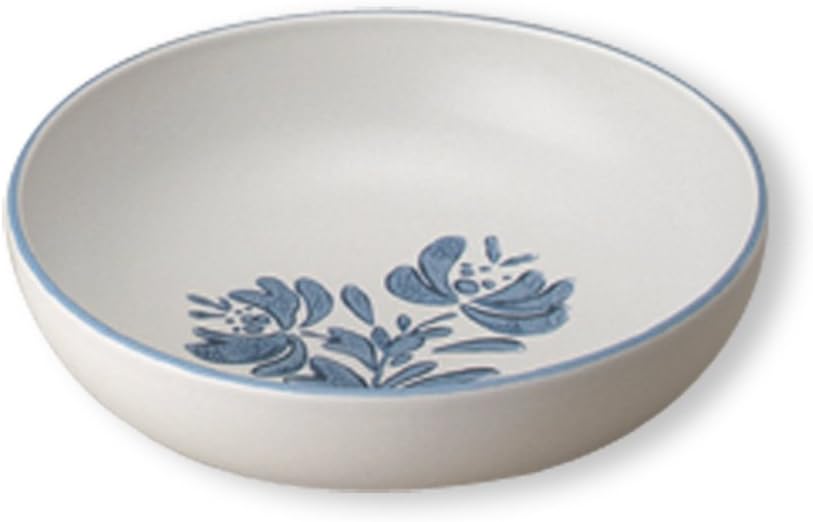
Yorktowne (1967- present): A popular blue and white pattern featuring a colonial-style design with a cobalt blue floral motif.
Village (1970-1989): Earthy tones and a rustic feel define this pattern, which features a village scene with houses and trees.
Heritage (1963-2008): Simple and elegant, Heritage showcases a cream-colored background with embossed details and a brown trim.
Naturewood (1997-2005): Inspired by nature, this pattern features botanical elements like leaves and insects in earthy tones.
Tea Rose (1985- present): Recognizable by its pink floral motif, Tea Rose adds a touch of classic charm to any table setting.
These are just a few examples, and Pfaltzgraff has produced a wide range of patterns over the years.
Collectors often appreciate vintage Pfaltzgraff for its nostalgic value, craftsmanship, and the enduring appeal of its timeless designs.
PFALTZGRAFF DISCONTINUED PATTERNS
Pfaltzgraff, like many other dinnerware manufacturers, has discontinued certain patterns over the years.
Reasons for discontinuation can vary and may include changes in consumer preferences, production costs, or a desire to introduce new designs.
Some examples of discontinued Pfaltzgraff patterns include “Yorktowne,”“Naturewood,” and “Folk Art.”
Keep in mind that the availability of discontinued patterns may vary in the secondary market or through collectors.
MOST VALUABLE PFALTZGRAFF MARKS
Pfaltzgraff has various marks that collectors consider valuable, with older or discontinued patterns often holding a higher value.
Some sought-after marks include early Yorktowne, Village, and Heirloom patterns.
However, the value of Pfaltzgraff pieces can depend on factors like rarity, condition, and specific patterns.
You’re hosting a dinner party, and as you set the table, your gleaming stainless steel plates catch the light perfectly.
Your guests can’t help but admire them. “Are these new?” they ask, running their fingers along the smooth, polished edges.
There’s something special about stainless steel dinnerware made in USA, it brings together exceptional craftsmanship, durability, and timeless style.
Whether you’re a cooking enthusiast, a homeowner seeking long-lasting kitchenware, or simply someone who appreciates quality dining experiences, USA-made dinnerware brands offer something truly remarkable.
But what makes these domestic treasures so special compared to imported alternatives? How do you choose the perfect set for your home?
Let’s discover why these gleaming kitchen essentials might be exactly what your dining table needs.
WHAT MAKES AMERICAN STAINLESS STEEL DINNERWARE SPECIAL?
Superior Quality Control Standards
American manufacturers adhere to strict quality control measures that exceed many international standards.
When you purchase stainless steel dinnerware made in the USA, you’re investing in products that have undergone rigorous testing and inspection processes.
These stringent measures ensure consistency in thickness, finish, and overall durability.
Unlike some imported options that might cut corners to reduce costs, American manufacturers typically prioritize quality over quantity.
This commitment to excellence translates into dinnerware that maintains its appearance and structural integrity for decades rather than just a few years.
Exceptional Craftsmanship
The tradition of metalworking in America dates back centuries, and this expertise is evident in the stainless steel dinnerware produced domestically.
American craftspeople often combine time-honored techniques with modern manufacturing processes to create products with impeccable finishes and attention to detail.
Many USA manufacturers employ skilled artisans who take pride in their work, resulting in dinnerware with perfectly balanced weight, smooth edges, and flawless surfaces.
This human touch, even in more automated production environments, contributes to the superior feel and function of American-made pieces.
Sustainable and Ethical Production
Buying stainless steel dinnerware often means supporting more sustainable and ethical production practices.
American manufacturers operate under stricter environmental regulations and labor laws than many overseas facilities.
This translates to:
Lower carbon footprint due to reduced shipping distances
Better working conditions for employees
More environmentally friendly manufacturing processes
Support for local economies and jobs
Health and Safety Benefits
When it comes to items that come into direct contact with your food, safety should be a top priority.
Quality stainless steel doesn’t leach harmful chemicals into food, unlike some plastic alternatives. The 18/10 or 18/8 stainless steel commonly used in American dinnerware indicates a higher nickel content, which enhances corrosion resistance and ensures your dinnerware remains safe and hygienic throughout its lifetime.
TOP AMERICAN STAINLESS STEEL DINNERWARE MANUFACTURERS
Liberty Tabletop
Based in Sherrill, New York, Liberty Tabletop stands as the only flatware manufacturer still producing in the United States.
Each piece is crafted from high-quality 18/10 stainless steel, providing excellent durability and a brilliant finish that maintains its luster over time.
What sets Liberty apart is its dedication to sustainable manufacturing practices. Their factory runs on hydroelectric power, and they’ve implemented numerous environmentally friendly initiatives throughout their production process.
Vollrath
Based in Wisconsin since 1874, Vollrath has built a reputation for producing exceptional commercial-grade kitchenware, including stainless steel serving dishes and food service equipment.
With a heritage dating back to 1901, this Wisconsin-based company represents the longevity and quality associated with American manufacturing traditions.
Their products feature thoughtful designs that address real kitchen needs while maintaining aesthetic appeal.
COMPARING USA-MADE VS. IMPORTED STAINLESS STEEL DINNERWARE
Understanding the key differences between domestic and imported options can help you make an informed decision about your dinnerware investment.
Feature
USA-Made Stainless Steel
Typical Imported Options
Quality Control
Stricter standards, consistent quality
A wide variety of designs are available
Materials
Typically 18/10 or 18/8 grade
Variable quality may have inconsistencies
Durability
Designed for decades of use
May have a shorter lifespan
Price
Higher initial investment
A wide variety of designs are are available
Environmental Impact
Lower shipping footprint, stricter regulations
Higher shipping emissions, variable standards
Labor Practices
Fair wages, better working conditions
Variable labor standards
Warranty
Often more comprehensive
Typically limited
Design Options
May have fewer style variations
Generally,y lower upfront cost
While imported options might seem more affordable initially, the longevity and quality of American-made stainless steel dinnerware often represent better value over time.
Many homeowners find that USA-made products maintain their appearance and functionality for decades, eliminating the need for frequent replacements.
CHOOSING THE RIGHT STAINLESS STEEL DINNERWARE FOR YOUR HOME
With many types of dinnerware available on the market, selecting the perfect stainless steel set requires considering several important factors.
Understand Stainless Steel Grades
The numbers you often see associated with stainless steel (like 18/10) indicate the metal composition:
The first number represents the percentage of chromium
The second number indicates the percentage of nickel
Higher nickel content (the second number) generally results in:
Better corrosion resistance
Enhanced shine and luster
Greater durability over time
For everyday home use, 18/10 stainless steel offers the ideal balance of durability, appearance, and value.
This high-quality grade maintains its shine and resists rust, making it perfect for daily use and special occasions alike.
Consider Weight and Balance
Quality stainless steel dinnerware has a substantial feel without being uncomfortable to use. When selecting your pieces:
Hold them to assess the weight
Check that the plates lie flat without wobbling
Evaluate how utensils feel in your hand
Ensure cups and bowls have balanced bases
The right weight indicates quality construction and proper metal distribution, which contributes to both durability and dining pleasure.
Evaluate, Finish, and Design
American manufacturers typically offer various finishes to suit different aesthetic preferences:
High-polish mirror finish for formal dining
Satin or brushed finish for contemporary styling
Textured or patterned designs for a unique character
Consider how your chosen finish will complement your existing kitchen aesthetics and how it will show fingerprints and water spots. While mirror finishes create a striking impression, brushed finishes often hide minor scratches and marks better over time.
Assess Versatility and Practicality
The best stainless steel dinnerware seamlessly transitions between everyday meals and special occasions. Look for sets that include:
Versatile pieces that serve multiple purposes
Stackable designs for efficient storage
Dishwasher-safe construction for easy cleaning
Many American manufacturers design their products with these practical considerations in mind, creating dinnerware that functions beautifully in real-world kitchens.
CARING FOR YOUR STAINLESS STEEL DINNERWARE
Proper maintenance ensures your investment will last for generations.
Most quality American-made stainless steel dinnerware is dishwasher safe, but hand washing can help preserve the finish over many years of use. If using a dishwasher, avoid overcrowding and prevent pieces from rubbing against each other.
Removing Stubborn Stains and Marks
Despite its resistance to staining, stainless steel occasionally develops marks or discoloration. For these situations:
Create a paste of baking soda and water for gentle scrubbing
Use white vinegar to dissolve mineral deposits
Try a specialized stainless steel cleaner for tough spots
Polish with a few drops of olive oil on a soft cloth for added shine
Proper Storage Solutions
How you store your stainless steel dinnerware impacts its longevity. Consider using:
Plate separators to prevent scratching
Felt lining in drawers
Dedicated storage cases for special occasion pieces ( for example, we have the popular USA-made Rubbermaid food storage containers) are different from storage solutions for your stainless steel tableware.
Avoid stacking heavy items on delicate pieces, and ensure storage areas remain dry to prevent any potential corrosion or spotting.
ARE STAINLESS STEEL PLATES LEAD-FREE?
Yes, properly manufactured stainless steel plates are lead-free. High-quality stainless steel dinnerware is made from an alloy of iron, chromium, and nickel, with no lead in its composition.
The most common grades used for food-contact items are 18/8 and 18/10 stainless steel, which contain 18% chromium with 8% or 10% nickel, respectively.
Unlike some ceramic or painted dinnerware that may contain lead in glazes or decorative elements, stainless steel is naturally lead-free.
This makes it a safe choice for everyday dining, especially for those concerned about heavy metal exposure from tableware.
To ensure your stainless steel plates are completely lead-free, purchase from reputable manufacturers that follow FDA guidelines for food contact materials.
IS IT GOOD TO EAT ON A STAINLESS STEEL PLATE?
Yes, eating from stainless steel plates is good for both health and practical reasons.
Stainless steel is non-reactive with food, meaning it won’t leach chemicals or metals into your meals, even with acidic foods like tomatoes or citrus.
These plates are extremely durable, resistant to scratches, and won’t break if dropped, making them ideal for daily use and households with children.
Stainless steel plates are also dishwasher-safe, stain-resistant, and don’t absorb odors or flavors from food.
From a health perspective, they’re naturally antibacterial and don’t harbor bacteria in microscopic cracks like some other materials might.
Additionally, stainless steel is environmentally friendly as it’s 100% recyclable and typically lasts for decades, reducing waste compared to disposable or less durable dinnerware options.
CONCLUSION
American-made stainless steel dinnerware represents more than just tableware—it embodies craftsmanship, sustainability, and enduring quality.
From the satisfying weight in your hand to the brilliant shine that lights up your table setting, these domestic treasures enhance every dining experience while supporting local manufacturing and sustainable practices.
Whether you’re setting a table for a special celebration or enjoying a quiet weeknight dinner, this stainless steel dinnerware adds both value and pleasure to your home.