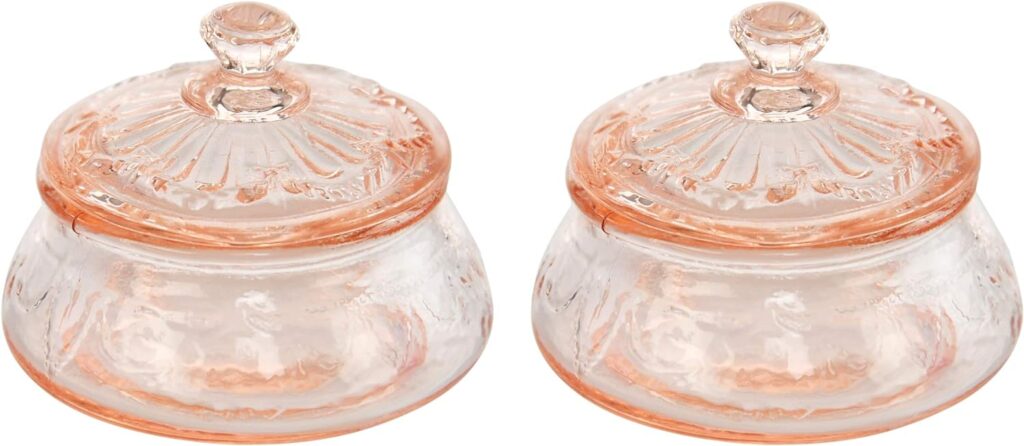
Category: Dinnerware Sets

  • Home Clay Firing: Complete Guide to Firing Pottery at Home

    You’ve shaped something with your own hands, something real, something yours. But there it sits on the table, fragile, raw, and nowhere near finished.

    You know it needs to be fired, but the idea of a professional studio kiln feels out of reach. What if you could do this at home?

    Home clay firing is more accessible than most beginners think, and people are doing it every day — in their backyards, garages, and even kitchen ovens.

    There are multiple methods: kiln firing, pit firing, and oven firing. Each one has its own rules, its own magic, and its own results.

    But which method is right for you, and how do you do it without ruining your work? Join me, let’s find out.

    What Is Clay Firing?
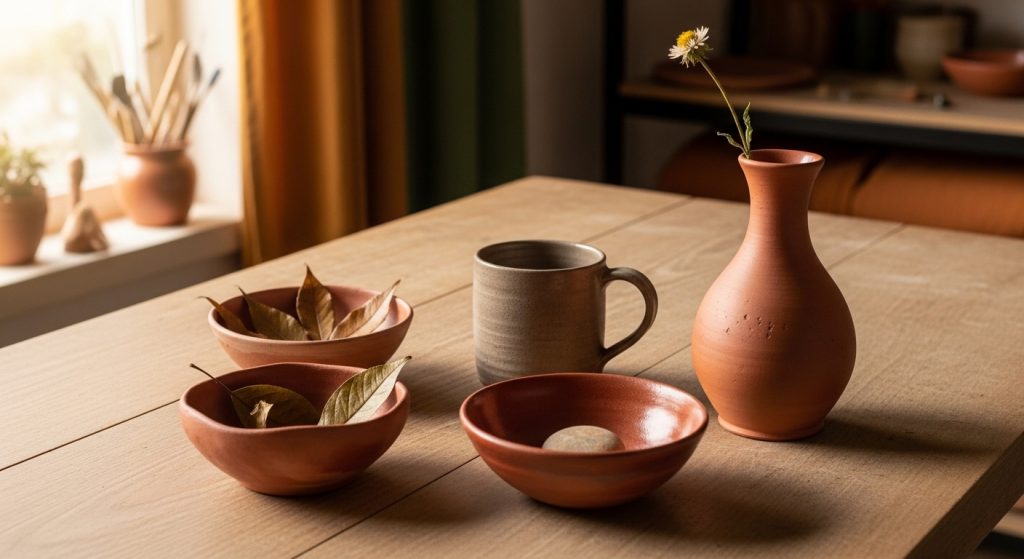
    clay firing earthenware

    Firing is the process of applying heat to clay to permanently harden it. Without it, your clay piece remains soft, fragile, and water-soluble, essentially useless for any practical purpose.

    Fire is what transforms a delicate clay shape into durable pottery.

    The Science Behind Firing Clay

    When clay is heated, several chemical changes happen that can’t be undone.

    First, all the physical water trapped between clay particles evaporates. Then, as temperatures rise further, chemically bonded water inside the clay molecules is driven out too.

    At even higher temperatures, typically above 1,000°C, a process called vitrification begins, where the clay particles fuse together, and the structure becomes glass-like and dense.

    This is what gives fired pottery its hardness and strength.

    Why Clay Must Be Fired

    Unfired clay will simply dissolve or crumble the moment it contacts water.

    Firing locks in the shape permanently, dramatically increases durability, and makes the piece suitable for everyday use, like holding water, food, or serving as a decorative object that will last decades.

    Can You Fire Clay at Home?
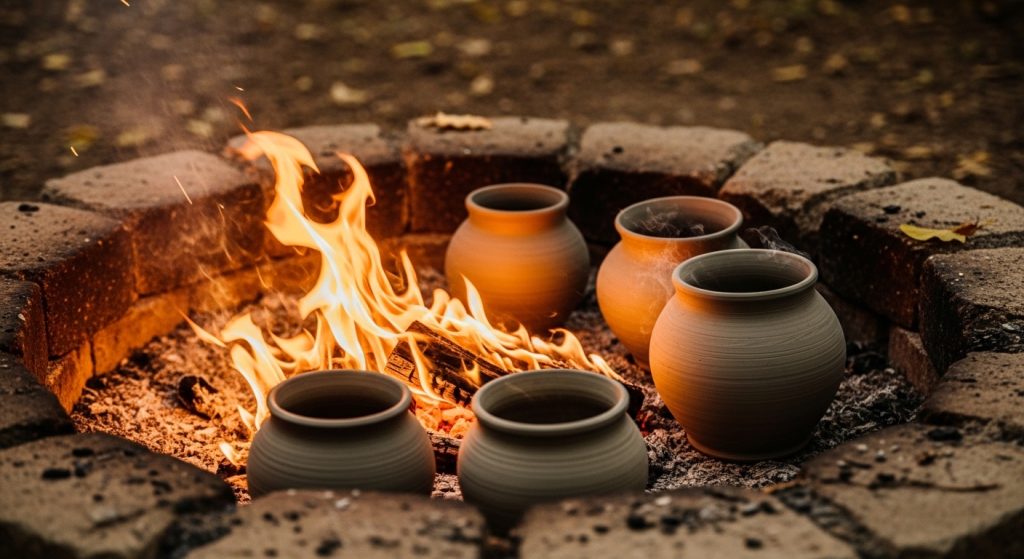
    home clay firing

    Yes, absolutely, but with some important caveats. Your options and success depend heavily on the type of clay you’re using and the firing method available to you.

    Some clays are purpose-built for home firing; others simply aren’t.

    Types of Clay Suitable for Home Firing

    Earthenware clay is the most beginner-friendly option. It fires at relatively low temperatures (around 1,000–1,150°C), which makes it achievable with a small home kiln or even a pit fire.

    Air-dry clay doesn’t require any firing at all; it hardens on its own, though it’s not waterproof or food-safe.

    Low-fire clay is another solid choice, designed specifically for lower temperature ranges that home setups can handle.

    Clay That Cannot Be Fired at Home Easily

    High-fire stoneware and porcelain clay both require temperatures well above 1,200°C — sometimes reaching 1,400°C.

    These temperatures are beyond the reach of most small home kilns, ovens, and pit fires.

    Attempting to fire them without proper equipment usually results in undercooked, brittle pottery. Stick to low-fire clays when you’re setting up at home.

    Methods for Firing Clay at Home

    There’s more than one way to fire clay at home, and each method produces different results. The right one depends on your budget, space, and the kind of finish you’re going for.

    Home Clay Firing for Beginners
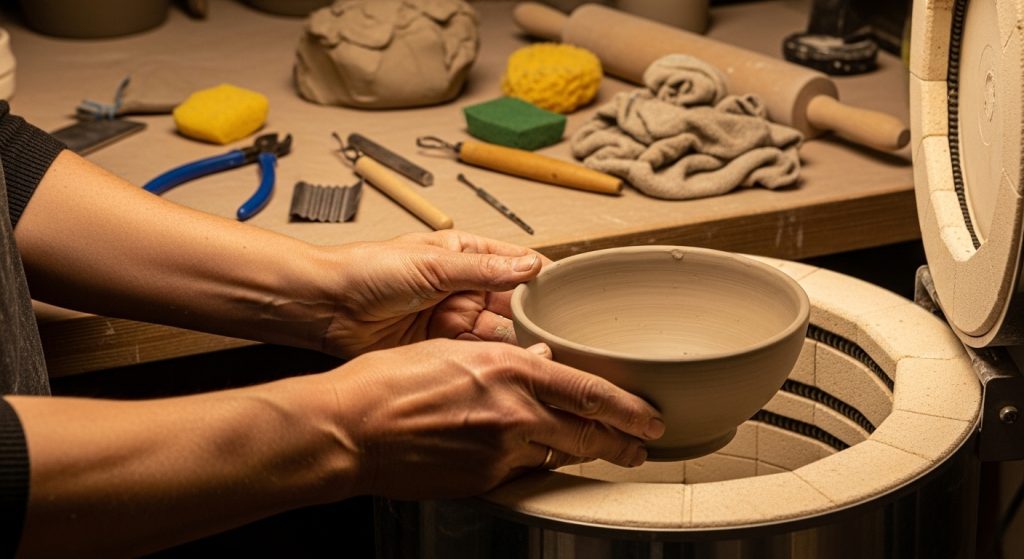
    home clay firing for beginners

    If you’re just starting, the learning curve doesn’t have to be steep.

    The most important things to get right from the beginning are: choosing the correct clay, drying your piece completely before firing, and understanding your temperature limits.

    Most beginners do best starting with small, simple pieces using low-fire earthenware clay.

    Mistakes are easier to recover from at smaller scales, and the materials are affordable.

    Using a Kiln at Home

    A dedicated kiln is the most reliable way to fire clay at home. Electric kilns are the most popular choice for home potters. They’re clean, controllable, and relatively safe when used properly.

    Small tabletop kilns are also available for those with limited space. They’re ideal for small jewellery, tiles, or test pieces.

    The key advantage of any kiln is temperature control; you can program precise firing schedules and hold temperatures at exact stages.

    If you’re serious about home pottery, visiting a resource like home pottery wheel and kiln can help you understand what equipment setup works best for your space and budget.

    Home Clay Firing Process

    Whether you’re using a kiln, pit, or oven, the process follows a similar structure.

    Natural stoneware high fire white clay

    You start with completely dry clay (bone dry, not just surface dry), move through a slow initial heat phase to remove any remaining moisture, then bring the temperature up to the target firing range.

    Cooling must also be done gradually, as cracking pottery is often the result of cooling too fast, not just firing issues.

    Home Clay Firing Techniques

    Beyond the basic kiln method, there are several alternative techniques worth knowing.

    Pit firing uses an open ground pit filled with combustible materials.

    Raku firing involves pulling pottery from a hot kiln and placing it into a container of combustible material for a dramatic reduction effect.

    Saggar firing uses a protective container inside a larger firing chamber to create localised atmospheric effects.

    Each technique produces a unique surface aesthetic.

    How to Fire Clay in an Oven

    A regular kitchen or craft oven can fire certain types of clay, specifically polymer clay and some specially formulated air-dry clays that require low baking temperatures (around 110–130°C).

    However, a standard oven cannot reach the temperatures needed for earthenware or stoneware.

    low fire pottery white clay USA Made

    If you’re using polymer clay, follow the manufacturer’s instructions closely.

    Place pieces on a parchment-lined tray, bake at the correct temperature, and avoid opening the oven door mid-bake.

    It’s a practical starting point, but know its limits.

    How to Fire Pottery Without a Kiln at Home

    No kiln? No problem — there are real alternatives. Pit firing, barrel firing, and raku-style setups can all be done without a professional kiln.

    You can also look into community studio access or mobile kiln rental if you want occasional kiln-fired results without owning one.

    For those in Australia, checking out available Pottery kilns Australia resources can point you toward local options and suppliers that cater to home potters.

    Pit Firing Pottery at Home

    Pit firing is one of the oldest firing methods in human history, and it’s surprisingly achievable in a backyard.

    Dig a pit roughly 60–90cm deep, line the bottom with combustible material (wood, sawdust, newspaper), place your bone-dry pieces inside, layer more combustibles on top, and light it.

    The fire burns for several hours and reaches temperatures of around 600–900°C.

    Pit-fired pieces are not waterproof, but the surface patterns produced by the smoke and flames are genuinely beautiful.

    Pit Firing Clay

    For successful pit firing, the clay prep matters as much as the fire itself.

    Use low-fire or earthenware clay with an open, grogged body (clay mixed with fired clay particles) this helps withstand the uneven heat of an open fire.

    Burnishing the surface before firing gives a smoother, shinier result.

    Adding materials like salt, banana peel, or copper carbonate into the pit creates colour variations and unique surface effects that no kiln can replicate.

    How to Build a Brick Kiln for Pottery

    Building a simple brick kiln at home is entirely possible with basic materials.

    You’ll need fire bricks (not regular bricks — they crack under high heat), a metal grate for air circulation, and a heat source such as a wood fire or propane burner.

    Stack the bricks in a rectangular structure with gaps for airflow, create a shelf area for your pottery, and cap it loosely with a brick lid that allows some heat escape.

    A basic thermometer or pyrometer is essential so you know what temperature you’re reaching inside.

    How to Build a Kiln for Wood

    A wood-fired kiln is a step up from a simple pit but still manageable as a DIY project.

    The structure needs to be built from firebricks with a dedicated firebox at one end where wood burns, and a chamber where pottery sits.

    Ash from the wood settles on the pottery during firing and melts at high temperatures to form a natural glaze, a characteristic that many potters love.

    Wood kilns require sustained stoking over many hours and some practice to reach even firing temperatures throughout the chamber.

    How to Make Ceramics at Home Without a Kiln

    If you don’t have access to a kiln at all, your best options are air-dry clay or polymer clay.

    Air-dry clay is available at most craft stores, hardens at room temperature over 24–48 hours, and can be painted or sealed afterwards.

    Polymer clay can be cured in a regular oven. Neither produces waterproof, food-safe pottery, but both are perfectly suited for decorative pieces, practice work, and sculptural projects.

    They’re also excellent for building skills before investing in firing equipment.

    Equipment Needed for Home Clay Firing

    Essential Tools

    At minimum, you need a firing vessel (kiln, pit, or barrel), a pyrometer or thermometer to monitor temperature, and heat-resistant gloves.

    You should also have a timer or firing schedule written out before you start.

    Optional Equipment

    Kiln shelves allow you to stack multiple pieces efficiently. Stilts prevent glazed pottery from sticking to the shelf surface during glaze firing.

    Protective eyewear, a fire extinguisher nearby, and a kiln vent or exhaust fan are all worth having for safety and consistency.

    Step-by-Step Process for Firing Clay at Home

    Step 1 – Drying the Clay Completely

    This is non-negotiable. Any moisture trapped inside clay will turn to steam during firing, and steam expands rapidly — causing pieces to crack or literally explode.

    Leave your pieces to dry for at least 24–72 hours in a well-ventilated space. For thicker pieces, drying time can extend to a week or more.

    The clay should feel room temperature (not cool) to the touch when completely dry.

    Step 2 – Bisque Firing

    Bisque firing is the first firing stage. The goal is to fire the clay high enough to permanently harden it and drive out any remaining chemically bonded moisture, but not so high that it vitrifies before you’ve had a chance to apply glaze.

    Earthenware bisque firing typically happens around 1,000°C. The result is a porous, chalky surface that’s perfect for accepting glaze.

    Step 3 – Glaze Firing

    Once bisqued and glazed, the piece goes into a second firing — the glaze firing — at a higher temperature.

    The glaze melts and fuses to the clay surface, creating a smooth, glass-like coating.

    The exact temperature depends on the glaze type and clay body.

    Always fire pieces on stilts or leave the base unglazed to prevent them from fusing permanently to kiln shelves.

    Temperature Guide for Home Clay Firing

    Low-Fire Temperature Ranges

    Earthenware fires between 1,000°C and 1,150°C (cone 06–1). This is the most accessible range for home firing setups. Most small electric kilns comfortably reach these temperatures.

    Polymer clay and air-dry clay operate at much lower temperatures — 110–175°C — within reach of a standard oven.

    Signs the Clay Is Properly Fired

    A properly fired piece will have changed colour (earthenware typically turns from grey/tan to a warm terracotta red or buff).

    Tapping a fired piece produces a clear, resonant ring — unfired or underfired clay sounds dull and thuddy.

    The piece will also feel notably harder and denser than the unfired version.

    Safety Tips for Firing Clay at Home

    Fire and Heat Safety

    Ventilation is critical. Firing clay releases gases and particulates — especially during glaze firing.

    Always work outdoors or in a well-ventilated space with an exhaust fan. Never leave an active pit fire or kiln unattended.

    Use heat-resistant gloves when handling anything near the fire, and keep a fire extinguisher nearby.

    Let all pieces cool completely inside the kiln or pit before attempting to remove them.

    Common Firing Mistakes to Avoid

    The most common mistake is firing clay that isn’t fully dry — this leads to cracking or explosions.

    Overheating is another frequent issue, particularly in pit fires where temperature is difficult to control precisely.

    Poor airflow in a kiln or pit results in uneven firing and cold spots. Always go slow, especially during the initial heating phase, and don’t rush the cool-down.

    Common Problems in Home Clay Firing

    Cracking Pottery

    Cracking usually happens for one of two reasons: the clay wasn’t dry before firing, or the temperature changed too quickly.

    Heat the kiln or pit slowly at the start to allow even temperature distribution throughout the piece.

    Exploding Clay Pieces

    Explosions happen when trapped moisture or air pockets inside the clay expand rapidly under heat.

    Ensure your clay is completely bone dry and that you’ve wedged it thoroughly to remove air bubbles before shaping.

    Uneven Firing Results

    In open fires and pit firings, uneven heat distribution is common.

    Rotating pieces when possible, ensuring good airflow throughout the firing chamber, and not overcrowding pieces help achieve more consistent results.

    Tips for Beginners Firing Clay at Home

    Start with Small Projects

    Small pieces dry faster, heat more evenly, and are much easier to manage when you’re learning.

    Coasters, small bowls, pinch pots, and tiles are all excellent starting projects. Keep wall thickness consistent — uneven thickness causes uneven drying and firing.

    Use Low-Fire Clay

    Low-fire earthenware clay is your best friend as a beginner. It’s forgiving, widely available, and compatible with the temperature ranges achievable by most home setups.

    Once you’ve mastered the basics, you can experiment with mid-fire and high-fire clays using better equipment.

    Practice Temperature Control

    Temperature control is the skill that separates consistent results from frustrating ones.

    Invest in a basic pyrometer, keep a firing log, and take notes on what worked and what didn’t after every session.

    Over time, you’ll develop an intuition for your specific setup.

    Conclusion

    Home clay firing is a genuinely achievable craft, one that rewards patience, preparation, and curiosity.

    Whether you’re using a small electric kiln, digging a backyard pit, or working with air-dry clay in your living room, the fundamentals remain the same: dry your clay completely, respect your temperature ranges, and keep safety front of your mind.

    Beginners should start small, use low-fire clay, and build confidence before scaling up.

    The process isn’t always perfect; cracking and uneven results are part of learning, but every firing teaches you something. Pick your method, prepare well, and start creating.
  • Home Pottery Wheel and Kiln: Complete Guide to Setting Up a Home Pottery Studio

    You have a creative itch that just won’t quit. You’ve watched potters shape clay into beautiful bowls and mugs on a spinning wheel, and something in you thinks: I could do that.

    But then reality sets in: studio memberships are expensive, class schedules are rigid, and you want to create on your own terms.

    That’s exactly why setting up a home pottery wheel and kiln is becoming the choice for so many artists.

    The idea of throwing clay and firing pottery right in your own space sounds ideal, but is it really possible?

    What does it actually take to pull this off without wasting money on the wrong equipment? The answer depends on a few things you might not have considered yet.

    What Is a Pottery Wheel?

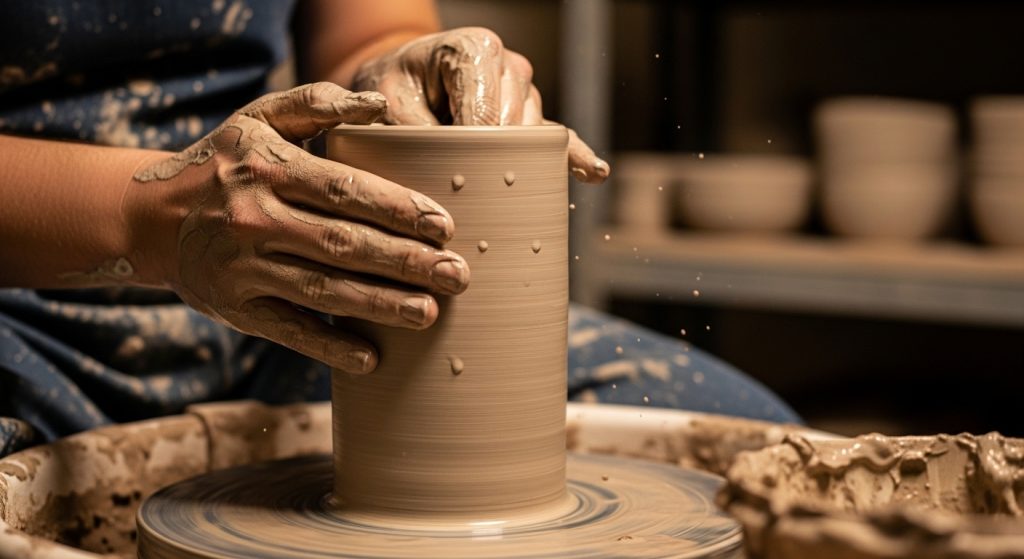
    A pottery wheel is a rotating platform that allows a potter to shape clay using centrifugal force and hand pressure. I

    t’s the cornerstone tool of wheel-thrown pottery and the reason those smooth, symmetrical shapes are achievable at all.

    Without a wheel, producing consistently round, centred forms by hand is incredibly difficult.

    How a Pottery Wheel Works

    The wheel spins horizontally, driven either by a foot pedal or an electric motor.

    The potter places a lump of clay at the centre of the spinning wheel head, then uses both hands to centre it, pressing inward and downward simultaneously.

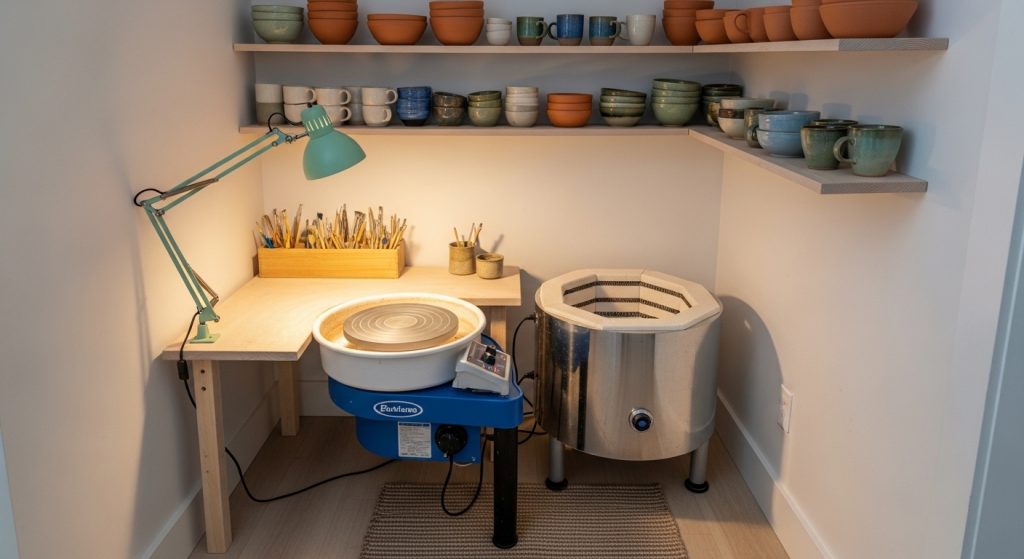
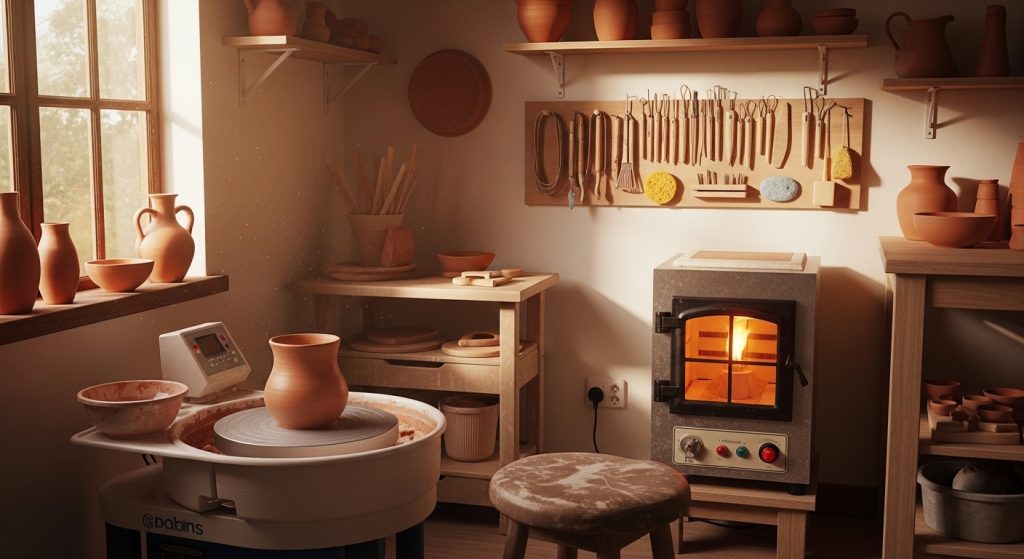
    home pottery studion with electric kiln

    Once centred, the clay is opened, pulled up, and shaped through a series of deliberate hand movements. The rotation does the heavy lifting; the hands guide the form.

    Types of Pottery Wheels for Home Use

    Electric pottery wheels are the most practical for home use; they’re consistent, adjustable, and require less physical effort.

    Kick wheels are traditional, foot-powered, and beloved for their quiet operation and tactile rhythm, though they take up more space.

    Tabletop pottery wheels are compact and affordable, ideal for small spaces or beginners who want to test the craft before committing to a full-sized wheel.

    What Is a Pottery Kiln?

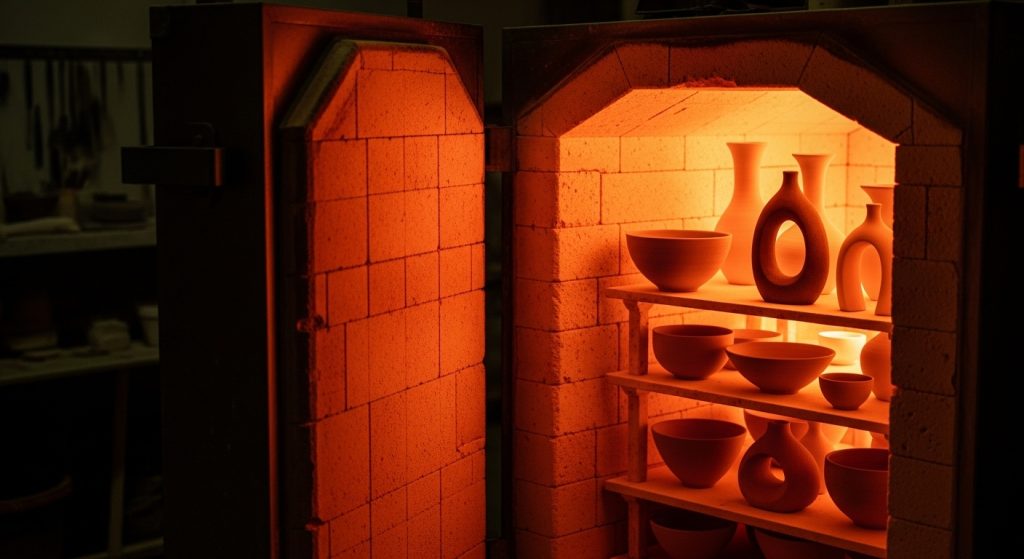
    A pottery kiln is a high-temperature oven specifically designed to fire clay into permanent ceramic.

    It’s what transforms your raw wheel-thrown piece, still fragile and water-soluble, into durable, hardened pottery. Without a kiln, the process is incomplete.

    Pottery Kiln

    Kilns work by heating clay to temperatures that trigger permanent chemical changes.

    The clay’s structure vitrifies, moisture is eliminated, and the material fuses into something fundamentally different from what it started as.

    Most pottery requires two separate firings: a bisque firing to harden the clay, followed by a glaze firing to seal and finish the surface.

    Understanding how to manage these firing cycles is one of the most important skills a home potter can develop.

    For a deeper look at the full firing process, the guide on home clay firing covers everything from pit firing to oven methods in detail.

    Types of Kilns for Home Pottery

    Electric kilns are the standard for home potters — they’re clean, controllable, and compatible with standard studio setups.

    Gas kilns produce distinctive atmospheric effects through flame and reduction but require outdoor space and careful setup.

    Small tabletop kilns are entry-level options great for testing glazes, firing small pieces, or working with low-fire clay.

    Each type has its place depending on your goals, available space, and budget.

    Why You Need Both a Pottery Wheel and a Kiln

    The wheel shapes; the kiln finishes. These two tools exist in a dependent relationship; neither is fully useful without the other if your goal is durable, functional pottery.

    home pottery wheel and kiln

    You can throw beautiful forms on the wheel, but without firing them, they’ll never be more than fragile clay.

    The Pottery-Making Process

    The workflow follows a clear sequence. Clay is thrown on the wheel and shaped into the desired form. Once shaped, it’s left to dry to a leather-hard state, then trimmed and refined.

    After that, it dries completely to bone-dry before its first firing (bisque). Once the bisque is fired, glaze is applied, and the piece goes back into the kiln for the glaze firing.

    That’s the complete cycle from raw clay to finished ceramic.

    Can You Do Pottery Without a Kiln?

    Yes, with some trade-offs. Air-dry clay is a genuine alternative for decorative pieces — it hardens at room temperature without any firing at all, though it’s not waterproof or food-safe.

    Community kiln options are another route: many local art centres, ceramic studios, and makerspaces offer kiln access by the hour or shelf space.

    For those in Australia, exploring Pottery ceramic kilns Australia resources can help locate suppliers, community kilns, and studio-grade equipment within reach.

    Choosing the Right Home Pottery Wheel

    Not all pottery wheels are built the same, and the right choice depends heavily on your skill level, available space, and how seriously you plan to pursue the craft.

    Making the wrong call here is an expensive lesson, so it’s worth taking the time to understand what actually matters.

    What Is the Best Pottery Wheel for Beginners?

    For beginners, the priority is simplicity, reliability, and reasonable cost. Entry-level electric wheels in the 1/3 to 1/2 horsepower range are more than sufficient for learning.

    spinning pottery wheel in a home studio

    Portable and tabletop models work well if space is tight. Budget options from reputable brands typically cost between $400–$700 and handle the basics well.

    Avoid the cheapest no-brand options — inconsistent motor performance makes learning centring even harder than it already is.

    Pottery Wheel for Adults

    Adult learners often benefit from a full-sized, floor-standing electric wheel with a sturdy wheel head (around 11–12 inches) and variable speed control.

    Adults tend to apply more pressure when learning to centre, so motor torque matters more than raw speed. A wheel with a reversible direction feature is also a nice advantage.

    Seating height and ergonomics are worth considering, too — an uncomfortable setup makes long throwing sessions genuinely difficult.

    Brent Pottery Wheel

    Brent is one of the most trusted names in pottery wheels and has been for decades.

    Their wheels are known for exceptional build quality, powerful and consistent motors, and longevity — a well-maintained Brent wheel can last 20–30 years.

    The Brent CXC and Brent IE models are popular mid-range and professional choices, respectively.

    They’re not the cheapest option on the market, but for serious home potters, the investment pays off over time.

    Shimpo Pottery Wheel

    Shimpo is another widely respected brand, particularly popular for its quiet motors and smooth speed control.

    The Shimpo RK-Whisper lives up to its name — it runs remarkably quietly compared to other electric wheels, which matters a great deal in a home setting where noise is a concern.

    Shimpo wheels also tend to be more compact than comparable Brent models, making them a good fit for smaller home studios.

    Professional Pottery Wheel

    A professional-grade pottery wheel typically offers a motor of 1 horsepower or more, a large wheel head (12–14 inches), heavy-duty construction, and precise variable speed from near-zero to full speed.

    Professional wheels are built for sustained daily use and can handle large clay loads — 25 pounds or more.

    If you’re planning to sell work or throw production pottery at home, investing in a professional wheel from the start saves money in the long run.

    Choosing the Right Kiln for Home Use

    Choosing a kiln is arguably a bigger decision than choosing a wheel. Kilns require more space, more electrical planning, and more safety considerations.

    Getting this right from the start matters.

    Home Pottery Kiln

    A home pottery kiln needs to balance capacity, temperature range, and practical installation requirements.

    Most home potters start with a small front-loading or top-loading electric kiln in the 2–7 cubic foot range.

    These are manageable in size, don’t require an industrial electrical supply, and can handle low to mid-fire work comfortably.

    A dedicated kiln space with good ventilation is essential, even electric kilns release fumes during firing that shouldn’t be inhaled.

    Mini Kiln for Pottery at Home

    Mini kilns (also called test kilns or tabletop kilns) are compact units designed for small-scale firing.

    They’re perfect for glaze testing, small jewellery pieces, tiles, or polymer clay. Most mini kilns reach temperatures of up to 1,100–1,300°C and run on standard household power.

    They’re an excellent low-commitment entry point — affordable, space-efficient, and surprisingly capable for the right type of work.

    Best Home Kiln for Pottery

    The best home kiln depends on what you’re making. For low-fire earthenware and glaze work, a small electric top-loader with digital controls is ideal.

    Brands like Skutt, Paragon, and L&L are consistently well-regarded. For mid-fire stoneware, you’ll want a kiln rated to at least Cone 6 (around 1,220°C).

    Digital controllers with programmable firing schedules make the process far more consistent and beginner-friendly than manual kilns.

    Kiln Size and Capacity

    Test kilns (under 1 cubic foot) suit glaze testing and small decorative pieces.

    Small studio kilns (2–5 cubic feet) are the sweet spot for most serious home potters — large enough to fire a meaningful batch, small enough to manage at home.

    Production kilns (7+ cubic feet) are for potters running a home business and require significant electrical and space planning before installation.

    Temperature and Firing Range

    Low-fire kilns reach up to around 1,100°C (Cone 06–1) and are suitable for earthenware and bright commercial glazes.

    Mid-range kilns fire to approximately 1,200°C (Cone 6) and work well for stoneware and most studio glazes.

    High-fire kilns reach 1,300°C and above (Cone 10+) for porcelain and traditional stoneware.

    For home use, Cone 6 is the practical sweet spot, broad enough in clay and glaze compatibility, achievable without an industrial-grade electrical supply.

    Setting Up a Home Pottery Studio

    A home pottery studio doesn’t require a lot of space, but it does require thoughtful planning. Getting the setup right from the start prevents headaches later.

    Can I Use a Pottery Wheel in My House?

    Yes — a pottery wheel can absolutely be used indoors.

    Electric wheels are quiet enough for home use, especially models like the Shimpo Whisper. The main considerations are flooring (clay and water will get everywhere — tile or concrete is ideal), drainage access nearby, and ceiling clearance.

    A dedicated room or garage corner works well. Some potters even work in apartments, using portable wheels and managing mess with rubber mats and covered storage.

    Electrical Requirements for Kilns

    This is where home kiln installation gets serious. Most small home kilns require a dedicated 240V circuit — the same type used for electric ovens or dryers.

    Larger kilns may require 50–60 amp service. Always have a licensed electrician install the circuit and check your home’s panel capacity before purchasing a kiln.

    Running a kiln on an inadequate circuit is a fire hazard and will damage the kiln’s controller over time.

    Organizing Your Workspace

    Place the wheel near a water source and with enough room to walk around it comfortably, about 3 feet of clearance on each side.

    Store clay in sealed bins to prevent drying. Keep tools within arm’s reach of the wheel: a simple pegboard or wall-mounted tool rack works perfectly.

    Position the kiln away from flammable materials, with at least 12 inches of clearance on all sides, and in a space with ventilation or an exhaust fan.

    Safety Tips for Using a Pottery Wheel and Kiln at Home

    Kiln Safety

    Always install a kiln vent or work in a space with strong ventilation. Kilns release carbon monoxide, sulfur compounds, and other fumes during firing, especially during glaze firing.

    Never leave an active kiln unattended for extended periods. Use heat-resistant gloves when handling elements or loading a warm kiln.

    Keep a fire extinguisher in the studio and ensure the kiln has an automatic shutoff or a kiln sitter to prevent overfiring.

    Studio Safety

    Dry clay dust is a genuine health hazard. Silica particles from clay can cause long-term respiratory damage if inhaled regularly.

    Wet mop or wet wipe all surfaces rather than sweeping dry dust. Wear an N95 respirator when mixing dry glazes or reclaiming clay.

    Wash your hands thoroughly before eating or touching your face. These habits feel minor, but they matter a lot over the course of years in the studio.

    Cost of Setting Up a Home Pottery Wheel and Kiln

    Average Price of Pottery Wheels

    Entry-level electric wheels: $400–$700. Mid-range models (Shimpo, Brent entry): $800–$1,200.

    Professional-grade wheels (Brent CXC, Shimpo RK-Whisper): $1,400–$2,000+. Kick wheels: $600–$1,500 depending on construction and brand.

    Tabletop or portable mini wheels: $200–$450.

    Average Price of Kilns

    Mini/test kilns: $300–$600. Small home studio kilns (2–4 cubic feet): $700–$1,500. Mid-size kilns (5–7 cubic feet): $1,500–$3,000.

    Larger production kilns: $3,000–$6,000+. Factor in $150–$400 for professional electrical installation on top of the kiln purchase price.

    Additional Equipment Costs

    Basic tool sets run $30–$80 and include wire tools, ribs, sponges, and trimming tools. Clay costs roughly $20–40 per 25 lb bag, depending on type.

    Glazes range from $10–25 per pint for commercially prepared options. A kiln vent system adds $150–$300. Kiln shelves and posts are another $50–$200.

    Budget around $300–$500 for consumables and accessories when setting up.

    Beginner Tips for Home Pottery

    Start with Small Projects

    Small projects let you build skills faster without the frustration of failing on something ambitious. Pinch bowls, small mugs, simple plates, and coasters are all excellent starting points.

    beginner home electric pottery studio wheel

    They dry faster, centre more easily, and fit multiple pieces in a single kiln firing.

    Once centring and pulling walls feel natural, you’ll have the foundation to tackle larger, more complex forms.

    Practice Centering Clay

    Centring is the single most important skill on the wheel, and it’s the one beginners struggle with most.

    It requires simultaneous inward and downward pressure with both hands while the wheel spins. Don’t rush it.

    A wobbly, uncentred lump will cause problems through every stage that follows. Spend the first several sessions doing nothing but centring and opening.

    It’s not glamorous, but it’s the foundation everything else is built on.

    Learn Basic Firing Techniques

    Start with low-fire earthenware and simple commercial glazes.

    Learn to read your kiln’s behaviour, how it heats, where the hot spots are, and how long it takes to cool.

    Keep a firing log from day one. Note the clay type, glaze, firing temperature, and results after every session.

    Over time, that log becomes one of your most valuable studio resources, saving you from repeating mistakes and helping you replicate successes.

    Conclusion

    A home pottery wheel and kiln setup is more achievable than most people think — but it works best when you go in with clear expectations.

    The wheel and the kiln are partners in the same process: one shapes, one finishes.

    Start with compact, reliable equipment suited to your space and budget, take ventilation and electrical requirements seriously, and give yourself time to build skills gradually.

    Pottery rewards patience over perfection. Begin with small projects, use low-fire clay, and let each firing teach you something.

    With the right setup and a little consistency, a productive home pottery studio is absolutely within reach.

  • Pottery Kilns Australia: Complete Guide to Buying and Using Kilns in Australia

    You’ve put weeks into your craft. The clay is shaped, dried, and sitting there waiting for the one thing that turns it from fragile raw work into something permanent and real: a firing.

    But finding the right kiln in Australia feels overwhelming. Which type do you actually need? What will it cost? Can you even run one at home safely?

    These are the exact questions that stop people from moving forward. Pottery kilns Australia-wide options are broader than most beginners realise, and the right choice depends on a few key factors that are easy to get wrong without the right guidance.

    This guide covers all of it, but where you should start might not be where you expect.

    What Is a Pottery Kiln?

    A pottery kiln is a high-temperature chamber designed to fire clay at controlled temperatures, transforming it from a soft, fragile material into a hard, permanent ceramic.

    It is the single most essential piece of equipment in any pottery studio; without it, the entire process is incomplete.

    How a Pottery Kiln Works

    Kilns work by gradually heating the clay through a carefully managed firing cycle.

    The temperature rises slowly in stages at first to allow residual moisture to escape without causing cracks or explosions, then steadily climbs to the target temperature, where the clay body and glazes undergo permanent chemical transformation.

    Once peak temperature is reached, the kiln holds that temperature for a set period before cooling down slowly. Rushing any stage of this cycle is where most firing problems begin.

    Why Kilns Are Essential for Pottery

    Unfired clay remains water-soluble and structurally weak; it will soften and break down the moment it contacts moisture.

    Firing permanent changes. The heat drives out all moisture, hardens the clay body, and during glaze firing, melts the glaze into a glass-like seal across the surface.

    The result is a durable, food-safe ceramic piece that can last for decades. There is simply no alternative to firing when it comes to producing functional, long-lasting pottery.

    Types of Pottery Kilns Available in Australia

    Pottery Kilns Australia

    Australia’s ceramics market has grown considerably in recent years, and with that growth has come a wider range of kiln types and price points than ever before.

    Understanding what each type offers helps you make the right call from the start.

    Electric Pottery Kilns

    Electric kilns are by far the most common choice for home studios and small ceramic businesses across Australia.

    They’re clean, quiet, and easy to control. Most modern electric kilns include digital controllers that let you program precise firing schedules without needing to monitor the kiln constantly.

    electric pottery kiln slightly open

    They run on standard 240V Australian power (with a dedicated circuit) and are available in a wide range of sizes.

    For beginners, especially, an electric kiln is almost always the right starting point.

    Ceramic Kilns in Australia

    The Australian ceramics community has seen strong growth in both hobbyist and professional kiln use over the past decade.

    Ceramic kilns in Australia range from compact tabletop test units used by jewellers and glaze experimenters, through to large front-loading studio kilns used by working ceramicists producing production runs.

    stone air dry modeling clay

    Gas kilns are used by experienced potters who want the atmospheric effects of reduction firing — the flame interacts with the clay and glaze in ways an electric kiln cannot replicate.

    They require outdoor installation, gas line access, and more technical knowledge to operate safely.

    Small Pottery Kiln Australia

    Small tabletop kilns have become increasingly popular across Australia for hobbyists, jewellers, and potters who work with small-scale pieces.

    These compact units typically hold a firing chamber of under one cubic foot, reach temperatures suitable for low to mid-fire work, and run on standard household power without requiring a dedicated circuit.

    They’re an excellent entry point — affordable, space-efficient, and genuinely capable for the right type of work.

    If your focus is glaze testing, tiles, small decorative pieces, or polymer clay, a small kiln is a smart first purchase.

    Choosing the Right Pottery Kiln in Australia

    Choosing a kiln isn’t just about picking a size or brand. It’s about matching the kiln to how you actually work your clay types, your firing goals, your available space, and your budget.

    Get this right, and the kiln will serve you for decades. Get it wrong, and it becomes an expensive, underused piece of equipment.

    Kiln Size and Capacity

    Small hobby kilns (under 2 cubic feet) suit beginners, glaze testers, and those making small decorative pieces.

    Medium studio kilns (2–6 cubic feet) are the sweet spot for most serious home potters — large enough for a meaningful batch of work, manageable in a home studio environment.

    Large production kilns (7+ cubic feet) are for potters running a business or producing high volumes and require significant space, electrical planning, and installation work before they can be used.

    Temperature Range and Firing Types

    Low-fire kilns reach up to around 1,100°C (Cone 06–1) and are well-suited for earthenware and bright commercial glazes.

    Mid-range kilns fire to approximately 1,220°C (Cone 6), the most versatile range for Australian home studio potters, compatible with a wide range of stoneware clays and studio glazes.

    High-fire kilns exceed 1,280°C (Cone 10+) and are used for porcelain and traditional stoneware; they require a more robust electrical supply and are less common in home studio setups.

    Power Requirements in Australia

    Australian homes run on 240V single-phase power, which is sufficient for most small to medium home studio kilns.

    However, most kilns above tabletop size require a dedicated 15–32 amp circuit separate from your household wiring.

    Larger kilns may need three-phase power, which is not standard in residential properties.

    Always engage a licensed electrician to assess your switchboard capacity and install the dedicated circuit before purchasing a kiln.

    Attempting to run a kiln on an inadequate circuit is a genuine fire risk.

    Pottery Kiln Prices in Australia

    Kiln pricing in Australia varies considerably depending on size, brand, and features.

    Understanding the price ranges across categories helps set realistic expectations and prevents underspending on a unit that won’t meet your needs or overspending on features you don’t yet require.

    Entry-Level Kilns

    Small tabletop kilns suitable for beginners and hobbyists typically range from AUD $400 to $900.

    These units handle low to mid-fire work, fit on a bench or shelf, and run on standard household power.

    They’re ideal for testing glazes, firing small jewellery pieces, or learning the basics of kiln operation before committing to a larger unit.

    At this price point, brands like Paragon and locally distributed compact models offer reasonable reliability for the investment.

    Mid-Range Studio Kilns

    Mid-range studio kilns capable of handling a proper batch of pottery — typically 3–6 cubic feet — run from AUD $1,800 to $4,500 in the Australian market.

    These are the most popular categories for serious home potters and small ceramic studios.

    Digital controllers, programmable firing schedules, and reliable elements are standard features at this level.

    This is also the price range where brands like Skutt, Woodrow, and locally sourced options become available with Australian distributor support.

    Skutt Kilns Australia

    Skutt is one of the most respected kiln brands internationally and has a growing presence in Australia through specialist ceramic suppliers.

    Skutt kilns are known for their precision digital controllers (the KilnMaster system), even heat distribution, and long-term reliability.

    The Skutt KM-818 and KM-1027 are popular mid-range models that suit Australian home studio setups well.

    Pricing for Skutt kilns in Australia typically sits in the AUD $3,000–$6,500 range, depending on model and size, with warranty support available through authorised Australian distributors.

    Professional and Large Kilns

    Professional production kilns — those used by working ceramicists selling work or running studio businesses — range from AUD $5,000 to over $15,000 depending on size and specification.

    At this level, three-phase power is often required, and installation costs (electrician, kiln furniture, ventilation system) can add another $1,000–$3,000 on top of the purchase price.

    These are long-term investments built to handle daily use across many years.

    Where to Buy Pottery Kilns in Australia

    Knowing where to buy matters as much as knowing what to buy. The right supplier provides not just the kiln but also ongoing support, spare parts, and technical advice when things go wrong.

    Australian Kiln Suppliers

    Several specialist ceramic supply companies operate across Australia, stocking kilns from both international brands and locally manufactured units.

    Companies like Walker Ceramics, Ceramic Supply (Sydney and Melbourne), and various state-based pottery suppliers carry a range of electric kilns and accessories.

    Buying through a local distributor gives you access to warranty support, Australian-compliant electrical specifications, and the ability to inspect the unit before purchase, advantages worth paying a modest premium for.

    Buying Kilns Online

    Online purchasing is increasingly common for kilns in Australia, particularly for smaller tabletop units.

    The key considerations are shipping costs (kilns are heavy and fragile — freight from interstate or overseas adds significantly to the final price), warranty terms in Australia, and whether the unit is wired to Australian electrical standards.

    Always confirm that an online purchase comes with local warranty support and that the seller can provide documentation for the electrical specifications before buying.

    Second Hand Kiln for Sale Australia

    The second-hand kiln market in Australia is active — platforms like Gumtree, Facebook Marketplace, and ceramics community groups regularly feature used kilns at 30–60% below new pricing.

    The savings can be significant, but second-hand kilns carry real risks.

    Always inspect the elements (they wear out and are expensive to replace), check the brickwork for cracks or damage, test the controller if possible, and verify the electrical wiring meets current Australian standards.

    If you’re not confident assessing a kiln, bring someone experienced with you before committing.

    Setting Up a Pottery Kiln in Australia

    Buying the kiln is only part of the process. Setting it up properly with the right space, electrical supply, and ventilation is what determines whether it operates safely and consistently for years.

    Space and Studio Requirements

    Kilns need clear space around them on all sides, a minimum of 30 cm clearance from walls and other surfaces, and ideally more.

    They should not be placed near flammable materials, in enclosed spaces without ventilation, or directly on timber flooring without a heat-resistant base.

    A garage, purpose-built studio, or outdoor covered area with a weatherproof cover is the most practical location for Australian home studio kilns.

    Indoor placement is possible with proper ventilation but requires more careful planning.

    Electrical Installation

    This step is non-negotiable in Australia: kiln electrical installation must be carried out by a licensed electrician.

    Most Australian states require a dedicated circuit breaker and appropriately rated cabling for any kiln above tabletop size.

    Attempting a DIY electrical connection for a kiln is illegal in most states and a genuine safety risk.

    Budget AUD $200–$600 for professional electrical installation, depending on your existing switchboard capacity and the distance from the board to the kiln location.

    Ventilation and Heat Management

    Kilns release carbon monoxide, sulfur compounds, and other fumes during firing, particularly during glaze firing.

    An inline kiln vent system (such as the Skutt Envirovent or equivalent) draws fumes down and out of the studio, preventing buildup.

    At a minimum, ensure strong passive ventilation through open windows or vents during every firing.

    Never fire a kiln in a completely enclosed space. In hot Australian summers, heat management also matters.

    Kilns generate significant ambient heat and should not be operated in spaces that exceed safe temperatures for the controller electronics.

    Safety Guidelines for Using Pottery Kilns

    Fire and Heat Safety

    Keep the area around an operating kiln completely clear of flammable materials, such as paper, fabric, chemicals, and timber, which should all be stored well away from the kiln during firing.

    Use heat-resistant gloves when loading a warm kiln or inspecting elements. Never look directly into a peephole without eye protection rated for high-temperature observation.

    Install a kiln sitter or rely on your digital controller’s automatic shutoff function rather than manually timing firings.

    A fire extinguisher should always be accessible in the studio.

    Managing Kiln Fumes

    The fumes produced during glaze firing are a real health concern and should never be dismissed.

    Metallic oxide glazes, particularly those containing lead, barium, lithium, or manganese, produce toxic vapours at firing temperatures.

    Even standard commercial glazes release gases that should not be inhaled over time.

    Run a kiln vent during every firing, keep the studio door or window open, and avoid spending extended time in the firing space while the kiln is running.

    This is not overcaution; it is standard studio practice.

    Tips for Beginners Using Pottery Kilns in Australia

    Pottery Kiln for Beginners

    If you’re just starting, the most important decision you can make is choosing a kiln that matches your actual current needs rather than your future aspirations.

    A compact electric kiln with a digital controller, rated to at least Cone 6, and in the 2–3 cubic foot range is the ideal beginner setup for most Australian home potters. It’s manageable, versatile, and forgiving enough to learn on without overwhelming you with complexity.

    For more on the full process of getting started with clay at home, the guide on firing clay at home is a useful companion read that covers the complete firing process from raw clay through to finished ceramic.

    Learn Basic Firing Schedules

    A firing schedule is simply a programmed set of temperature ramp rates and hold times that guides the kiln through its firing cycle.

    Most digital kilns come with pre-loaded schedules, but learning to read and adjust them yourself is one of the most valuable skills a home potter can develop.

    Start with the manufacturer’s recommended schedule for your clay type, keep a firing log from day one, and adjust gradually based on your results.

    Understanding your kiln’s behaviour, its hot spots, and its actual vs. displayed temperature takes time but pays off in consistent results.

    Practice with Low-Fire Clay

    Low-fire earthenware clay is the most forgiving material for beginners and the easiest to fire successfully in a home studio kiln.

    It reaches maturity at lower temperatures, costs less per kilogram than stoneware or porcelain, and is compatible with a wide range of bright commercial glazes.

    Start here, get comfortable with the firing process, and move to mid-fire stoneware once you understand how your kiln behaves.

    For a broader overview of how a wheel and kiln work together in a home setup, pottery wheel and kiln use at home covers the full studio workflow from throwing to final firing.

    Conclusion

    Choosing the right kiln in Australia comes down to matching the equipment to how you actually work.

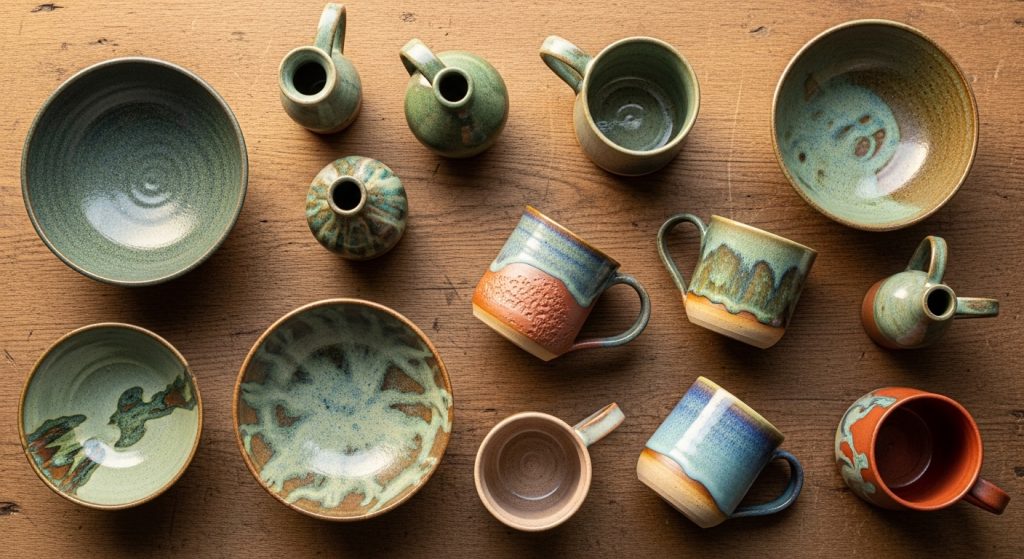
    finished Australian studio pottery

    Size, temperature range, power requirements, and safety all matter and getting those fundamentals right from the start saves time, money, and frustration.

    For most beginners, a compact electric kiln with digital controls is the most practical and versatile entry point into home studio pottery.

    Take ventilation and electrical installation seriously, buy from a supplier who can offer ongoing support, and invest time in learning basic firing schedules.

    The ceramics community in Australia is thriving, and with the right kiln setup, there’s no reason you can’t be a part of it.

  • Vaisselle Arcopal

    You’re hosting a dinner party, and as you’re setting the table, your friend gasps at how elegant yet lightweight your dinnerware is. “These can’t be regular plates,” she says, carefully lifting a pristine white plate that seems to float in her hands.

    You smile, knowing you’re about to introduce her to one of France’s best-kept culinary secrets: Vaisselle Arcopal.

    This isn’t just any dinnerware – it’s the perfect marriage of durability and sophistication that has graced French households for generations.

    But what makes these dishes so special, and why are they becoming increasingly popular in American homes?

    Let’s dive into the world of Arcopal, where French artistry meets practical innovation.

    THE LEGACY OF FRENCH INNOVATION: UNDERSTANDING ARCOPAL

    When it comes to comparing lightweight dinnerware options few can match the legacy of Vaisselle Arcopal.

    Born in the heart of France, Arcopal revolutionized the dinnerware industry with its unique composition of tempered opal glass.

    This innovative material, developed by Arc International, the parent company, has been setting durability standards for tableware since its inception.

    THE BIRTH OF A FRENCH ICON

    The Arc Group is the world leader in tableware, designing innovative and sustainable glass solutions for everyday use, devoted to the pleasure of drinking, eating, and adorning our homes.

    Vaisselle Arcopal

    The company was founded in 1825 in the North of France, in Arques, where the Group still has its headquarters and its Research and Development division.

    The Arques site is the largest glass tableware production site in the world and the eighth-largest industrial site in France.

    The result was a groundbreaking advancement in dinnerware technology that would soon become a staple in households worldwide.

    Arcopal Dessert Plates Set

    With production units in France, the US, China, and the United Arab Emirates, the Group produces over 4 million items each day.

    Arc employs 7,500 permanent staff worldwide, including 4,400 in France, and generated sales of €740 million in 2021.

    WHAT MAKES ARCOPAL UNIQUE?

    Material Composition and Manufacturing:

    Vaisselle Arcopal is crafted from tempered opaline glass, a material that undergoes a special heat treatment process.

    “The Arc Group’s commitment to sustainability shines through their innovative manufacturing process.

    Arcopal Domitille Black Opal Dinnerware Set For 6 People

    According to their Environmental report explained below, their state-of-the-art facilities employ advanced techniques that slash energy consumption by up to 40%, reduce water usage by nearly a third, and utilize carbon-neutral technologies.

    These eco-conscious practices ensure that every piece of Arcopal gracing your table comes with the added satisfaction of environmental responsibility.

    Arc Group’s manufacturing methods set new benchmarks for sustainable glassware production in Europe.”

    They also minimize the use of chemicals and with all this in place, that is why their dinnerware or glass products are:

    – 2.5 times more resistant to breakage than traditional porcelain

    – Completely non-porous

    – Thermal shock resistant

    100% hygienic and food-safe.

    Thus, meeting their vision which is “innovative glass for a better world”.

    ARCOPAL VS TRADITIONAL MATERIALS

    FeatureArcopalRegular PorcelainCeramic
    Break ResistanceHighMediumLow
    WeightVery LightHeavyHeavy
    Thermal ShockExcellentGoodFair
    Dishwasher SafeYesYesYes and it also Varies
    Microwave SafeYesYesYes and it also Varies

    PRACTICAL BENEFITS FOR MODERN LIVING

    1. Durability That Defies Expectations:

    The superior impact resistance of these innovative plates makes them ideal for busy households.

    According to consumers report and safe kitchen standard practices, Arcopal’s break-resistant properties make it one of the safest options for family use.

    2. Lightweight Excellence:

    At just a fraction of the weight of traditional porcelain, Arcopal offers exceptional handling comfort. This makes it particularly popular among:

    – Restaurant professionals

    – Families with children

    Elderly users

    – Anyone who appreciates easier table setting and cleanup

    VERSATILITY IN THE KITCHEN

    Temperature Tolerance:

    One of Arcopal’s most impressive features is its ability to handle extreme temperature changes. Based on culinary testing standards, the Arcopal brand is:

    – Microwave safe up to 150°C (302°F)

    – Freezer safe to -20°C (-4°F)

    – Oven safe up to 120°C (Arcopal casserole vintage dish) (248°F)

    CARE AND MAINTENANCE

    Maintaining your Arcopal collection is remarkably straightforward:

    1. Dishwasher Safe: Place items securely to prevent movement during washing

    2. Stack with Care: Despite durability, avoid excessive sliding

    3. Regular Inspection: Check for any signs of wear, though rarely needed

    DESIGN AND AESTHETICS

    Classic French Style

    Arcopal’s design philosophy combines:

    – Traditional French elegance

    – Modern minimalistic touches

    – Versatile patterns suitable for any décor

    Popular Collections

    The most sought-after designs include:

    1. Blanc Collection (Pure white)

    2. Fleur Bleue (Traditional blue floral)

    3. Moderne (Contemporary patterns)

    ENVIRONMENTAL IMPACT AND SUSTAINABILITY

    In today’s eco-conscious world, Arcopal stands out for its:

    – Long-lasting durability reducing replacement needs

    – Energy-efficient manufacturing process

    – Recyclable materials

    According to the Arc Environmental Sustainable Report, they plan to improve Arcopal’s manufacturing process by:

    • reducing carbon emissions by 37% by 2030.
    • Introduce eco-design into our approach and ensure that 100% of new products are eco-designed by 2025.
    • By 2030, we will reduce our CO2 emissions at the Arc France site by more than a third, our fossil fuel consumption by nearly 40%, and our water withdrawals by 80%.

    MAKING THE RIGHT CHOICE: BUYING GUIDE

    What to Look For:

    When purchasing Vaisselle Arcopal:

    1. Check for authentic markings

    2. Consider your specific needs (daily use vs. special occasions)

    3. Evaluate pattern longevity

    4. Compare prices across authorized retailers

    WHERE TO BUY

    Authentic Arcopal can be purchased through:

    – Official distributors

    – Select department stores

    – Specialized kitchenware retailers

    CONCLUSION

    Vaisselle Arcopal represents the perfect blend of French innovation and practical design.

    Whether you’re a professional chef, a busy parent, or simply someone who appreciates quality dinnerware, Arcopal offers an unmatched combination of durability, style, and functionality.

    Ready to elevate your dining experience? Consider starting with a basic set of Arcopal dinnerware and experience firsthand why this French classic continues to win hearts worldwide.

  • Does Depression Glass Contain Lead

    During the bleak years of the Great Depression, amidst economic hardship and uncertainty, a glimmer of beauty emerged in the form of Depression glass.

    With its delicate colors, intricate patterns, and affordable price tags, Depression glass became a beacon of hope for many households across America, adorning tables and lifting spirits during challenging times.

    Fast forward to the present day, and Depression glass continues to captivate collectors and enthusiasts with its nostalgic charm and historical significance.

    However, beyond its undeniable allure lies a lingering question: Does Depression glass contain lead?

    This inquiry has sparked debates and raised concerns within the collecting community and among health-conscious individuals.

    In this exploration, we delve into the intricacies of Depression glass, uncovering its origins, discussing its appeal, and addressing the contentious issue of lead content.

    As we navigate through conflicting opinions and scientific findings, we aim to shed light on this complex topic, empowering readers to make informed decisions about the acquisition, handling, and enjoyment of Depression glass in their lives.

    Join us on this journey as we unravel the mysteries surrounding Depression glass, separating fact from fiction and illuminating the path towards a deeper understanding of this beloved yet enigmatic artifact of American history.

    WHAT IS DEPRESSION GLASS?

    Depression glass earned its name because it was mass-produced during the Great Depression era ( 1929-1939).

    Manufacturers used cost-effective methods to create affordable glassware during economic hardship.

    These pieces were often given away as promotional items or sold at very low prices, making them accessible to struggling families.

    Depression glass is made of inexpensive materials like soda-lime glass and comes in a variety of colors, such as clear, yellow, pink, green, blue, red, pink, and amber. e.t.c

    Depression glass is a highly collectible item and has been collectible since the 1960s, and becomes more and more collectible as it becomes rarer.

    DOES DEPRESSION GLASS CONTAIN LEAD

    Does Depression Glass contain Lead

    Depression glass does contain lead. This colored glassware, manufactured between 1929 and 1939 during the Great Depression, was mass-produced using a variety of metals and compounds, including lead oxide.

    Lead was an essential ingredient that helped create the glass’s characteristic colors and improved its durability during the manufacturing process.

    Key facts about lead in Depression glass:
    – The lead content varies by color, with green and pink pieces typically containing higher concentrations
    – Lead was used as a stabilizing agent and to produce clarity in the glass
    – The lead oxide content could range from 12% to 36%, depending on the manufacturer and color
    – While the lead is generally stable within the glass matrix, it can leach out under certain conditions, particularly when exposed to acidic foods or beverages.

    CONFLICTING OPINIONS ON THE PRESENCE OF LEAD IN DEPRESSION GLASS

    To begin this discussion, let us first lay this foundation: During the Great Depression, there were a handful of Depression glass manufacturers, but the most notable were Federal Glass CompanyIndiana Glass CompanyHazel Atlas Glass CompanyAnchor Hocking Glass CompanyJeanette Glass CompanyMacBeth-Evans Glass CompanyImperial Glass Company, and a host of others.

    You agree that adding lead to glassware products during the Depression would have been more expensive, right?

    So, with few resources, they had to mass-produce these Depression glasses in vast quantities.

    The fear of lead and other toxic elements in glassware and other ceramic tableware stems from the fact that when we hear that glassware is old or vintage, we immediately think that it must have been made with lead because lead was commonly used in glass manufacturing processes at the time.

    Take, for example, is it all the Corelle old dinnerware that contains Lead? The answer is NO!

    Secondly, most users are afraid and say that since Depression glass was often mass-produced using economical methods, they might have used lead as a stabilizer to achieve specific colors and textures.

    Another assertion is that Depression glass items are not manufactured equally, as many companies were involved.

    Different manufacturers, patterns, and colors may have utilized varying formulations and may have resulted in differences in lead content.

    In addition, the moment we see a piece of clear, brilliant, shining glassware, we think it must have been leaded, but this is not always the case.

    Crystal glass isn’t Depression glass, though they might look somewhat similar.

    Even Brands like Mikasa which manufactures both regular glass and Crystal drinking glasses, have pointed out that their crystal glass is lead-free because of the new innovative manufacturing methods and adherence to the FDA laws regarding compliance with safety standards.

    Scientific studies and testing have been conducted to determine the lead content in Depression glass.

    Results have been mixed. Some studies found detectable levels of lead, while others reported minimal to no lead present.

    Presently, regulatory standards for lead content in consumer products have become stricter.

    However, Depression glass predates many modern regulations, so users are worried its lead content may not meet current safety standards.

    To conclusively determine if Depression glass contains lead, we recommend having items tested by professionals if lead exposure is a heavy concern.

    For example, a lead experiment done by Lead SAFE Mama shows that the clear Depression glass is free from lead and other toxic elements, so we are left with other colored Depression glass.

    Finally, handle and use Depression glass with caution, as collectors use it mostly as decorative pieces and for gifts.

    IS DEPRESSION GLASS SAFE TO USE?

    Modern experts recommend using Depression glass only for display purposes rather than for serving food or drinks.

    While occasional use likely poses minimal risk, regular exposure to food or beverages could lead to lead leaching, especially with acidic contents like citrus juices, tomato-based foods, or vinegar.

    IS GREEN DEPRESSION GLASS SAFE TO USE?

    Green Depression glass is one of the most common types of glassware produced during the great depression era in the USA between the late 1920s and early 1940s.

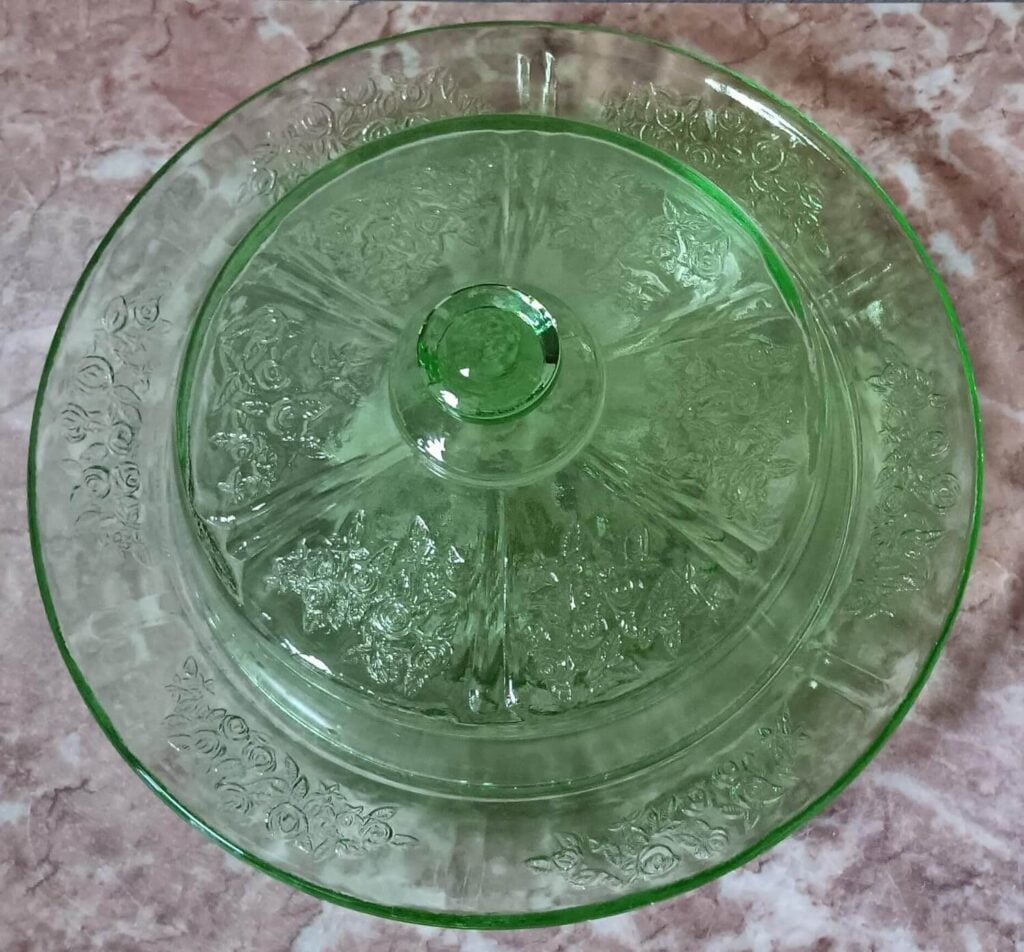
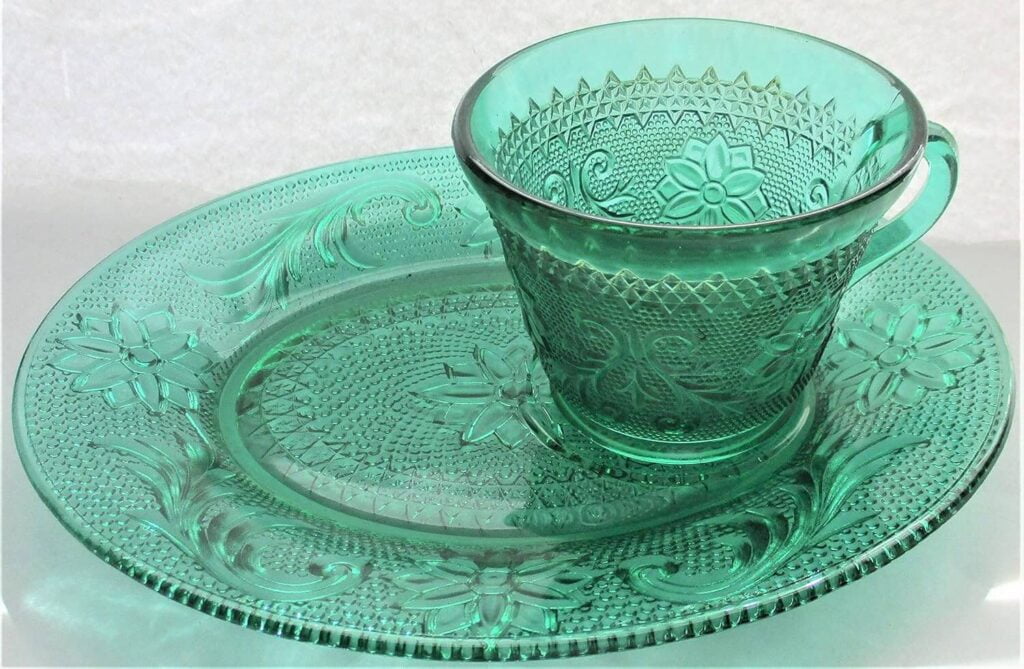
    Green Depression Glass Plate with Cup

    Green Depression glass is not recommended for food use. These pieces typically contain both lead and potentially uranium oxide, which can leach into food or beverages.

    While safe for display and collection purposes, green Depression glass should be used only as decorative items rather than functional dinnerware.

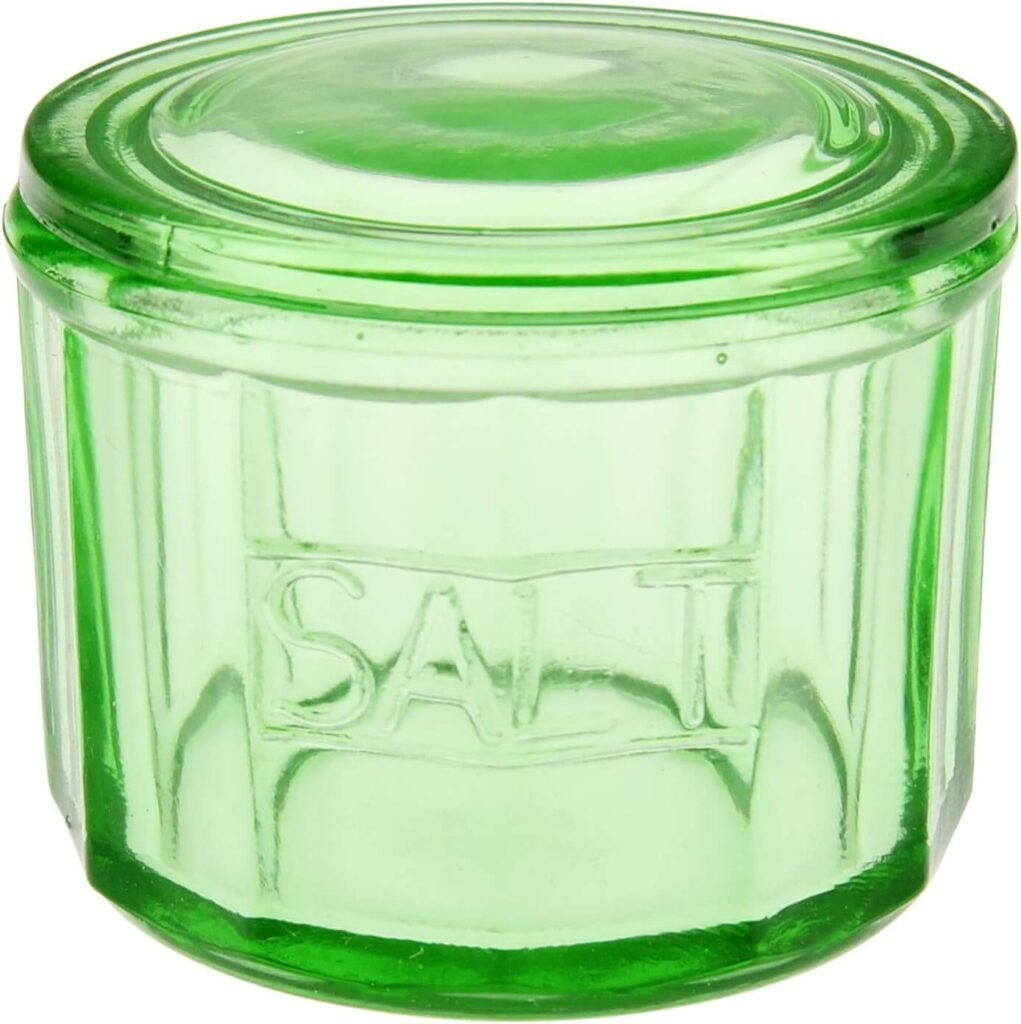
    Green Depression glass salt cellar

    While safe for display and collection purposes, green Depression glass should be used only as decorative items rather than functional dinnerware.

    IS DEPRESSION GLASS RADIOACTIVE?

    Some Depression glass pieces are mildly radioactive, particularly those containing uranium oxide, which was commonly used to create yellow, green, and amber colors.

    However, the radiation levels are generally very low and considered safe for display purposes. Uranium glass was manufactured until the 1940s.

    AMBER DEPRESSION GLASS

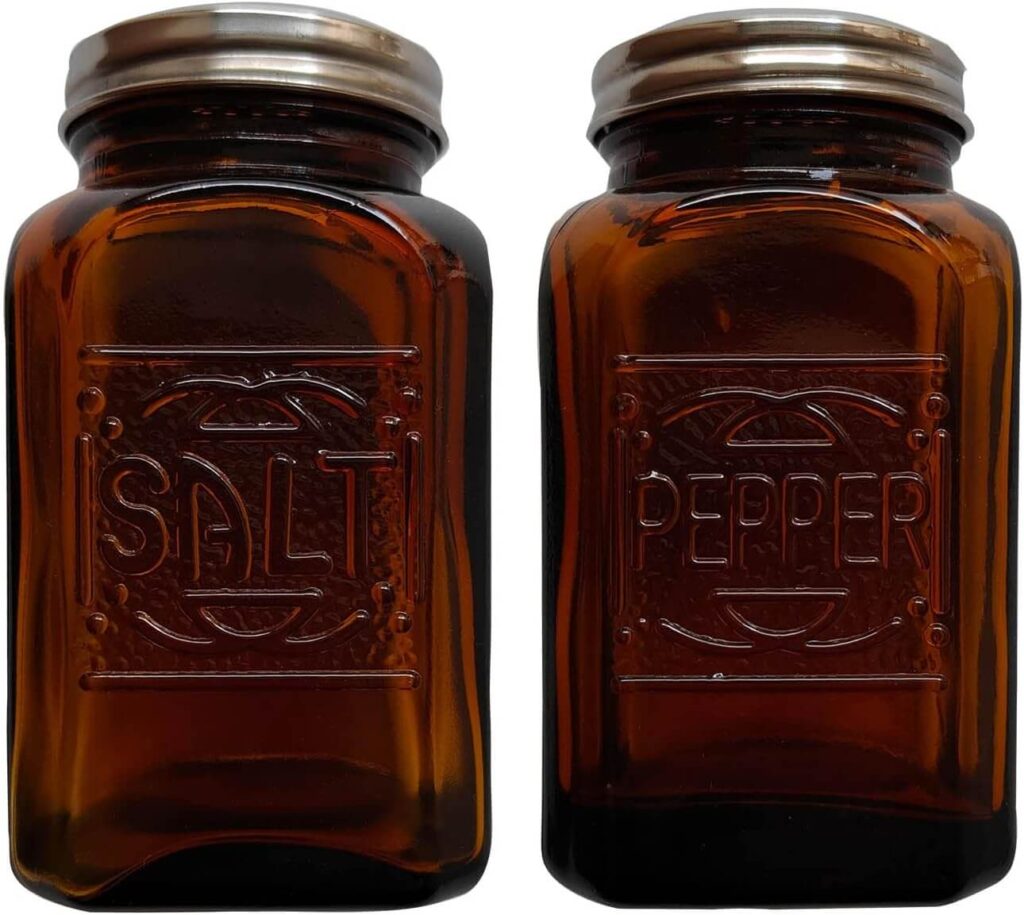
    Amber Depression glass

    Amber Depression glass usually comes in shades of amber or yellow. It was mass-produced and given away as a promotional item or sold at low prices during the great depression.

    The glassware often featured intricate patterns and designs, adding a touch of elegance during a time of economic hardship.

    New lead free Amber wine drinking glassware

    Today, it’s sought after by collectors for its historical significance and nostalgic charm.

    IS DEPRESSION GLASS VALUABLE?

    Yes, most colors of Depression glass are valuable and heavily sought after by collectors because they can be sold for a substantial amount.

    One of the most popular Depression glasses amongst collectors is the Pink Depression glass.

    In addition, two colors are considered rare Depression glass, and they are red and blue, making them most valuable, expensive, and sought after more than the green and pink Depression glass.

    DOES ALL DEPRESSION GLASS GLOW?

    Not all Depression glass glows under ultraviolet light. Only pieces containing uranium oxide or manganese will glow.

    Pink Depression glass does it glow?

    Pink Depression glass typically glows due to manganese content, while green and yellow pieces may glow due to uranium oxide.

    The presence of these elements was common in glass production during the Depression era.

    IS PINK DEPRESSION GLASS RADIOACTIVE?

    Pink Depression glass is typically not radioactive, as it was colored using manganese rather than uranium oxide.

    While it may glow under UV light due to the manganese content, this fluorescence is not related to radioactivity. However, pink Depression glass often contains lead.

    IS YELLOW DEPRESSION GLASS SAFE TO USE?

    Yellow Depression glass is not considered safe for regular food use.

    While decorative displays are fine, these pieces often contain both lead and uranium oxide.

    The potential for leaching of these substances, especially when in contact with acidic foods or hot liquids, makes them unsuitable for serving food or beverages.

    IS URANIUM GLASS HARMFUL?

    Uranium glass was made in the 18th century; they are different from Depression glass, and you can only know this with the help of a UV light.

     Some people call Uranium glass Vaseline glass because of the yellow or yellowish-green color that glows bright green under backlight due to the presence of Uranium in the glass formulation.

    It is good to note here that green-colored Depression glass is neither Vaseline glass nor Uranium glass.

    Although uranium glass can produce low quantities of radiation, the levels are usually regarded as safe for handling.

    However, do not use metals on uranium glass and avoid prolonged exposure or ingestion, as this may pose health hazards.

    It’s best to avoid prolonged contact or ingestion of uranium glass and to handle it with care by using it for decorative purposes.

    DOES HAZEL ATLAS GLASS CONTAIN LEAD?

    Hazel Atlas Glass Company was a prominent manufacturer of glassware in the United States, known for producing a wide range of glass products, including kitchenware, dinnerware, and decorative glass items.

    Established in the early 20th century, the company was particularly renowned for its Depression-era glassware.

    It is not all Hazel Atlas Glass product lines that contain Lead. Hazel Atlas Glassware produced before the mid-20th century may contain trace amounts of lead, particularly in decorative or colored glass items.

    However, the company also produced clear glassware that typically didn’t contain lead.

    For example, the clear food storage Hazel Atlas glass Lid is Lead-free, while the Vintage Orange Hazel Atlas Milk glass Mug contains Lead, cadmium, and even mercury.

    DEPRESSION GLASS HEALTH BENEFITS?

    Depression glass has no known health benefits.

    Using Depression glass for food or beverages may pose health risks due to its lead and, in some cases, uranium content.

    These pieces should be valued for their historical and decorative significance rather than any purported health properties.

    DOES PRESSED GLASS CONTAIN LEAD?

    Pressed glass can contain lead, as lead was commonly used in glassmaking processes to improve clarity and brilliance, as well as to aid in the molding of intricate designs.

    However, not all pressed glass items contain lead, and the amount of lead can vary depending on factors such as the specific composition of the glass and the period in which it was produced.

    For example, the Anchor Hocking pressed Wexford glassware made in 1967 – 1998 is Free from Lead, while the Vintage Pressed small platter glass contains Lead and even antimony.

    It is best to always test your glass brand for the presence of lead before you use it for food, especially old, vintage, or antique glassware.

    REFERENCE: ULTIMATE GUIDE TO UNDERSTANDING DEPRESSION GLASS

  • Why are Dishes called China

    Imagine an elegant dining setting: the soft glow of candlelight, the clink of silverware, and the delicate beauty of fine china adorning the table.

    For centuries, dishes have been more than mere vessels for food—they are symbols of culture, status, and craftsmanship. But have you ever wondered why we call them “China”?

    Diving into the origins of this term reveals a fascinating journey through history, culture, and trade.

    From the bustling markets of ancient civilizations to the royal courts of Europe, the story of why are dishes called china is intertwined with the evolution of human civilization.

    In this article, we’ll unravel the mystery behind the term “chinaware”.

    We’ll explore its historical roots, examine the cultural significance of fine dining, and uncover the influence of global trade on culinary traditions.

    By the end, you’ll have a deeper appreciation for the humble dish and its remarkable journey through time.

    Join me as we embark on a captivating exploration of why dishes bear the name “China in America and English,” inviting you to ponder the intricacies of language and culture.

    WHY ARE DISHES CALLED CHINA IN ENGLISH AND AMERICA

    The term “china” for dishes originated from the country China, where porcelain was first produced.

    This has led to why dishes are called china in English, because it is a common way to refer to ceramic dishes and tableware made of porcelain or a similar material.

    While in America, dishes are called china due to the historical association with porcelain production in China.”

    WHY ARE DISHES CALLED CHINA?

    Why are dishes called China

    Dishes are commonly called china because dinnerware, which includes fancy plates and cup,s was first made in China around 2,000 years ago under the name Porcelain.

    Chinese porcelain became famous for its beauty and quality, and it was highly prized by people in other countries.

    When Europeans started making similar dishes later on, they called them “china” to show that they were like the ones from China.

    So, the term stuck, and now we use “china” to refer to fine porcelain dishes regardless of where they are made.”

    WHY DID EUROPEANS REFER TO FINE DINNERWARE AS “CHINA”?

    Fine dinnerware is called “china” because China was the source of porcelain, a superior ceramic material developed during the Tang Dynasty (600-700 CE).

    When Portuguese traders introduced Chinese porcelain to Europe in the 16th century, its exceptional qualities—translucency, durability, and pure white color—made it highly prized among European nobility.

    China maintained a monopoly on porcelain production for nearly 1,000 years, making it so valuable it was known as “white gold.”

    Even after Europeans learned to make their porcelain at Meissen, Germany in 1708, the term “china” had become firmly established as the generic name for fine porcelain dinnerware, reflecting China’s mastery of porcelain-making and its lasting influence on ceramic arts worldwide.

    WHY ARE FANCY DISHES CALLED CHINA?

    Fancy dishes are called China because fine porcelain originated in China during the Tang Dynasty (618-907 AD).

    The Chinese carefully guarded their porcelain-making secrets, making them extremely valuable.

    When porcelain finally reached Europe through trade routes, it was so prestigious that “China” became synonymous with fine dinnerware.

    WHY IS BONE CHINA CALLED CHINA?

    Bone China got its name from its origins in China, and its unique composition contains bone ash (up to 50% of animal bone).

    The term became popular in the 18th century when English potters added bone ash to porcelain to create a stronger, more translucent material that rivaled Chinese porcelain.

    WHY IS FINE CHINA CALLED CHINA?

    Fine China bears this name because China was the birthplace of porcelain, keeping its manufacturing process secret for over 1,000 years.

    The term “Fine China” specifically refers to high-grade, translucent porcelain first produced in Jingdezhen, China.

    Europeans couldn’t replicate this quality until the 18th century, cementing China’s reputation as the origin of superior porcelain.

    IS CHINA PORCELAIN?

    As explained above, you can see that there is a correlation between “China” and “Porcelain”.

    What do I mean? The term “China” first refers to a country, and if you combine “China Porcelain”, it simply denotes that it is a type of ceramic ware known as Porcelain that originated in China during the Tang dynasty (618–907 AD).

    China Porcelain Dinnerware by Lenox

    The beauty and craftsmanship involved with china porcelain made it highly prized and exported to various parts of the world, leading to its association with the country.

    Later on, other countries began producing porcelain as well, but the name “china” stuck as a generic term for this type of ceramic ware.

    In addition, in case you are still confused about what chinaware or china set is, allow me to make it easy for you

    So, what is Chinaware or China Set? They are a collection of beautiful, matching dishes and serving pieces you have at home made from either fine ceramic or porcelain material.

    Gibson Home China Porcelain Dinnerware set

    Generally, China sets include plates, salad plates, soup bowls, saucers, cups, serving bowls, and serving platters that are often designed with beautiful patterns or handcrafted designs.

    Finally, Chinaware or Chinese sets are commonly used for formal dining occasions or special gatherings.

    CHINA PLATES

    To follow through with our discussion, China plates are also known as fine China plates; they can be used interchangeably. Some people still prefer to call Chinese plates Porcelain.

    Chinese plates can also be said to be simply ceramic dishes made for the singular purpose of serving cold or hot food.

    China plates or fine china plates are known for their translucent quality, white or off-white; they are designed with colorful designs and patterns, and appear elegant and smooth.

    Sweese Fine China Porcelain Plates and Bowls

    China plates or fine china are made up of kaolin clay, feldspar, and quartz. These materials are fired at high temperatures to create a durable and non-porous surface, making china plates resistant to scratches, stains, and chips.

    In addition, China plates are commonly made using a process called slip casting or molding.

    This involves pouring liquid clay into molds, allowing it to set, and then firing it in a kiln at high temperatures to harden and create the final product.

    The country of origin of the China plates and the methods of manufacturing cause consumers to wonder if plates made in China are safe.

    Stone Lain China Plates and Bowls set

    Fine china dishes are ideal for formal dinners or special occasions where guests must be served separately, but this does not exclude you from using china plates for regular use at home – it all comes down to personal opinion.

    Furthermore, the delicate appearance and fine craftsmanship of china plates make them a popular choice for weddings, holidays, decorative purposes, and other important gatherings.

    China plates are also recognized for their lightweight nature, but not all of them.

    They are also easy to handle and can maintain heat, keeping your meal warm for a longer period of time.

    To care for china plates, it’s important to hand-wash them gently with mild detergent and warm water.

    Avoid using abrasive cleaners or scrubbers that could scratch the surface.

    Finally, storing them properly by placing felt or cloth between stacked plates can prevent scratching and chipping.

    WHY ARE CHINA PLATES SO EXPENSIVE?

    China plates command high prices due to their superior materials, skilled craftsmanship, and intricate manufacturing process.

    The production requires refined kaolin clay, precise temperature control, and multiple firing stages.

    Hand-painted designs, gold or platinum trim, and limited production runs further increase costs. Premium brands also factor in their heritage and reputation.