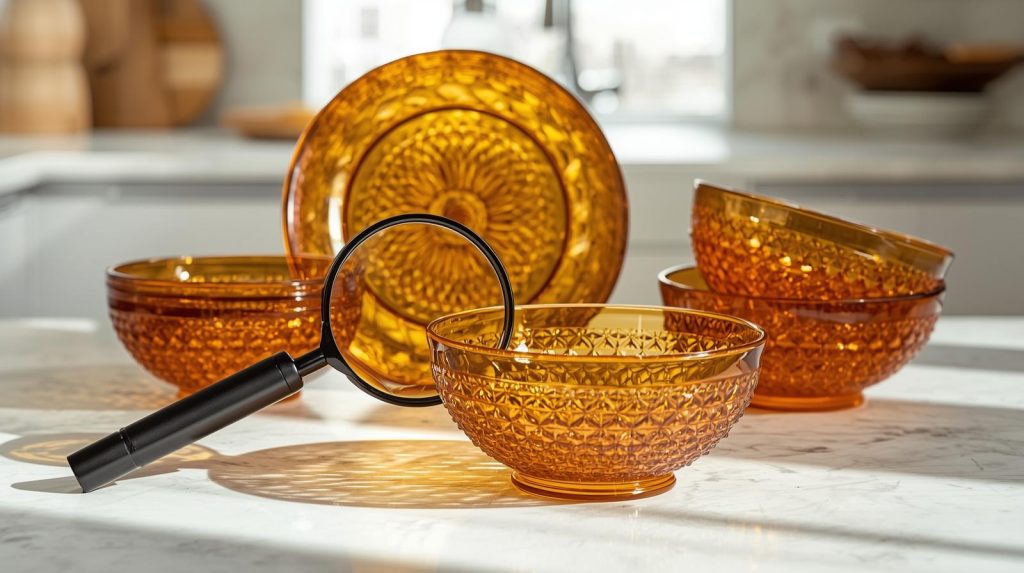
If you’ve inherited a beautiful piece of Indiana Glass or spotted one at an antique store, you might be wondering: “Is this safe to use for food or drink?”
Many vintage glass lovers share this concern, especially as awareness about lead exposure in household items has grown.
Indiana Glass, produced by the Indiana Glass Company from the early 1900s through the 1990s, remains popular among collectors for its distinctive carnival glass, depression glass, and milk glass designs.
However, the question of lead content in these vintage pieces is crucial for anyone considering using them in their kitchen.
This guide will provide you with the historical context, safety information, and practical testing methods you need to make informed decisions about your Indiana Glass collection.
Whether you’re a collector, a vintage enthusiast, or simply concerned about kitchen safety, understanding the potential risks and how to enjoy these beautiful pieces safely is essential.
What Is Indiana Glass?
The Indiana Glass Company was a prominent American glassware manufacturer founded in 1907 in Dunkirk, Indiana.
For over eight decades, this company has produced an impressive array of glass products that have become staples in American households.
Indiana Glass became particularly well-known for its carnival glass pieces with their distinctive iridescent finish, depression glass that graced tables during the 1920s and 1930s, and milk glass with its opaque white appearance.
Throughout its history, Indiana Glass went through several ownership changes and production phases.
In the 1970s, the company operated under the Tiara Exclusives brand, selling directly to consumers through home parties.
During this era, they reproduced many popular Depression-era patterns, making their glassware accessible to a new generation.
The company’s products often competed with other major glass manufacturers like Federal Glass and Anchor Hocking.
Indiana Glass continued production until 1999, when changing market conditions and increased competition led to the factory’s closure.
Today, Indiana Glass pieces are highly collectible, valued for their historical significance, distinctive patterns, and the nostalgia they evoke for mid-century American life.
Why Some Glassware Contains Lead
Lead oxide has been a prized ingredient in glassmaking for centuries because it creates exceptionally brilliant, clear glass with a distinctive sparkle and weight.
When added to glass formulations, lead oxide increases the refractive index, giving the glass a prismatic quality that makes it gleam beautifully in light.
This is why lead crystal has been so highly valued for fine tableware and decorative pieces.
Lead is most commonly found in crystal glass, colored glass, and intricately cut glass pieces, where clarity and brilliance are paramount.
Adding lead also makes glass softer and easier to cut into detailed patterns. In contrast, most everyday glassware is made from soda-lime glass, which contains sodium carbonate and calcium oxide but no lead.
The glass industry began shifting away from lead-based formulations in the late 20th century as health concerns emerged and regulations tightened.
Today, many manufacturers have replaced lead oxide with alternative materials like zinc or barium oxide that provide similar optical properties without the health risks.
Understanding these material differences helps consumers distinguish between potentially leaded vintage pieces and modern lead-free alternatives when building a safe dinnerware and cookware materials collection.
Did Indiana Glass Use Lead in Their Products?
The answer to whether Indiana Glass contains lead is a little complex and depends largely on the specific product type and manufacturing period.
According to glass historians and collector communities, Indiana Glass generally did not produce traditional lead crystal, which typically contains 24% or more lead oxide.
Most Indiana Glass pieces were made using pressed-glass techniques with soda-lime formulations, which are naturally lead-free.
However, some decorative pieces produced during certain periods may have contained trace amounts of lead, particularly in colored glass or pieces with applied decorations.
The carnival glass and milk glass that Indiana Glass is famous for typically pose a lower risk because these were predominantly pressed glass rather than cut crystal.
The iridescent coating on carnival glass was achieved through metallic salts applied to the surface, not through lead in the base glass composition.
It’s important to note that manufacturing standards varied throughout the company’s nearly century-long history.
Earlier pieces from the 1900s through the 1940s were produced during an era when lead use in glassware was less regulated.
Later reproductions from the 1970s through 1990s were manufactured during a period of increasing safety awareness.
While Indiana Glass pieces are generally considered safer than European lead crystal or leaded decorative glass, without specific testing, it’s impossible to guarantee that any individual piece is completely lead-free.
For absolute certainty about your specific pieces, read our guide on the various ways to test dishes for lead and which is the most reliable approach.
How to Tell if Your Indiana Glass Contains Lead
Determining whether your Indiana Glass contains lead requires a combination of testing methods and careful observation.
The most reliable way to detect lead is through a lead test swab kit, available at most hardware stores or online.
These kits contain chemicals that turn red or pink when they come into contact with lead.
To use them, simply swab the glass surface, particularly on any painted or decorated areas where lead is most likely to be present.
For more precise results, you can have your glassware tested with XRF (X-ray fluorescence) analysis, a non-destructive testing method used by professionals.
Some libraries, health departments, or environmental testing companies offer this service.
While more expensive than home test kits, XRF analysis provides accurate lead concentration measurements.
You can also look for visual and physical clues, though these are not definitive. Lead glass tends to be heavier than regular glass, produces a distinctive ringing sound when gently tapped, and has exceptional brilliance and clarity.
However, these characteristics alone cannot confirm lead content.
Some collectors mention the “vinegar test,” where glass is soaked in vinegar to see if lead leaches out, but this method is not scientifically reliable and can damage your glassware.
When handling vintage glass, always wash your hands afterward, avoid using pieces with chips or cracks where lead might leach more easily, and consider keeping potentially leaded pieces for display only.
Lead exposure, even in small amounts, poses serious health risks, particularly for children and pregnant women.
When lead is present in glassware, it can leach into food and beverages, especially when the glass comes into contact with acidic substances like citrus juices, wine, vinegar, or tomato-based products.
Hot liquids can also accelerate lead leaching from glass surfaces. Once ingested, lead accumulates in the body over time, as it cannot be easily eliminated.
The health effects of lead poisoning are particularly severe for developing brains. In children, even low-level lead exposure can cause learning disabilities, behavioral problems, reduced IQ, and developmental delays.
For pregnant women, lead can cross the placental barrier and affect fetal development.
In adults, chronic lead exposure can lead to high blood pressure, kidney damage, reproductive problems, and neurological effects, including memory loss and difficulty concentrating.
The FDA has established limits for lead in dishware and glassware intended for food contact, but vintage pieces manufactured before these regulations may exceed safe levels.
It’s crucial to understand the difference between decorative use and food-safe use.
While displaying vintage Indiana Glass as collectibles poses minimal risk, using it for regular food service—especially for acidic or hot foods—increases exposure potential.
If you’re concerned about lead exposure symptoms or previous use of vintage glassware, consider reading more aboutlead poisoning risks and consulting with your healthcare provider for blood lead level testing.
What the FDA and Experts Say
The U.S. Food and Drug Administration (FDA) regulates lead content in items intended for food contact, including glassware and dishware.
The FDA has established limits stating that decorative glassware should not leach more than 0.5 parts per million (ppm) of lead for small hollowware items.
These standards were developed to protect consumers from excessive lead exposure through everyday use of kitchen items.
The Environmental Protection Agency (EPA) also guides lead exposure, emphasizing that there is no safe level of lead in children’s blood.
California’s Proposition 65 requires warnings on products that contain lead or other chemicals known to cause cancer, birth defects, or reproductive harm.
Many vintage glass items, if sold today, would require Proposition 65 warnings if they contain significant lead levels.
Lead leach testing protocols established by these agencies involve exposing glassware to acidic solutions that simulate food contact, then measuring how much lead migrates into the solution.
The FDA recommends that consumers avoid using antique or collectible glassware for food service unless it has been specifically tested and certified as lead-free.
Experts consistently advise that vintage glassware, including Indiana Glass, should be considered decorative unless proven otherwise through proper testing.
The FDA’s food contact materials division continues to update guidance as new research on lead exposure emerges, making it important to stay informed about current safety recommendations for vintage kitchenware.
Safer Alternatives to Indiana Glass
If you’re concerned about lead exposure but love the aesthetic of vintage glassware, numerous modern alternatives offer the beauty without the risk.
When shopping for safe glassware, look for products explicitly labeled as “lead-free” or made from borosilicate glass, tempered glass, or soda-lime glass.
Many contemporary manufacturers now proudly advertise their lead-free credentials on packaging and websites.
Dishwasher-safe glassware is typically made with modern, lead-free formulations designed to withstand high temperatures and repeated washing without degrading.
For those who still want to collect vintage Indiana Glass, you can enjoy these pieces safely by reserving them for display purposes only.
Consider creating a curio cabinet showcase for your carnival glass or using milk glass pieces as decorative vases for dried flowers rather than food service.
If you do choose to use vintage glass occasionally, avoid acidic foods and hot liquids, hand-wash gently, and never use pieces with chips, cracks, or worn decorations where lead leaching would be more likely.
By combining the beauty of vintage collectibles with the safety of modern, is vintage Pyrex safe? alternatives for actual food use, you can enjoy the best of both worlds in your kitchen.
How to Enjoy Vintage Indiana Glass Safely
You can still appreciate your Indiana Glass collection without compromising your family’s health by following some practical safety guidelines.
The safest approach is to use vintage pieces as decorative items rather than for daily food service.
Display carnival glass in a well-lit cabinet where its iridescent colors can shine, or use milk glass pieces as flower vases, candle holders, or decorative centerpieces.
These pieces are works of art that deserve to be seen and admired.
If you choose to use your Indiana Glass occasionally for special events, take precautions to minimize any potential lead exposure.
Avoid serving acidic foods like citrus, vinegar-based salads, or tomato dishes, as these can increase lead leaching.
Never heat vintage glass in the microwave or use it for hot beverages.
Hand-wash your pieces gently with mild soap rather than putting them in the dishwasher, as harsh detergents and high heat can degrade the glass surface over time.
After handling vintage glass, always wash your hands thoroughly before preparing food or eating.
Keep vintage glassware out of children’s reach entirely, as they are more vulnerable to lead exposure and may handle pieces roughly, creating chips or breaks that increase leaching risk.
Inspect your pieces regularly for any damage—chips, cracks, or worn decorative elements—and retire damaged pieces to display-only status.
Store your Indiana Glass collection carefully, wrapping pieces in acid-free tissue to prevent scratching or breaking.
By treating these pieces as the collectibles they are and taking simple precautions, you can preserve their beauty and your family’s health for years to come.
FAQ – Indiana Glass and Lead Safety
Is Indiana Glass dishwasher-safe?
Even if lead-free, vintage Indiana Glass is generally not recommended for dishwashers.
The high heat and harsh detergents can damage the glass, cause clouding, or wear away decorative finishes.
Hand-washing with mild soap preserves the integrity and appearance of these collectible pieces for future generations.
Is it all vintage glass that is leaded?
No, not all vintage glass contains lead. Most everyday pressed glass, including much of Indiana Glass’s production, was made with soda-lime glass formulations without lead.
Lead was primarily used in higher-end crystal, cut glass, and some colored or decorative pieces where brilliance and clarity were paramount.
Can I drink from Indiana Glass safely?
While many Indiana Glass pieces may be lead-free, it’s safest to reserve vintage glassware for display unless it has been professionally tested and confirmed lead-free.
If you choose to use it occasionally, avoid acidic or hot beverages, which increase the risk of lead leaching if lead is present.
Final Thoughts: While Indiana Glass pieces are generally considered lower-risk compared to leaded crystal, the safest approach is to treat vintage glassware as collectibles unless confirmed lead-free through testing.
By understanding the history, testing your pieces, and following safety guidelines, you can enjoy the beauty of Indiana Glass while protecting your family’s health.
If you own Rosenthal china or are considering purchasing pieces from this prestigious German brand, you’re likely wondering: Does Rosenthal china contain lead?
The short answer is that modern Rosenthal products manufactured after the 1990s are lead-free and meet current international safety standards.
However, vintage pieces produced before stricter regulations may contain lead in decorative glazes or gilt trim.
Lead in dinnerware has become a significant concern for consumers, particularly parents and health-conscious individuals who want to ensure their families’ safety.
With Rosenthal’s long history dating back to 1879, understanding which pieces are safe for daily use versus display-only is crucial for collectors and everyday users alike.
This comprehensive guide will examine Rosenthal’s lead content across different manufacturing periods, compare it with other fine china brands like Haviland and Lenox, and provide practical testing and usage recommendations.
Does Rosenthal China Contain Lead?
Modern Rosenthal china (post-1995) is manufactured to comply with FDA and European Union safety standards and is considered lead-free for consumer use.
Vintage Rosenthal pieces (pre-1990s), especially those with gold trim, hand-painted decorations, or bright-colored glazes, may contain lead and should be tested before use with food.
The brand’s current production uses lead-free glazes and materials that meet California Prop 65 and international safety requirements.
Understanding Rosenthal China
Rosenthal, founded in 1879 by Philipp Rosenthal in Selb, Germany, has been synonymous with luxury porcelain and fine china for over 140 years.
The company built its reputation on innovative designs, collaborations with renowned artists, and exceptional craftsmanship.
Throughout its history, Rosenthal has produced everything from everyday dinnerware to museum-quality art pieces.
The brand manufactures primarily hard-paste porcelain, known for its durability, translucency, and resistance to chipping.
In 2009, Rosenthal became part of the Italian Sambonet Paderno Industrie group, though production continues to follow strict European manufacturing standards.
Modern Rosenthal pieces are made in Germany and Italy, adhering to contemporary safety regulations that prohibit lead in consumer dinnerware.
Lead in Dinnerware: Understanding the Context
Lead was historically incorporated into ceramic glazes and decorative elements for several practical reasons.
It lowered the melting temperature of glazes, created brilliant colors (particularly reds, yellows, and oranges), and produced the lustrous finish associated with fine china.
Gold and metallic decorations often contained lead compounds that enhanced adhesion and shine.
However, lead exposure poses serious health risks, particularly for children and pregnant women.
Even small amounts can cause neurological damage, developmental delays, kidney problems, and reproductive issues.
Lead leaches more readily from ceramics when in contact with acidic foods like tomatoes, citrus, or vinegar-based dressings.
The FDA established strict regulations in the 1970s, with current limits set at 0.5 parts per million (ppm) for the lip area of cups and 0.5 ppm for flatware surfaces.
The European Union’s regulations (EC No 1935/2004) are similarly stringent. California’s Proposition 65 requires warnings for products containing lead above specific thresholds.
Most reputable manufacturers eliminated lead from their production processes by the mid-1990s to comply with these evolving standards.
Modern Rosenthal Products and Lead Content
Contemporary Rosenthal china manufactured from the mid-1990s onward is produced without lead-containing materials.
The company transitioned to lead-free glazes, underglazes, and decorative processes in response to international regulations and consumer demand for safer products.
Modern Rosenthal pieces undergo testing to ensure compliance with FDA standards (21 CFR 545.450), European Union regulations, and other international safety requirements.
The manufacturing process uses alternative materials like zinc, boron, and alkali compounds to achieve the desired glaze properties without lead.
Even decorative elements, including metallic trims and hand-painted designs, now utilize lead-free formulations.
When purchasing new Rosenthal china directly from authorized retailers, consumers can be confident in the product’s safety for food contact.
The company’s current collections, including popular lines like Maria, Versace collaborations, and Thomas by Rosenthal, meet all contemporary safety standards for daily use.
If you’re buying new Rosenthal products, request documentation confirming compliance with current lead-free standards.
Reputable retailers can provide certificates of compliance or manufacturer specifications that verify the product’s safety status.
Vintage and Antique Rosenthal Pieces: What You Need to Know
Vintage Rosenthal china produced before the 1990s requires more careful consideration.
Pieces manufactured between 1879 and the early 1990s may contain lead, particularly in certain decorative elements.
The highest risk exists with items featuring gold or platinum trim, hand-painted decorations, bright red or orange colors, and over-glaze decorations applied after the primary firing process.
Identifying potentially problematic pieces involves examining the backstamp and decorative style.
Earlier Rosenthal marks (pre-1950s) and pieces with elaborate gilt work should be tested before food use.
Patterns with vibrant hand-painted flowers, particularly those in red, orange, or yellow hues, are more likely to contain lead-based pigments.
Rosenthal’s “Ivory” and hand-painted floral patterns from the early to mid-20th century often featured elaborate decorations that may contain lead.
The popular Sanssouci pattern in gold trim versions could potentially have lead content depending on the production year. Studio Line pieces from the 1960s-1980s with artistic glazes should also be tested.
For collectors, this doesn’t mean vintage Rosenthal is worthless or dangerous—it simply requires appropriate handling.
These beautiful pieces can still be displayed, used for dry goods, or reserved for special occasions with non-acidic foods, provided you take appropriate precautions.
Similar concerns apply to other vintage ceramics, including pieces from manufacturers like Myott china ceramic dishes, which also require testing when produced during earlier manufacturing periods.
Is the Rosenthal China Oven Safe?
Beyond lead concerns, many Rosenthal owners wonder about oven safety. Most modern Rosenthal porcelain is oven-safe up to temperatures of 300°F (150°C), but this comes with important caveats.
Pieces without metallic decorations, gold or platinum trim, or hand-painted elements can typically withstand moderate oven temperatures for warming or baking.
However, Rosenthal china with any metallic embellishments should never be placed in the oven or microwave.
The metal can spark, damage the piece, and create fire hazards. Even lead-free gold trim will be damaged by high heat and can cause dangerous reactions in microwaves.
For oven use, follow these guidelines: always check the manufacturer’s care instructions specific to your pattern, avoid temperature extremes and sudden temperature changes (thermal shock can crack porcelain), preheat items gradually rather than placing cold china into a hot oven, and use temperatures below 300°F (150°C) for safety.
The Thomas by Rosenthal line, designed for everyday use, typically offers better heat tolerance than delicate, decorative Rosenthal collections.
When in doubt, use alternative ovenware and reserve your Rosenthal for serving rather than cooking.
How to Test Your Rosenthal China for Lead
If you own vintage Rosenthal pieces or have purchased second-hand china of uncertain age, testing for lead content provides peace of mind.
Several testing options are available at different price points and accuracy levels.
Home test kits like 3M LeadCheck swabs cost $10-30 and provide quick presumptive results.
These swabs change color when exposed to lead, though they can produce false positives and may not detect lead beneath glazes.
They’re best used on decorative surfaces, gilt trim, and painted areas where lead is most likely present.
XRF (X-ray fluorescence) testing offers the gold standard for accuracy. Professional testing services charge $50-150 per piece but provide precise lead concentration measurements.
Some community health departments, universities, or environmental agencies offer free or low-cost XRF testing events.
Mail-in laboratory testing provides accurate quantitative results, with costs ranging from $30-100 per sample. This requires sending small samples or the entire piece to a certified laboratory.
When testing, focus on surfaces that contact food: the eating surface of plates, the rim and interior of cups and bowls, and any decorative elements on functional surfaces.
The FDA’s action level is 0.5 ppm for surfaces that contact food, though many experts recommend avoiding any detectable lead for items used regularly.
Comparing Other Fine China Brands
Does Haviland China Contain Lead?
Haviland china, another prestigious brand with roots in 19th-century Limoges, France, shares similar lead concerns with Rosenthal.
Modern Haviland production (post-1990s) is lead-free and compliant with current safety standards. The company transitioned to lead-free glazes in response to international regulations.
Vintage Haviland pieces, particularly those manufactured before 1980, may contain lead in decorative elements.
Haviland’s famous hand-painted floral patterns, gold trim, and vibrant colored glazes from earlier eras often utilized lead-based formulations.
The brand’s Limoges production from the late 1800s through the mid-1900s is especially likely to contain lead in decorative elements.
Collectors should test vintage Haviland before food use, particularly pieces with elaborate gold borders (common in patterns like “Ranson” and “Schleiger”), hand-painted fruits and flowers in bright colors, and any over-glaze decorations.
Modern Haviland collections sold through authorized dealers meet current safety standards and can be used without concern.
Lenox Spice Village Lead Content
The Lenox Spice Village pattern, produced from 1983 to 1992, has specific concerns regarding lead content.
This whimsical pattern featuring houses shaped like spice jars became collectible but has raised safety questions among owners.
Independent testing has revealed that some Lenox Spice Village pieces contain detectable lead levels, particularly in the decorative painted surfaces.
The brightly colored details and gilt accents characteristic of this pattern may leach lead, especially when exposed to acidic foods or liquids.
While the base porcelain is typically safe, the decorative glazes pose potential risks.
Due to these concerns, experts recommend treating Lenox Spice Village pieces as decorative items rather than functional dinnerware.
If you choose to use them, avoid acidic foods, don’t microwave or dishwash the pieces, use them only occasionally rather than daily, and consider testing specific pieces that receive the most use.
Other Lenox patterns from the 1980s and earlier may also contain lead in decorative elements, though modern Lenox production follows lead-free standards.
The company eliminated lead from its manufacturing processes in the 1990s.
Industry-Wide Standards and Other Vintage Glassware Concerns
The transition to lead-free production occurred across the fine china industry during the 1990s.
Brands like Royal Doulton, Wedgwood, Noritake, and Mikasa all eliminated lead from their formulations in response to regulations and consumer demands.
Today’s fine china market overwhelmingly consists of lead-free products that meet international safety standards.
It’s worth noting that lead concerns extend beyond fine china to vintage glassware as well.
While these glass manufacturers primarily produced soda-lime glass without lead, some decorative elements, colored pieces, and crystal items may contain lead.
Testing vintage glassware follows the same principles as testing ceramics, particularly for pieces with painted decorations or crystal compositions.
When comparing brands, modern products from reputable manufacturers are equally safe. The differences lie primarily in design, quality, and price rather than safety concerns.
Vintage pieces from any brand, whether china, ceramic, or glass, require the same caution and testing protocols.
Safe Usage Guidelines for Rosenthal China
To safely enjoy your Rosenthal china collection, follow these practical guidelines based on the piece’s age and characteristics:
For modern Rosenthal (post-1995): Use freely for food and beverages, follow manufacturer’s care instructions, avoid extreme temperature changes, and hand-wash pieces with delicate decorations even if labeled dishwasher-safe.
For vintage Rosenthal (pre-1990s): Test before food use or reserve for display. If you choose to use untested pieces, avoid acidic foods and hot beverages, hand-wash gently without abrasive cleaners, never microwave pieces with metallic decorations, and use them for special occasions only rather than daily meals.
For all Rosenthal pieces: Inspect regularly for damage (cracks, chips, or crazing can increase lead leaching), store carefully to prevent chips that expose underlying materials, avoid cutting directly on plates with knives, and educate family members about which pieces are safe for food versus display only.
Display cases offer an excellent solution for valuable vintage pieces that may contain lead.
You can appreciate their beauty while eliminating any safety concerns, and protective displays also prevent accidental damage to irreplaceable antiques.
Conclusion
Modern Rosenthal china is safe, lead-free, and meets all current international standards for food contact materials.
If you’re purchasing new Rosenthal products from authorized retailers, you can use them with confidence for daily dining or special occasions.
The brand’s commitment to quality extends to safety, with contemporary production processes that eliminate lead.
Vintage Rosenthal pieces require more discernment. While these beautiful items represent craftsmanship from earlier eras, pieces manufactured before the 1990s may contain lead in decorative elements.
Testing provides definitive answers, but when in doubt, reserve untested vintage pieces for display or decorative purposes.
The same principles apply to other fine china brands like Haviland and Lenox. Modern production is uniformly safe, while vintage pieces benefit from testing and careful usage.
By understanding the history of lead in ceramics and following appropriate safety guidelines, you can enjoy your fine china collection while protecting your family’s health.
When uncertain about any piece’s safety, testing is always worthwhile. The small investment in a lead test kit or professional analysis provides peace of mind and allows you to make informed decisions about how to use or display your treasured Rosenthal china.
You’ve just inherited your grandmother’s beautiful Myott china set, the one with the delicate floral pattern and elegant gold trim that graced every special family dinner.
Or perhaps you discovered a complete set at an estate sale, the distinctive Staffordshire backstamp confirming it’s authentic Myott.
Before you set your holiday table with these vintage treasures, one crucial question demands an answer: Does Myott china contain lead?
This isn’t just collectors’ paranoia. Lead in vintage dishware is a legitimate health concern that affects thousands of families who cherish their antique china.
The good news? With proper information and testing, you can make an informed decision about whether your Myott china is safe to use or better suited for display.
In this comprehensive guide, we’ll examine the evidence about lead content in Myott china across different production eras, explain how to test your specific pieces, and provide clear safety guidelines for collectors who want to honor their heritage without compromising their health.
What is Myott China? Company History
Myott, Son & Company was established in 1898 in Staffordshire, England—the heart of British pottery production.
For nearly a century until its closure in 1991, Myott produced affordable, attractive earthenware and semi-porcelain that became staples in households across the United Kingdom, Canada, Australia, New Zealand, and other Commonwealth countries.
Unlike premium bone china manufacturers like Royal Doulton or Wedgwood, Myott focused on the middle market, creating durable, decorative dinnerware that working families could afford.
This democratization of beauty meant Myott pieces were produced in massive quantities, which is why complete sets still surface regularly in attics, estate sales, and antique shops today.
Myott’s most beloved patterns include Chelsea Bird (featuring hand-painted birds and gold trim), Bermuda (with its tropical motifs), Country Life (depicting rural English scenes), Finlandia (a modernist design from the 1960s), and Olde Chelsea (an ornate Victorian-inspired pattern).
The company primarily produced ironstone and earthenware rather than fine porcelain, using transfer printing and hand-painted decoration to create its distinctive aesthetic.
The Myott backstamp evolved throughout the company’s history, making it possible to date pieces approximately.
Early marks (1900s-1930s) often feature elaborate crests, while mid-century marks (1940s-1970s) became simpler, and later pieces (1980s-1991) sometimes include pattern names and registration numbers.
Understanding your piece’s age is crucial for assessing its lead risk.
Understanding Lead in Vintage China: Why It Matters
Before we answer whether Myott china contains lead, it’s essential to understand why lead was ubiquitous in historical ceramic production and why it poses health risks today.
Why Lead Was Used in Ceramics
Lead served multiple purposes in pottery manufacturing:
Lead in Glazes: Lead oxide functioned as a flux, lowering the melting temperature of glazes and creating smooth, glossy, durable surfaces.
Lead-based glazes were cheaper and easier to work with than lead-free alternatives, making them the industry standard for centuries.
Lead in Decorative Elements: Bright colored paints, especially reds, oranges, and yellows, often contained lead compounds.
Metallic lustres, those beautiful gold, silver, and copper trims, typically contained lead. Transfer decorations sometimes use lead-based inks.
Lead in Clay Bodies: Less commonly, some earthenware clay bodies contained lead compounds, though this was more typical of earlier pottery traditions.
Timeline of Lead Use in British Pottery
The British pottery industry’s relationship with lead spans centuries, but regulation came slowly:
Pre-1970s: Lead-based glazes were standard practice across the British pottery industry. Manufacturers faced minimal restrictions on lead content in decorative dishware.
1970s: Growing health awareness prompted some voluntary industry reforms, but mandatory standards remained weak.
1980s: European directives began addressing heavy metals in consumer products, though enforcement was gradual.
1990s onward: Stricter regulations finally mandated significant lead reduction, though Myott ceased production in 1991, just as these standards tightened.
According to the UK’s Health and Safety Executive, historical British pottery regularly contained lead levels that would be illegal under current regulations.
This reality affects not just Myott but virtually all British pottery manufactured before the 1990s.
Health Risks of Lead Exposure
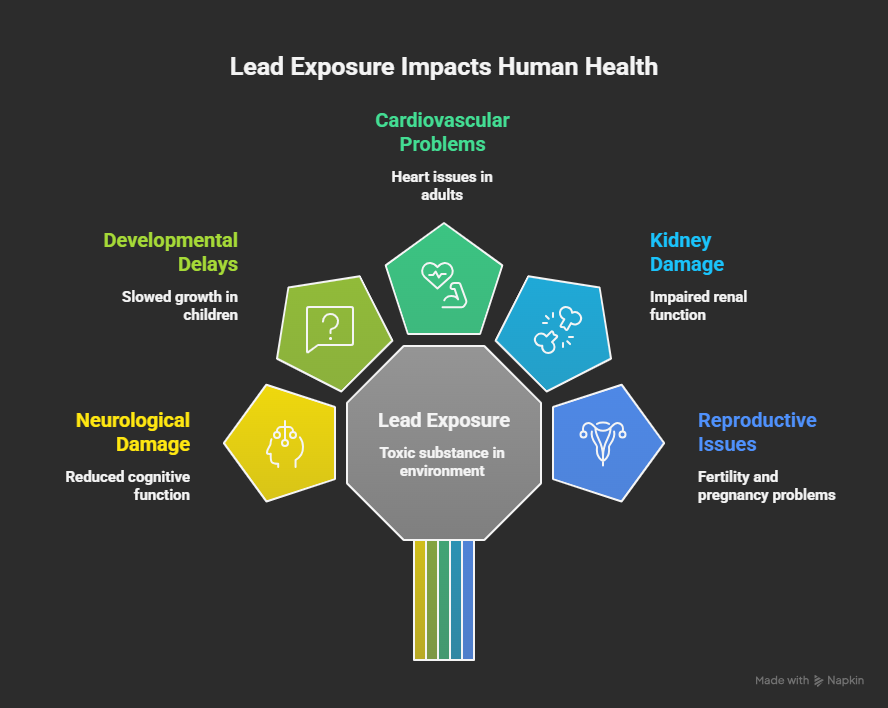
The U.S. Environmental Protection Agency (EPA) states unequivocally that no level of lead exposure is considered safe, particularly for children and pregnant women.
Lead accumulates in the body over time, causing:
Neurological damage and reduced cognitive function
Developmental delays in children
Cardiovascular problems in adults
Kidney damage
Reproductive issues
The Centers for Disease Control and Prevention (CDC) reports that even low-level lead exposure can reduce IQ scores in children and cause behavioral problems.
For adults, chronic low-level exposure contributes to hypertension and decreased kidney function.
How Lead Leaches from Dishware
Lead doesn’t simply sit inert in your china. It leaches into food and beverages through several mechanisms:
Acidic foods and beverages (citrus, tomatoes, vinegar, wine, coffee) are particularly effective at extracting lead from glazes.
A 2012 study published in Environmental Research demonstrated that acidic substances significantly accelerate the release of lead from vintage ceramics.
Heat increases leaching rates. Hot beverages and heated foods extract more lead than room-temperature items.
Time matters—the longer food contacts the surface, the more lead transfers. Storing food overnight in vintage china dramatically increases exposure compared to serving it briefly.
Surface deterioration makes leaching worse. Crazing (fine cracks in glaze), chips, and worn decorations expose more lead to food contact.
Vintage Dishes That Contain Lead Poisoning
Myott China isn’t alone in the lead content concern. Understanding which categories of vintage dishware typically contain lead helps contextualize Myott’s risk profile:
Depression-Era American Glass and Pottery (1920s-1940s): While many ask if Federal Glass is safe to use, these concerns extend to all Depression-era dishware. Colored glazes often contained lead and cadmium compounds.
European Fine China with Decorative Elements: Manufacturers across Europe, including questions about whether Rosenthal china was free from lead and used lead-based materials in decorative elements well into the 20th century.
American Pressed Glass: Similar to concerns about whether Indiana Glass is free from lead, vintage American glassware sometimes contained lead in colored formulations or decorative enamels.
Mexican Pottery: Traditional glazing methods often use high-lead glazes, a practice that continued into the 21st century in some regions.
Asian Export Porcelain: Particularly pre-1990 pieces with bright overglaze decoration often test positive for lead and cadmium.
Restaurant-Ware and Institutional China: Heavy-duty vintage restaurant china frequently used lead-based glazes for durability.
Commemorative and Souvenir Plates: Decorative plates from any era before 2000 should be considered high-risk for food use.
The common thread? Virtually all vintage dishware manufactured before the 1980s-1990s should be suspected of containing lead until proven otherwise through testing.
Myott china, produced during the peak era of lead use in British pottery (1898-1991), falls squarely within this risk category.
When Did They Stop Using Lead in China Dishes?
The transition away from lead in ceramic dishware wasn’t a single moment but a gradual evolution that varied by country, manufacturer, and product type.
United Kingdom Timeline (Relevant to Myott)
Pre-1970: Lead-based glazes were essentially universal in British pottery. The only exceptions were specialized industrial ceramics or expensive studio pottery intentionally made lead-free.
1970-1980: The British Pottery Manufacturers’ Federation began voluntary lead reduction initiatives following growing health concerns. However, compliance was inconsistent, and many manufacturers continued traditional formulations.
1981: The UK implemented the Glazed Ceramic Ware Regulations, establishing the first mandatory lead release limits. These initial standards were relatively lenient by modern measures.
1988: Stricter amendments reduced allowable lead release levels significantly.
1992: European Union Directive 84/500/EEC harmonized standards across Europe, establishing stringent limits on lead and cadmium release from ceramic articles intended for food contact.
2005: Even tighter EU regulations (Commission Directive 2005/31/EC) further restricted heavy metals in consumer products.
Myott ceased production in 1991, just one year before the EU’s comprehensive harmonized standards took full effect.
This timing means that even the newest Myott pieces were manufactured under standards far less stringent than today’s regulations.
United States Timeline
The U.S. followed a different trajectory:
1971: The FDA first established action levels for lead release from ceramic ware.
1980s: California’s Proposition 65 required warnings on products containing lead.
1990s: The FDA strengthened standards and increased enforcement.
2009: The Consumer Product Safety Improvement Act dramatically reduced allowable lead levels in children’s products.
The Critical Takeaway
If your Myott china was manufactured before 1990 (which includes the vast majority of surviving pieces), it was produced under regulations that permitted lead levels now considered unsafe.
Even late-1980s Myott china predates the most stringent standards.
Bottom line: The pottery industry didn’t voluntarily abandon lead until regulations forced the transition. Economics and tradition kept lead in use as long as legally permissible.
Does Myott China Contain Lead?
Now for the answer you’ve been seeking: Yes, most Myott china almost certainly contains lead, particularly in glazes and decorative elements. The amount and accessibility of that lead vary by production era, pattern, and condition.
Let’s break this down by time period and type:
Pre-1970s Myott China (Highest Risk)
Myott china manufactured before 1970 was produced during an era when lead-based glazes were standard throughout the British pottery industry.
These pieces have the highest probability of significant lead content:
Glazes: The clear glaze over the clay body likely contains lead oxide as a flux. This was a universal practice and made glazes glossy, durable, and economical.
Decorative Elements: Hand-painted details, transfer decorations, and particularly any gold, silver, or metallic trim almost certainly contain substantial lead.
Bright colors, especially reds, oranges, and yellows, may also contain cadmium, another toxic heavy metal.
Risk Level: Consider all pre-1970 Myott china to contain significant lead unless professional testing proves otherwise. These pieces should not be used for food or beverages without testing.
1970s-1980s Myott China (Moderate to High Risk)
This transitional period saw some industry reforms, but compliance was inconsistent:
Variable Lead Content: Some manufacturers began reducing lead voluntarily, while others continued traditional formulations until forced to change.
Without manufacturer records (which rarely survive), it’s impossible to know Myott’s specific practices year-by-year.
Decorative Elements Still High-Risk: Even if base glazes began incorporating less lead, decorative elements—especially metallic lustres and bright colors—likely still contained lead compounds. The technology to achieve these effects, lead-free, wasn’t commercially viable until later.
Risk Level: Treat 1970s-1980s Myott china with the same caution as earlier pieces. The lead reduction (if any occurred) wasn’t sufficient to meet modern safety standards.
Late 1980s-1991 Myott China (Moderate Risk)
The final years of Myott production coincided with tightening UK regulations:
Some Lead Reduction Likely: The 1988 amendments to UK ceramic regulations may have prompted some formulation changes.
However, Myott ceased operations in 1991, before the comprehensive EU standards of 1992 took effect.
Still Predates Modern Standards: Even the newest Myott china predates current stringent regulations. These pieces may contain less lead than earlier production but still more than modern standards permit.
Risk Level: Later Myott pieces pose lower risk than earlier ones, but should still be tested before use for food or beverages. Don’t assume “newer” means “safe.”
Pattern-Specific Considerations
Within any production era, certain Myott patterns carry a higher risk:
Highest Risk – Patterns with Metallic Trim:
Chelsea Bird (gold trim and hand-painted details)
Bermuda (gold accents)
Any pattern with gold, silver, platinum, or copper lustre
Patterns with extensive gilding
Gold and metallic lustres were almost universally lead-based until the late 1990s. These decorative elements wear directly where lips and food contact them, maximizing exposure.
High Risk – Brightly Colored Patterns:
Patterns featuring reds, oranges, or yellows
Heavily decorated floral patterns
Patterns with overglaze decoration (applied on top of the clear glaze)
Bright pigments historically relied on lead and cadmium compounds to achieve color intensity and permanence.
Moderate Risk – Transfer Patterns:
Country Life (transfer-printed scenes)
Staffordshire Bouquet (transfer florals)
Simpler printed patterns
Transfer decorations typically contain less lead than hand-painted elements, but aren’t lead-free.
Lower Risk – Plain Patterns:
Plain white ironstone with minimal decoration
Simple patterns with underglaze decoration (beneath the clear glaze)
Later production pieces without metallic trim
These pieces may still have lead in the clear glaze but lack the high-lead decorative elements.
The Scientific Evidence
While comprehensive testing data specific to Myott China is limited (the company’s closure predates most consumer testing initiatives), studies of comparable British pottery provide strong evidence:
Tamara Rubin, founder of Lead Safe Mama and a prominent consumer advocate, has tested thousands of vintage ceramic pieces using XRF (X-ray fluorescence) technology.
Her testing of British pottery from Myott’s production era consistently reveals lead levels ranging from 20,000 to over 100,000 parts per million (ppm) in decorative elements.
For context, the FDA considers anything over 90 ppm on food contact surfaces to be hazardous.
One related scientific study on lead migration from ceramicware with various food simulants is documented in the Journal of Food Science and Engineering (2012), which found that acidic simulants like acetic acid and citric acid extract lead from ceramic glazes significantly, with some samples releasing lead amounts above safety thresholds depending on glaze and pH conditions.
The UK’s Food Standards Agency has issued warnings that vintage ceramics manufactured before the EU harmonization in 1992 may contain lead levels exceeding current safety limits.
Specifically, older decorated ceramic items might contain unsafe lead levels that could leach into food and drink, posing health risks.
This is supported by information stating that before 1971, there were no limits on lead in ceramics, and stricter standards were introduced in 1992, so ceramics made before this time may not meet current safety requirements.
The general advice is to avoid using vintage ceramics for food unless they have been tested and proven to be lead-free.
In summary, the UK Food Standards Agency cautions that ceramic items manufactured before 1992 could exceed current lead limits, supporting the warning phrase that “older decorated ceramic items” may contain levels of lead that exceed current limits in official messages and consumer advice.
Does Royal Doulton China Contain Lead?
To provide additional context, collectors often ask: Does Royal Doulton china contain lead?
Royal Doulton, a premium British manufacturer operating during the same era as Myott, faces similar concerns.
Despite being a higher-end brand, Royal Doulton pieces from before the 1990s regularly test positive for lead, particularly in decorative elements and metallic trims.
The lesson? Even prestigious British pottery contains lead when manufactured during the lead-glaze era.
Myott, as a mid-market manufacturer, would have used similar or more economical (and thus more lead-dependent) production methods.
The Definitive Answer
Without testing, you must assume your Myott china contains lead. This is particularly true for:
Any piece manufactured before 1990
Any piece with decorative elements, especially metallic trim
Any piece showing wear, damage, or deterioration
The only way to know your specific pieces’ lead content with certainty is through professional testing.
How to Test Your Myott China for Lead
Since we’ve established that most Myott china likely contains lead, the crucial question becomes: How do you determine if your specific pieces are safe?
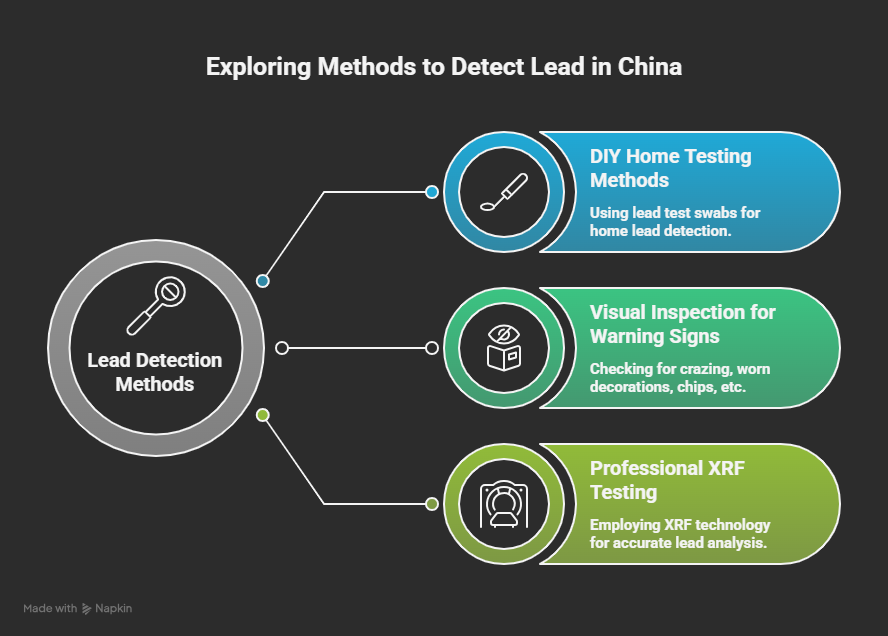
DIY Home Testing Methods
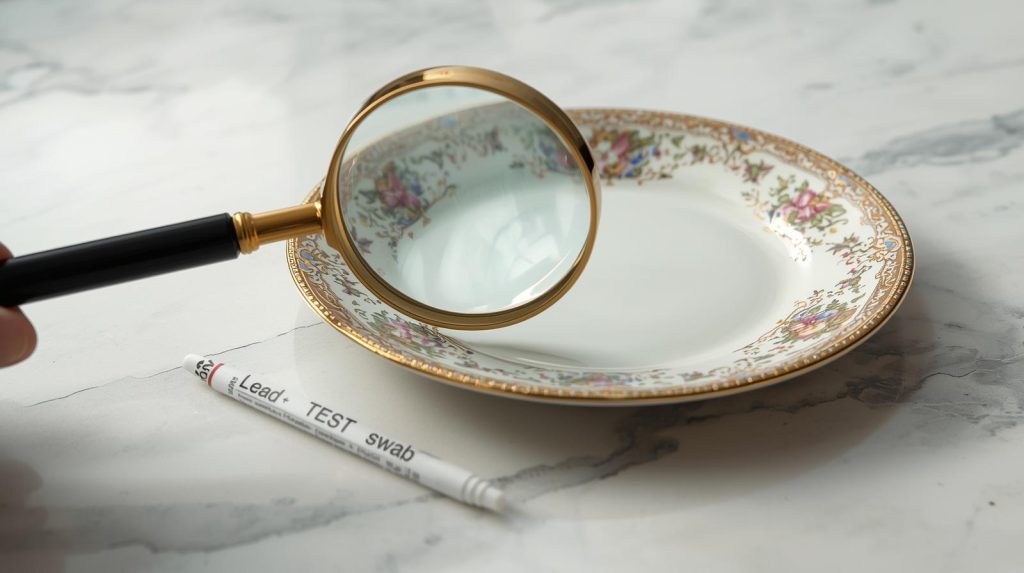
Lead Test Swabs (3M LeadCheck and Similar Products)
These chemical swabs, available at hardware stores and online for $10-25 per pack, change color when they contact lead:
How to Use in China:
Activate the swab according to package directions (usually involves crushing inner capsules)
Rub the moistened swab on the area you’re testing for 30 seconds
Wait for the color change (usually pink/red indicates lead presence)
Test multiple locations on each piece
Where to Test:
Rim edges where lips contact (highest priority)
Any gold, silver, or metallic decorative elements
Brightly colored painted or printed areas
Areas with visible crazing or wear
The back/bottom stamp area (for baseline comparison)
Limitations of Swabs:
Detect surface lead, but may miss lead deep in the glaze
Can give false negatives on very smooth, intact glazes
Cannot quantify the amount of lead (just yes/no detection)
Won’t detect lead that hasn’t yet leached to the surface
Best used on decorative elements where lead is most accessible
Verdict: Swabs are useful for detecting lead in decorative elements, but shouldn’t be your only assessment method for pieces you plan to use regularly.
Visual Inspection for Warning Signs
Before or alongside chemical testing, examine your Myott china carefully:
Crazing: Fine cracks in the glaze that look like spider webs indicate glaze breakdown. Crazed pieces are more likely to leach whatever’s in the glaze, including lead. Hold pieces up to light to see crazing clearly.
Worn Decorations: Gold trim that’s partially worn away, faded colors, or decorations with missing patches indicate the protective glaze has broken down, exposing lead-containing materials.
Chips and Damage: Any break in the glaze surface exposes the clay body and inner glaze layers. These damaged areas can leach lead more readily.
Unusual Texture: If areas feel rough, gritty, or sandy rather than smooth, the glaze has deteriorated.
Color Changes: If colors have faded unevenly or show rainbow-like iridescence, chemical changes in the glaze are occurring.
Any of these warning signs means the piece should not be used for food, regardless of test results, because deterioration increases lead leaching risk.
Professional XRF Testing
X-ray fluorescence (XRF) testing is the gold standard for detecting lead and other heavy metals in ceramics:
What XRF Testing Provides:
Precise measurement of lead content in parts per million (ppm)
Detection of other concerning metals (cadmium, mercury, arsenic)
Non-destructive testing (doesn’t damage your china)
Testing of both surface and subsurface layers
Quantifiable results you can compare to safety standards
Where to Get XRF Testing:
Consumer product testing laboratories (ProLab, Environmental Testing and Research Laboratories)
Some local health departments offer testing services
Lead inspection companies (primarily serve homes but may test dishware)
Antique appraisers who’ve invested in XRF equipment
Some universities with environmental health programs
Cost: Expect to pay $30-75 per item for professional XRF testing, with discounts often available for multiple pieces.
When Professional Testing Is Worth It:
You want to use the china regularly for special occasions
The set has significant monetary value (rare patterns, complete sets)
You’re serving food to vulnerable populations (children, pregnant women, the elderly)
Home tests gave ambiguous results
You’re selling pieces and want to certify their safety status
The sentimental value justifies the testing investment
How to Interpret Results:
The FDA’s current standard for lead release from ceramic ware is:
Small hollowware (cups): Maximum 0.5 µg/mL (micrograms per milliliter)
Large hollowware (bowls, pitchers): Maximum 2.5 µg/mL
Flatware (plates): Maximum 3.0 µg/mL
However, XRF testing measures lead content in the material (ppm) rather than lead release into food (µg/mL). As a general guideline:
Below 90 ppm: Generally considered acceptably low for modern products
90-600 ppm: Gray area; may exceed release limits depending on use
Above 600 ppm: Almost certainly exceeds safe release levels
Above 10,000 ppm: Dangerously high; never use for food
Many vintage Myott pieces with decorative elements test between 10,000-100,000+ ppm in the decorated areas.
Identifying High-Risk Myott Pieces Without Testing
If testing isn’t immediately feasible, you can assess relative risk by examining your pieces:
Highest Risk (Assume Unsafe for Food):
Any gold, silver, platinum, or copper metallic trim or decoration
Hand-painted colored decorations, especially bright reds, oranges, yellows
Pieces showing any damage, crazing, or wear
Pieces manufactured before 1970 (check backstamp dating guides)
Heavily ornamented patterns with multiple colors and decorative techniques
Moderate Risk (Test Before Using):
Simple transfer-printed patterns without metallic elements
Pieces from the 1970s-1980s with minimal decoration
Plain colored glazes (single color, no decoration)
Pieces in excellent condition with no visible wear
Lower Risk (Still Test If Possible):
Plain white ironstone with no decoration beyond the basic glaze
Very late production pieces (1988-1991) with simple designs
Pieces with exclusively underglaze decoration (decoration beneath the clear glaze layer)
Remember: “Lower risk” doesn’t mean “no risk.” Testing is always preferable to assumption.
Safety Guidelines for Using Myott China
If you’ve tested your Myott china or decided to use certain pieces despite uncertainty, follow these guidelines to minimize lead exposure:
If Test Results Confirm Significant Lead Presence
Display Only – No Food Contact:
When tests reveal lead levels above safe thresholds, your china should retire from food service:
Display pieces in china cabinets, on plate rails, or in shadow boxes
Use as purely decorative elements in tablescapes (with modern dishes for actual food)
Handle with care and wash your hands after touching
Keep away from children who might put pieces in their mouths
Consider clear acrylic stands for valuable display pieces
Document your collection with photos for insurance purposes
Safe Display Methods:
Plate hangers with protective backing (not bare metal against china)
Glass-front cabinets to minimize dust and handling
Proper spacing to prevent pieces from touching and chipping
Stable shelving that won’t sag or vibrate
Climate-controlled environment if pieces are valuable (avoid extreme temperature/humidity changes)
If Using Lead-Reduced or Uncertain Pieces
If you choose to use Myott china that hasn’t been tested or shown borderline results, apply the strictest safety protocols:
Best Practices for Minimal Risk:
Avoid Acidic Foods Entirely: Never use Myott china for:
Citrus fruits and juices (oranges, lemons, limes, grapefruit)
Acidic substances dramatically increase lead leaching. One study found that acidic foods could extract 10-100 times more lead than neutral foods from the same dish.
Avoid Heat: Never use Myott china for:
Hot beverages (coffee, tea, hot chocolate)
Soups or stews
Foods heated in or served directly from the dish
Anything above room temperature
Heat accelerates lead release from glazes. Even “warm” (not hot) foods pose an increased risk.
Limit Contact Time:
Serve food immediately before eating; don’t let it sit in the china
Never store food in Myott china (no leftovers, no overnight storage)
Use for brief serving only—transfer food from serving dishes to modern plates for eating
Don’t soak Myott china during washing (quick wash and rinse only)
Appropriate Uses:
Dry cookies, crackers, or candies are served briefly
Decorative centerpiece for table (no food contact)
Short-term display of non-acidic, cold items
Never Use For:
Children’s food or dishes
Pregnant women
Daily meals (occasional use only)
Food storage of any kind
Commercial food service
Cleaning Methods That Won’t Increase Lead Exposure
Proper cleaning protects both the china and your health:
Hand Wash Only: Never put Myott china in the dishwasher
Harsh detergents can degrade glazes
High heat and water pressure accelerate deterioration
The dishwasher environment is too aggressive for vintage china
Gentle Cleaning:
Use mild dish soap (not harsh degreasers)
Lukewarm water (not hot)
Soft sponge or cloth (never abrasive scrubbers)
Quick washing and rinsing (don’t soak)
Dry Immediately:
Hand dry with a soft towel
Don’t air-dry (can cause water spots and mineral buildup)
Check for any deterioration during each washing
Avoid Harsh Chemicals:
No bleach, ammonia, or harsh cleansers
No abrasive powders or pastes
No automatic dishwasher detergent
No scouring pads
Wash Hands After Handling: Even if you’re not using the china for food, wash your hands after touching pieces, especially if handling decorative elements or pieces with visible wear.
Storage Recommendations:
Store plates vertically with soft padding between them (felt or paper towels)
Don’t stack too many pieces (weight can cause stress fractures)
Keep in a dry environment (moisture promotes deterioration)
Avoid temperature extremes
Store cups hanging or nested with padding (not stacked directly)
Keep away from children’s access
When Display Is the Only Safe Option
Sometimes the wisest choice is to preserve your Myott china without using it for food:
Indicators That Display-Only Is Best:
Any test results showing lead above 10,000 ppm
Extensive gold or metallic decoration
Rare or valuable patterns
Pieces with significant sentimental value that can’t be replaced if damaged
Any visible deterioration, damage, or crazing
If you have young children in the home
If anyone in your household is pregnant or immunocompromised
Creative Display Ideas:
Wall-mounted plate displays in the kitchen or dining room
China cabinet with proper lighting
Rotating seasonal displays
Grouped by color or pattern in open shelving
Integrated into bookcases as decorative accents
Used as serving pieces at the table (with food in modern bowls placed on top)
Photo documentation for digital display if physical space is limited
Myott China Patterns and Lead Risk Assessment
Understanding specific Myott patterns helps collectors assess their pieces’ relative risk. While testing remains the only definitive answer, certain patterns warrant extra caution:
Risk Factors: Gold decoration, bright colors typical of lead/cadmium pigments
Recommendation: Test before use; avoid acidic foods entirely
Meakin (Collaboration Patterns)
Features: Various patterns produced in collaboration with Alfred Meakin
Production Era: Variable
Risk Factors: Often features elaborate decoration and gilt
Recommendation: Examine for metallic elements; test if present
Any Pattern with Extensive Gilding
Gold bands around rims
Gold handles or finials
Gold decorative elements throughout
Recommendation: Assume gold contains lead; display only
Moderate Risk Patterns
Country Life
Features: Transfer-printed rural English scenes, typically brown or black on cream
Production Era: Mid-20th century
Risk Factors: Transfer printing (moderate lead concern), simpler decoration than some patterns
Recommendation: Test if using regularly; may be safer than heavily decorated patterns, but not risk-free
Staffordshire Bouquet
Features: Floral transfer patterns, moderate decoration
Production Era: Mid-20th century
Risk Factors: Colored transfers may contain lead compounds
Recommendation: Inspect for condition; test if showing any wear
Finlandia
Features: Modernist geometric pattern, typically blue on white
Production Era: 1960s-1970s
Risk Factors: Later production (potentially less lead), but still predates strict regulations
Recommendation: May be lower risk, but test before regular use
Lower Risk Patterns (Generally Simpler)
Plain White Ironstone
Features: Minimal or no decoration, simple shapes
Production Era: Throughout company history
Risk Factors: Clear glaze may contain lead, but lacks high-risk decorative elements
Recommendation: Still test if possible, but the lowest risk category for Myott
Simple Banded Patterns
Features: Single-color bands or lines, minimal decoration
Production Era: Variable
Risk Factors: Depends on whether bands are underglaze (lower risk) or overglaze (higher risk)
Recommendation: Examine closely; test if bands are raised or metallic
Late Production Plain Patterns
Features: Simple designs from 1980s-1991
Production Era: Final years of production
Risk Factors: May reflect some lead reduction efforts, but still predate comprehensive standards
Recommendation: Better than early pieces but still warrants testing
Important Disclaimers
Pattern identification doesn’t replace testing: These assessments provide general guidance based on decorative techniques and production eras, but individual pieces vary.
A “lower risk” pattern could still test high for lead, while an exceptional “higher risk” piece might test lower than expected.
Condition matters as much as pattern: A heavily decorated pattern in perfect condition may be safer than a plain pattern with extensive crazing and wear. Always factor the condition into your risk assessment.
Backstamps help with dating: Learn to identify Myott backstamps from different eras. Earlier marks (pre-1950) generally indicate higher risk; later marks (1980s-1991) indicate somewhat lower risk.
However, all pre-1992 pieces should be approached with caution.
Alternatives and What to Do With Unsafe Myott China
Discovering that your beloved Myott china contains lead doesn’t mean you must discard treasured family heirlooms. Several alternatives let you honor these pieces while protecting your health:
Modern Lead-Free Alternatives with Vintage Aesthetic
If you love the Depression-era look but want guaranteed safety:
Anthropologie (vintage-inspired patterns, modern safety standards)
Williams Sonoma (some heritage collection pieces)
Replacements, Ltd. (modern pieces in vintage styles)
Etsy artisans (custom reproduction patterns on certified lead-free blanks)
Benefits: Visual appeal of vintage with certifiable safety. These pieces meet current FDA standards and can be used freely.
Drawbacks: Won’t have the authenticity, history, or collectible value of genuine Myott pieces.
Repurposing Unsafe Pieces for Non-Food Uses
Your Myott china can serve beautiful purposes beyond dining:
Decorative Uses:
Bathroom soap dishes or trinket holders
Vanity organizer for jewelry or cosmetics
Office supply holders (paper clips, rubber bands)
Craft room storage (buttons, beads, small supplies)
Garden saucers for small potted plants (use with liner)
Candle platforms (tea lights or votives—not touching wax directly to preserve finish)
Bird feeders or garden decoration (outdoor use, where lead won’t contact human food)
Artistic Repurposing:
Mosaic tile projects (broken pieces)
Jewelry (small chips set in resin)
Garden stepping stones (embedded in concrete)
Picture frame decoration
Shadow box assemblages
Home Decor:
Wall art installations
Coffee table styling
Bookshelf accents
Seasonal vignettes and tablescapes (decorative only)
Safe Disposal of Lead-Containing China
If pieces are damaged beyond display value or you prefer not to keep them:
Proper Disposal Methods:
Check with local hazardous waste facilities (some accept lead-containing items)
Wrap broken pieces securely to prevent injury to waste handlers
Never put intact lead-containing dishes in donation bins (could endanger others)
Some municipalities have special collection days for household hazardous waste
What NOT to Do:
Don’t donate to thrift stores without disclosure (exposes others to lead risk)
Don’t place intact dishes in regular trash, where someone might retrieve them
Don’t use broken lead-containing china for crafts that children will access.
Frequently Asked Questions About Myott China and Lead Safety
Does all Myott china contain lead?
Not necessarily in the same amounts, but virtually all Myott china manufactured before 1990 should be assumed to contain some lead unless testing proves otherwise.
Plain pieces may have lead only in the clear glaze, while decorated pieces almost certainly have lead in decorative elements (gold trim, colored paints, transfers).
The only way to know your specific piece’s lead content is through testing.
Pieces from Myott’s final production years (1988-1991) may contain less lead than earlier items, but they still predate comprehensive EU safety standards implemented in 1992.
How can I tell how old my Myott china is?
Examine the backstamp on the bottom of each piece. Myott used different marks throughout its history:
Early marks (1900-1930s): Elaborate crests, ornate lettering, sometimes “Royal Staffordshire” designation
Mid-century marks (1940s-1960s): Simplified marks, often “Myott Son & Co” in simpler fonts
Later marks (1970s-1991): May include pattern names, “Made in England,” registration numbers
Pattern-specific marks: Some popular patterns had dedicated backstamps.
Online backstamp databases and collector guides provide detailed dating information. Generally, more elaborate marks indicate earlier production.
The presence of pattern names and country-of-origin marks suggests later production (post-1960s).
Can I put Myott china in the dishwasher?
Absolutely not. Even if lead weren’t a concern, vintage Myott china should never go in the dishwasher:
Harsh detergents degrade glazes and accelerate deterioration
High heat causes thermal stress and increases lead leaching
Water pressure can damage delicate decorations and cause chips
An alkaline environment promotes “sick glass” syndrome and chemical breakdown
Always hand-wash Myott china gently with mild soap and lukewarm water, then dry immediately.
Dishwasher damage is often irreversible, ruining both the piece’s appearance and safety profile.
Is Myott China safe for microwave use?
No, never microwave Myott china or any vintage dishware:
Rapid heating increases lead leaching dramatically
Thermal stress can cause invisible cracks that compromise the piece
Vintage china wasn’t designed for microwave use (technology didn’t exist during most of Myott’s production)
Metallic decorations (gold trim) will spark and damage both the dish and the microwave
Even if lead weren’t present, microwaving vintage china risks destroying irreplaceable family heirlooms. Always use microwave-safe modern dishes.
Conclusion: Making Informed Decisions About Your Myott China
Yes, virtually all Myott china manufactured during the company’s 1898-1991 operation contains some level of lead, particularly in glazes and decorative elements.
The amount varies by production era, pattern, and decoration type, but all pre-1992 Myott pieces should be treated with caution until testing proves otherwise.
This doesn’t diminish the beauty, craftsmanship, or historical significance of your collection. These pieces represent nearly a century of British pottery tradition and likely hold precious family memories.
The key is balancing appreciation with safety: test pieces you wish to use, follow strict safety protocols if using untested items, or choose display-only to eliminate all risk.
Your grandmother’s Myott china can remain a treasured connection to the past without compromising your family’s future health.
Whether displayed in a cabinet, used occasionally with proper precautions, or preserved for future generations, informed decisions let you honor both heritage and health.
Disclaimer: This article provides general information about lead in Myott China based on historical manufacturing practices, published research, and testing data from comparable vintage ceramics.
It is not a substitute for professional testing of your specific pieces or medical advice regarding lead exposure.
When uncertainty exists about any vintage dishware’s safety, consult certified testing laboratories and follow guidance from healthcare providers.
The author and publisher assume no liability for decisions readers make regarding vintage china. Individual pieces may vary significantly in lead content.
Testing is the only definitive method to determine your specific items’ safety profile.
You’ve just inherited your grandmother’s beautiful glass dessert dishes, or perhaps you scored an amazing find at an estate sale, a complete set of vintage Federal Glass in that gorgeous amber color.
But before you serve your famous trifle in these treasured pieces, a nagging question keeps you up at night: Is Federal Glass safe to use?
You’re not alone in this concern. With growing awareness about lead and other heavy metals in vintage dishware, collectors and homeowners are rightfully questioning whether their beloved Federal Glass pieces pose health risks.
The good news? Federal Glass safety isn’t a simple yes-or-no answer, but with the right information, you can make an informed decision about whether to use, display, or retire your vintage pieces.
In this comprehensive guide, we’ll explore the safety concerns surrounding Federal Glass, examine whether it contains lead, and provide actionable steps to determine if your specific pieces are safe for food contact.
What is Federal Glass? A Brief History
The Federal Glass Company operated in Columbus, Ohio, from 1900 to 1979, making it one of America’s most prolific glassware manufacturers during the Depression era and beyond.
During its nearly 80-year run, Federal produced everything from affordable everyday dishes to decorative pieces that millions of American families relied on.
Federal Glass is perhaps best known for its Depression-era patterns, including Colonial (“Knife and Fork”), Georgian (also called “Lovebirds”), Madrid, Mayfair, Sharon (“Cabbage Rose”), and Normandie.
These patterns came in various colors—pink, amber, green, crystal clear, and occasional blue pieces, making them highly collectible today.
What makes Federal Glass so common in homes today? The company produced massive quantities of affordable glassware, often distributed as promotional items at gas stations, movie theaters, and grocery stores.
Your grandmother likely collected these pieces one by one during weekly shopping trips, which is why complete sets are still found in attics and estate sales across America.
Federal Glass pieces typically feature distinctive patterns, maker’s marks (often an “F” within a shield), and characteristic Depression-era styling with geometric or floral motifs pressed into the glass surface.
The Main Safety Concerns with Federal Glass
Before we answer whether Federal Glass is safe, let’s understand what potential hazards you or collectors worry about:
Lead Content in Glass
Lead has historically been added to glass to enhance clarity, weight, and brilliance, creating what is known as “lead crystal.”
However, lead can leach from glass into food and beverages, particularly when exposed to acidic substances, heat, or prolonged storage.
According to the Environmental Protection Agency (EPA), even low-level lead exposure can cause health problems, particularly in children and pregnant women, affecting brain development and causing various neurological issues.
The critical question collectors ask: Does vintage Federal Glass contain lead? The answer depends on the specific type and pattern.
Most standard Federal Glass produced for everyday use was made from soda-lime glass, which typically does not contain lead.
Federal Glass was primarily mass-produced, affordable tableware rather than premium lead crystal.
However, some decorated pieces, particularly those with painted or metallic trim, may have lead-containing decorative elements.
Uranium and Manganese in Colored Glass
Many colored vintage glass pieces, including some Federal Glass items, contain small amounts of uranium oxide or manganese dioxide.
These elements were used to create distinctive colors. Uranium created vibrant yellow-green “Vaseline glass,” while manganese produced pink and amber hues, just like in Fiesta designs linked to its radioactivity concerns.
While the word “uranium” understandably causes alarm, the radioactivity in uranium glass is extremely low.
The U.S. Nuclear Regulatory Commission (NRC) states that uranium glass typically contains up to about 2% uranium by weight, and the radiation emitted by such glass is very low, comparable to natural background radiation.
According to the NRC publication NUREG-1717, the radiation exposure from uranium glass is minimal, with estimated effective doses around 4 millirems (mrem) per year, which is approximately 1 to 2% of the average American’s annual radiation exposure.
This level of radiation is considered negligible and safe under normal handling and display conditions.
Surface Deterioration and Cloudiness
Over decades, glass can develop “sick glass” syndrome—a cloudy, sometimes iridescent appearance caused by alkaline elements leaching from the glass surface.
This deterioration, while aesthetically unpleasing, can indicate that the glass structure is breaking down.
When glass deteriorates, any trace elements within it become more likely to leach into food or beverages.
Cadmium in Decorative Elements
Some vintage glassware features painted decorations, gold or silver trim, or colored enamels.
These decorative elements sometimes contained cadmium or lead, particularly in red, orange, and yellow colors.
Here’s the straightforward answer you need: Most plain, undecorated Federal Glass in good condition is generally safe for occasional use, but with important caveats.
Let’s break this down by category:
Clear and Plain Federal Glass (Generally Safe)
Standard clear Federal Glass patterns like Colonial, Georgian, and similar pressed glass patterns were manufactured using basic soda-lime glass formulations.
These pieces typically do not contain significant lead content. The Federal Glass Company focused on mass-market, affordable products rather than premium lead crystal, which was more expensive to produce.
This makes plain Federal Glass pieces substantially different from contemporary European lead crystal or more recent concerns about lead in decorative ceramics (similar to questions collectors have about whether Rosenthal china contains leador if Myott china contains lead.
Colored and Decorated Pieces (Use with Caution)
Colored Federal Glass—particularly pink, amber, green, and blue pieces—requires more careful consideration.
While the glass base is likely lead-free, the colorants themselves warrant attention:
Pink and Amber pieces: Often colored with manganese or selenium compounds, generally considered safe but best avoided for acidic foods or hot liquids.
Green and yellow-green pieces: May contain uranium oxide (creating that distinctive glow under UV light), which poses minimal radiation risk, but some collectors prefer display-only use.
Painted or gilded decorations: Any Federal Glass with painted designs, metallic trim, or enameled decorations should be treated with caution, as these elements may contain lead or cadmium.
Damaged or Deteriorated Glass (Avoid Food Contact)
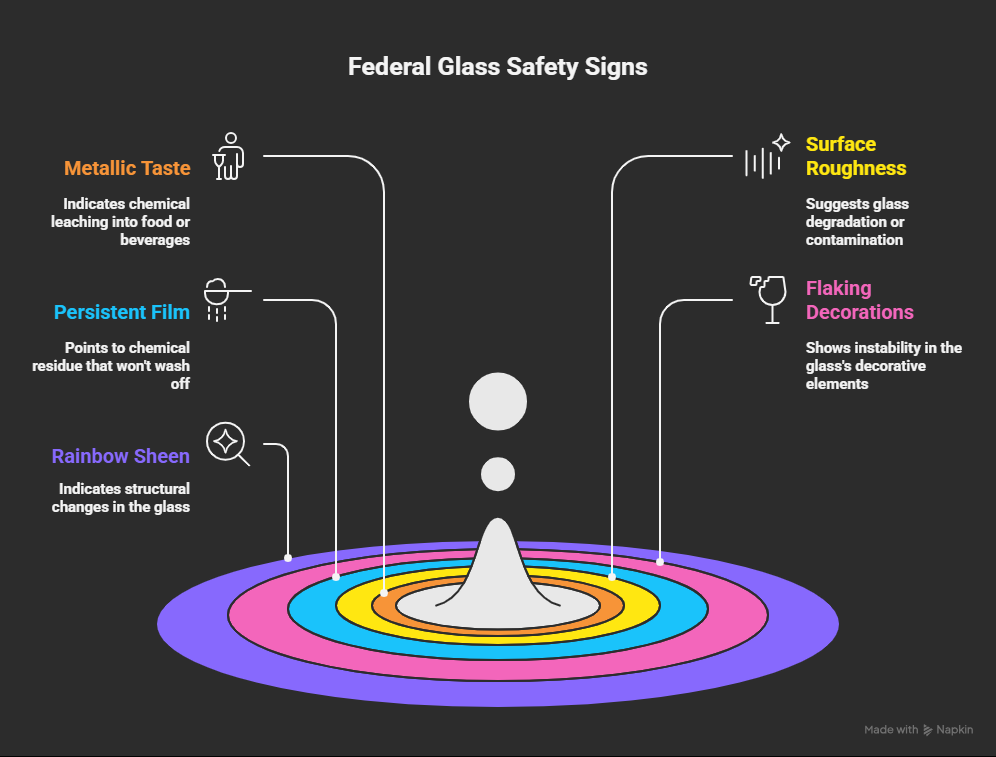
Federal Glass showing any of these conditions should not be used for food or beverages:
Cloudiness or haziness that won’t clean off (“sick glass”)
Flaking, chipping, or rough edges
Iridescent surface film
Visible crazing or internal cracks
Worn or flaking decorative elements
When glass deteriorates, its structure becomes compromised, potentially releasing any elements within the glass matrix.
Additionally, damaged glass can harbor bacteria in microscopic cracks and poses physical injury risks from sharp edges.
FDA Perspective on Vintage Glassware
The FDA’s current standard for lead release from ceramic and glass-ceramic cookware limits leachable lead to 0.5 micrograms per milliliter (μg/mL) for small hollowware.
These standards apply to new products and ensure ceramic ware sold in the U.S. meets these safety limits.
However, vintage dishware, such as Federal Glass produced before these regulations came into force, has generally not been retroactively tested by the FDA to meet these modern standards.
Vintage ceramics often contain higher lead levels because lead was historically used in glazes and paints for durability and vibrant colors, especially before 1971, when no federal limits existed.
Although the FDA began enforcing limits on lead in ceramics in 1971 and has increasingly tightened these limits since then, older items remain outside these norms, posing potential lead exposure risks when used for food or drink.
Therefore, vintage dishware typically lacks verification to modern lead-release safety standards, and consumers should be cautious about their use with food.
How to Determine If Your Federal Glass Is Safe
Rather than making blanket assumptions, here’s how to assess your specific Federal Glass pieces:
Visual Inspection Checklist
Examine each piece carefully:
✓ Surface Condition: Is the glass clear and smooth, or cloudy and rough? ✓ Structural Integrity: Any chips, cracks, or internal stress lines? ✓ Decorative Elements: Does it have painted designs, metallic trim, or enameling? ✓ Color Intensity: Unusually vibrant colors (especially yellows and greens) may indicate uranium content ✓ Pattern Clarity: Are the pressed patterns sharp, or worn and degraded?
Any piece failing these visual checks should be relegated to display-only status.
Testing Methods You Can Use at Home
Lead Test Swabs: Available at hardware stores and online (3M LeadCheck is a popular brand), these swabs change color when they contact lead.
Test any painted or decorated areas, not the plain glass surface itself. Follow the manufacturer’s instructions carefully.
Note that these tests work best on surfaces where lead is accessible; they may not detect lead deep within the glass matrix, but they’ll identify lead in decorative elements where it poses the greatest risk.
UV Blacklight Test: If you suspect uranium glass, a simple UV blacklight (available for $10-20) will cause uranium-containing glass to fluoresce bright green.
While this doesn’t indicate danger, it confirms uranium content, helping you make an informed decision about use versus display.
Remember, uranium glass radiation exposure from normal use is considered negligible by experts.
The Water Test for Cloudiness: Fill the glass with water and observe. Permanent cloudiness that doesn’t improve when wet suggests glass degradation.
This type of deterioration means the glass structure is compromised.
When to Seek Professional Testing
Consider professional laboratory testing (typically $20-50 per item through companies like ProLab or Environmental Testing and Research Labs) if:
You plan to use the pieces regularly for food service
The pieces have significant monetary or sentimental value
You’re serving food to children or pregnant women
The glass has decorative elements you’re uncertain about
You’re selling the pieces and want to certify their safety
Professional X-ray fluorescence (XRF) testing can definitively identify lead, cadmium, and other heavy metals in both the glass matrix and decorative elements.
Warning Signs to Never Ignore
If your Federal Glass exhibits any of these characteristics, do not use it for food or beverages:
A metallic taste when you drink from the glass
Surface roughness that feels gritty or sandy
Film or residue that returns after washing
Flaking decorations that come off during cleaning
Visible rainbow sheen (iridescence) on the surface
These signs indicate chemical instability or degradation that makes the glass unsafe for food contact.
Safe Usage Guidelines for Federal Glass
If you’ve determined your Federal Glass is in good condition and shows no warning signs, follow these guidelines to minimize any potential risks:
Best Practices for Food Contact
Do:
Use for dry foods (cookies, crackers, candies)
Employ for short-term beverage service (serving and consuming within an hour)
Hand wash gently with mild dish soap and warm water
Dry immediately with a soft cloth
Store with padding between stacked pieces
Rotate use among pieces to prevent overuse of individual items
Don’t:
Store acidic foods (citrus, tomatoes, vinegar-based items) for extended periods
Use for hot beverages or foods above 150°F
Put in the dishwasher (harsh detergents and high heat can degrade glass)
Use in the microwave (thermal stress can cause hidden cracks)
Use for overnight or long-term food storage
Serve foods to infants, young children, or pregnant women (apply extra caution)
The Acid Test Principle
Acidic substances are particularly effective at leaching elements from glass and ceramics.
This is why you should avoid using vintage Federal Glass for:
Citrus juices and fruits
Tomato-based sauces
Vinegar dressings
Wine or acidic cocktails
Pickled foods
Carbonated beverages
If you love your Federal Glass amber sherbet dishes, fill them with ice cream rather than citrus sorbet!
Cleaning Methods That Won’t Damage Your Pieces
Proper care extends both the life and safety of Federal Glass:
Hand wash only with lukewarm water and mild, phosphate-free dish soap
Avoid abrasive scrubbers—use soft sponges or cloths
Never use harsh chemicals like bleach, ammonia, or abrasive cleansers
Skip the dishwasher entirely—the combination of harsh detergents, high heat, and water pressure accelerates glass deterioration
Dry immediately to prevent water spots and mineral buildup
Remove stuck-on food by soaking it in warm water rather than scrubbing aggressively.
Some collectors successfully maintain their Federal Glass for decades by treating each piece as they would fine china with respect and gentle handling.
Alternatives and When to Display vs. Use
Sometimes the wisest decision is to admire your Federal Glass without using it for food. Here’s when display is the better option:
When Display Is the Better Choice
Choose display over use if your Federal Glass:
Has significant collector value (rare patterns or colors)
Shows any deterioration or damage
Features decorative elements with uncertain composition
Contains uranium (for collectors who prefer extra caution)
Holds special sentimental value that would be diminished by accidental damage
Will be in a home with young children who might accidentally break pieces
Much like collectors debate whether Indiana Glass contains lead and often choose display over use for valuable pieces, Federal Glass collectors face similar decisions.
Modern Alternatives for Collectors
If you love the Depression-era aesthetic but want guaranteed safety:
Modern Reproductions: Several companies produce Depression glass reproductions in original patterns using modern, lead-free glass formulations.
While purists may scoff, these pieces offer the visual appeal without safety concerns.
Contemporary Colored Glass: Modern colored glassware from companies like Mosser Glass and Fenton (before its 2011 closure) provides similar aesthetics with contemporary safety standards.
Display-Safe Alternatives: Use your vintage Federal Glass for decorative purposes while serving food in modern glass.
Your grandmother’s pink Sharon pattern bowls can hold potpourri, decorative balls, or sit empty as beautiful accent pieces.
Creative Non-Food Uses for Federal Glass
Repurpose your Federal Glass pieces safely:
Vanity organization: Store cotton balls, Q-tips, or jewelry
Office supplies: Hold paper clips, rubber bands, or pushpins
Craft storage: Organize buttons, beads, or sewing notions
Planter bases: Use as cachepots for small potted plants (with a liner)
Candle holders: Place tea lights or votives inside (avoid direct flame contact)
Decorative vignettes: Create seasonal displays on shelves or mantels
Guest room accents: Display with flowers or as elegant soap dishes
These uses let you enjoy your collection daily without any food-safety concerns.
Federal Glass Safety: Making Your Decision
After examining the evidence, here’s how to make an informed decision about your Federal Glass:
The Conservative Approach: If you have any doubts, display your Federal Glass rather than use it.
This zero-risk strategy protects your health while preserving your collection’s value and longevity.
This is especially prudent if you’re serving children, pregnant women, or individuals with compromised immune systems.
The Moderate Approach: Use plain, undecorated Federal Glass in excellent condition for occasional, dry food service or brief beverage use, while avoiding acidic foods, hot liquids, and prolonged storage.
Test any decorated pieces with lead swabs and restrict decorated items to display only.
The Informed Risk Approach: After testing and inspection, use your Federal Glass regularly for appropriate foods, following all safety guidelines about avoiding acids, heat, and deteriorated pieces.
Accept that absolute certainty is impossible with vintage items, but make educated choices based on available evidence.
Remember, even collectors who love their Federal Glass often keep a few special pieces for use while displaying the rest.
There’s no requirement to use every piece you own—sometimes, admiring beauty is enough.
Frequently Asked Questions About Federal Glass Safety
Does all Federal Glass contain lead?
No, most Federal Glass was made from standard soda-lime glass without significant lead content.
Federal Glass Company produced mass-market, affordable tableware rather than premium lead crystal. However, decorative elements (painted designs, metallic trim) on some pieces may contain lead.
The glass base itself, in plain Federal patterns, is generally lead-free.
Can I microwave Federal Glass?
No, you should never microwave Federal Glass or any vintage glassware. Microwaving causes rapid, uneven heating that can create thermal stress, potentially causing the glass to crack or shatter.
Additionally, any trace elements in the glass may become more likely to leach under high-heat conditions. Vintage glass was not designed or tested for microwave use.
How do I test Federal Glass for uranium?
Purchase an inexpensive UV blacklight (wavelength 365-395nm) and shine it on your glass in a dark room. Uranium-containing glass will fluoresce bright yellow-green.
This distinctive glow confirms uranium content, though remember that uranium glass poses minimal health risk.
Many collectors specifically seek this characteristic, as it confirms authentic vintage production.
Is cloudy Federal Glass dangerous?
Cloudiness that won’t wash off indicates “sick glass” syndrome—chemical deterioration where alkaline elements are leaching from the glass structure.
While not immediately dangerous to touch, this compromised glass should not be used for food or beverages because the structural breakdown makes any trace elements more likely to leach, and the surface can harbor bacteria in microscopic irregularities.
What Federal Glass patterns are most valuable?
While value isn’t directly related to safety, the most sought-after Federal Glass patterns include Madrid in amber, Mayfair (“Open Rose”) in pink or blue, Sharon (“Cabbage Rose”) in pink, and rare colors of common patterns.
However, valuable doesn’t mean unsafe—it simply means you might prefer display over use to preserve condition and value.
Should I use Federal Glass for hot coffee or tea?
No, avoid using Federal Glass for hot beverages. Heat increases the likelihood of leaching any trace elements from glass into liquids.
Additionally, rapid temperature changes can cause thermal shock, potentially cracking vintage glass that may have invisible stress fractures from decades of use.
How can I tell if my Federal Glass has lead in the decorations?
Purchase lead test swabs (like 3M LeadCheck) and test any painted, enameled, or metallic decorative elements.
These swabs turn pink or red when they contact lead. Test multiple spots on decorated areas.
While these tests won’t detect lead deep within the glass matrix, they’ll identify lead in surface decorations where it poses the greatest risk to users.
Conclusion: Balancing Beauty, History, and Safety
Federal Glass represents a tangible connection to American history—pieces that graced millions of tables during challenging economic times and became treasured heirlooms passed through generations.
The question of whether Federal Glass is safe to use doesn’t have a universal answer because “Federal Glass” encompasses hundreds of patterns, colors, and production runs spanning nearly 80 years.
The key takeaways for your collection
Most plain, undecorated Federal Glass in excellent condition was made from basic soda-lime glass without significant lead content.
These pieces are generally safe for occasional use when you follow proper guidelines—avoiding acids, heat, and prolonged storage, while inspecting regularly for deterioration.
Colored and decorated Federal Glass requires more caution. Test decorative elements for lead, consider the implications of uranium or manganese colorants, and perhaps restrict these pieces to display or very limited use.
Any Federal Glass showing cloudiness, chips, cracks, or deterioration should be retired from food service immediately, regardless of pattern or color.
Ultimately, only you can decide the right balance between using and preserving your Federal Glass.
Some collectors believe these pieces were made to be used and enjoyed, while others prefer preserving them as display-worthy artifacts.
Both approaches honor the craftsmanship and history these pieces represent.
Take action today
Inspect your Federal Glass collection piece by piece
Test any decorated items with lead swabs
Make informed decisions about which pieces to use versus display
Follow safe usage guidelines for any pieces you continue using
Consider consulting a professional testing service for valuable or questionable items
Your grandmother’s Federal Glass dishes carried meals and memories for decades.
With informed caution, you can continue that tradition safely or honor those memories by displaying these beautiful pieces where they can be admired for generations to come.
Disclaimer: This article provides general information about Federal Glass safety based on available research and expert guidelines. It is not a substitute for professional testing or expert consultation. When in doubt about any vintage dishware’s safety, consult a certified testing laboratory or choose display over use. The author and publisher assume no liability for decisions readers make regarding vintage glassware.
Heat resistant glassware has become essential in modern kitchens, but not all glass can handle thermal stress equally.
Understanding what makes certain glass safe for ovens and microwaves helps prevent dangerous shattering incidents.
Different materials like borosilicate and tempered glass respond differently to heat, making some suitable for baking while others crack under temperature changes.
This guide explains the science behind heat-resistant glass, compares material types, identifies trusted brands, and outlines proper usage to keep your kitchen safe.
Whether you’re baking casseroles or reheating leftovers, knowing which glassware to use matters.
The right knowledge prevents accidents and extends the life of your cookware.
What Makes Glass Heat-Resistant?
Glass becomes heat-resistant through specific material compositions and manufacturing processes that control how it responds to temperature changes.
The ability to withstand heat depends on thermal expansion rates and chemical structure.
How heat changes the glass structure
When glass heats up, its molecular structure expands. Standard soda-lime glass expands significantly, creating internal tension.
Heat-resistant glass contains additives that stabilize the molecular network, preventing excessive expansion.
The low expansion coefficient in specialized glass means the material stays dimensionally stable even at high temperatures.
Boron oxide in borosilicate glass creates stronger bonds between silicon and oxygen atoms, making the structure more rigid and less prone to expansion-related stress.
Thermal expansion and stress
Thermal expansion occurs when different parts of glass heat unevenly, causing some areas to expand faster than others.
This creates internal stress that can exceed the glass’s breaking point. The coefficient of thermal expansion measures how much a material expands per degree of temperature increase.
Standard glass has a high coefficient, while heat-resistant glass has a low one, reducing stress during heating and cooling cycles.
Why do some glass handles heat better
Material composition determines heat tolerance. Borosilicate glass withstands thermal shock because it can withstand direct flame contact and contains 15% boron trioxide, drastically reducing expansion.
Tempered glass gains strength through controlled heating and rapid cooling, which creates surface compression.
However, this process doesn’t change expansion rates like chemical composition does, making tempered glass strong but still vulnerable to thermal shock compared to borosilicate alternatives.
Types of Heat-Resistant Glassware
Different glass materials offer varying levels of heat resistance based on their chemical composition and manufacturing methods.
Understanding these distinctions helps you choose appropriate cookware.
This material contains silica and boron trioxide, creating a structure that expands minimally when heated.
Originally used in laboratory settings, furnaces and kilns, it later became popular in cookware.
Older Pyrex manufactured in Europe still uses borosilicate, as do premium brands like Simax and OXO.
This glass tolerates temperature differentials of 330°F or more without cracking.
2. Tempered Glass
Tempered glass undergoes heat treatment that strengthens it mechanically but doesn’t improve thermal shock resistance significantly.
Most modern U.S. kitchen glassware, including brands like Corelle, Anchor Hocking, and current Pyrex products, uses tempered soda-lime glass.
While durable against impacts, this material shatters explosively when subjected to rapid temperature changes.
The tempering process creates internal tension that holds the glass together until a breaking point triggers complete disintegration into small, relatively harmless pieces.
3. Glass-Ceramic (Visionware type)
Glass ceramic material represents the most heat-stable option, capable of direct stovetop use.
Corning’s Visionware line exemplifies this rare category, featuring a crystalline microstructure that resists thermal shock exceptionally well.
Sudden temperature changes cause immediate shattering. Never use decorative glassware, drinking glasses, or standard storage jars for heating applications.
Heat-Resistant Glassware vs Regular Glass
The distinction between heat-resistant and regular glass lies in material science and thermal performance characteristics. These differences dramatically affect safety and usability.
How borosilicate behaves under heat
Borosilicate glass maintains structural integrity across extreme temperature ranges.
When heated, it expands approximately one-third as much as regular glass, preventing the internal stress that causes cracking.
You can transfer borosilicate directly from the freezer to the oven without risk.
The material’s chemical stability also prevents leaching at high temperatures, maintaining food safety.
Why tempered glass shatters explosively
Tempered glass contains enormous internal stress from its manufacturing process.
Surface compression holds the glass together, but any breach releases this stored energy instantly.
When thermal shock creates a crack, the entire piece explodes into thousands of tiny cubes. This sudden failure mode differs from regular glass, which typically cracks progressively.
The explosive nature makes tempered glass unpredictable under thermal stress.
Common household items that are NOT oven-safe
Many everyday glass items lack heat resistance despite appearances. Drinking glasses, vases, picture frames, and decorative bowls use standard soda-lime glass.
Oven safety depends on glass type, temperature limits, and proper usage techniques. Even heat-resistant glass has boundaries that shouldn’t be exceeded.
Oven-safe labels vs real safety
Manufacturer labeling indicates tested safety limits, but understanding what those labels mean matters.
“Oven-safe” typically means the glass withstands 350°F–450°F without preheating precautions.
However, labels don’t guarantee safety if you violate usage guidelines. Some FDA-approved food contact surface certified products still shatter when misused.
Always read specific temperature ratings and restrictions. European borosilicate pieces often tolerate higher temperatures than American tempered glass products.
Temperature limits
Borosilicate glass typically handles temperatures up to 450°F–500°F safely, while tempered soda-lime glass usually limits to 350°F–425°F.
Exceeding these thresholds risks structural failure. Oven safe fire king glass demonstrates reliable performance within the rated ranges.
Consider that oven hot spots may exceed the set temperature by 25°F–50°F. Glass-ceramic materials withstand even higher temperatures, sometimes exceeding 650°F.
Always leave a safety margin below maximum ratings for longevity.
Why preheating and direct contact matter
Placing cold glass in a preheated oven creates immediate thermal shock as the bottom heats rapidly while the top remains cool.
This temperature gradient generates internal stress. Always start with room-temperature glassware and heat gradually.
Never place glass directly on oven floors or heating elements where concentrated heat creates localized stress. Use oven racks for even air circulation.
Similarly, avoid placing hot glass on cold or wet surfaces, which reverses the shock effect.
Can You Use Heat-Resistant Glassware on the Stovetop?
Stovetop use presents different challenges than oven use, with most heat-resistant glass unsuitable for direct flame or burner contact despite oven safety.
Most heat-resistant glass is NOT stovetop-safe
Even borosilicate glass that handles ovens excellently typically fails on stovetops.
The concentrated, uneven heat from burners creates localized hot spots that expand faster than surrounding glass, causing immediate shattering.
Libbey glassware confirmed products are oven-safe, but explicitly warn against stovetop use.
Electric coil burners, gas flames, and induction cooktops all generate heat patterns too intense for standard heat-resistant glass.
Manufacturers specifically prohibit this application for liability reasons.
Exceptions (glass-ceramic)
Glass-ceramic cookware represents the only glassware truly safe for stovetops.
Products like vintage Visionware contain crystalline structures that distribute heat rapidly enough to prevent dangerous thermal gradients.
These specialized pieces work on gas, electric, and some induction cooktops.
The Duralex glassware brand produces some tempered pieces, but even these aren’t stovetop-rated.
True glass-ceramic feels slightly textured compared to smooth borosilicate and often appears amber or opaque rather than clear.
Risks of direct flame exposure
Direct flame creates the most severe thermal stress possible. Gas burners concentrate 1,000°F+ temperatures on small contact points while surrounding areas remain much cooler.
This extreme differential shatters even quality borosilicate glass within seconds.
Flames also heat glass faster than its internal structure can equilibrate, creating mechanical failure from expansion mismatches.
Only purpose-designed laboratory borosilicate or glass-ceramic withstands direct flame safely.
Why Heat-Resistant Glass Can Still Shatter
Even properly rated heat-resistant glass fails under certain conditions. Understanding failure mechanisms prevents dangerous situations and extends the cookware life.
Hidden chips and stress points
Microscopic damage invisible to the naked eye creates failure initiation points.
Chips along rims, scratches on surfaces, or internal fractures from previous thermal stress concentrate force during heating.
These defects propagate rapidly when temperature changes occur. Even minor dishwasher contact between items creates micro-fractures that accumulate over time.
Always inspect glassware carefully before heating, running fingers along edges to detect damage.
Cold-to-hot transitions
Taking refrigerated or frozen glass directly to heat sources causes the most common failures.
The sudden temperature jump creates maximum internal stress as surface molecules expand while the core remains contracted.
This differential tears the material apart. Similarly, the Luminarc oven-safe brand recommends 15–30 minutes of room temperature equilibration before heating refrigerated glass.
Even heat-resistant glass needs gradual temperature transitions.
Uneven heating
Placing glass partially over burners, using high broiler settings, or creating air pockets under bakeware generates uneven heating that stresses glass unpredictably.
Filling the glass unevenly, so some areas heat faster than others, also creates problems.
Always ensure full, even support, and consistent food or liquid distribution.
Thick foods that insulate certain areas while others heat directly create differential expansion.
Sudden temperature changes (thermal shock)
Thermal shock occurs whenever temperature changes too rapidly for the glass structure to accommodate expansion or contraction.
Setting hot glass on wet counters, cold granite, or metal surfaces transfers heat quickly, shocking the material.
Adding cold ingredients to hot glass dishes mid-cooking creates similar stress.
The transition speed matters more than absolute temperature differences. Gradual changes allow molecular adjustment.
Best Uses for Heat-Resistant Glassware
Proper applications maximize safety and performance while leveraging the unique advantages of heat-resistant glass in cooking and food preparation.
Oven baking
Heat-resistant glass excels at oven baking between 300°F and 425°F. The transparency lets you monitor browning and doneness visually.
Glass conducts heat efficiently, creating evenly browned edges on casseroles and baked dishes. It retains heat longer than metal, keeping food warm at the table.
Reduce recipe temperatures by 25°F when converting from metal pans, since glass cooks slightly hotter. Avoid broiling functions that create extreme, uneven heat.
Microwaving
Glass provides the safest microwave option, creating no hot spots or chemical interactions.
Unlike plastic that may leach chemicals when heated, glass remains inert. The transparency reveals food during cooking without opening doors.
Use only microwave-safe, labeled glassware since some decorative glass contains metallic elements.
Never microwave an empty glass, as concentrated microwave energy without food to absorb it may stress the material.
Heating liquids safely
Glass allows visible monitoring of boiling liquids, preventing overflows and burns. The smooth, non-reactive surface doesn’t impart flavors or harbor bacteria like some plastics.
Heat-resistant measuring cups with handles facilitate safe pouring of hot liquids. Always leave expansion space at the tops of containers since liquids expand when heated.
Avoid superheating water in microwaves, which can erupt violently when disturbed.
Casseroles and roasting
Large baking dishes showcase glass’s advantages for one-dish meals. Even heat distribution prevents burnt edges while centers remain undercooked.
The material transitions from oven to table attractively for serving. Glass doesn’t react with acidic ingredients like tomatoes or citrus that might affect metal pans.
However, avoid overcrowding ovens since restricted airflow creates uneven heating that stresses glass.
Top Brands of Heat-Resistant Glassware
Brand selection affects safety, durability, and performance. Manufacturing standards and material choices vary significantly between producers.
Pyrex (USA vs International differences)
Pyrex represents the most recognized heat-resistant glass brand, but its composition varies by region.
European Pyrex still uses borosilicate glass, offering superior thermal shock resistance.
American Pyrex switched to tempered soda-lime glass in 1998, reducing manufacturing costs but increasing shatter risk.
European versions tolerate more extreme temperature changes and higher absolute temperatures.
Check the manufacturing location when purchasing, as “Pyrex” doesn’t guarantee the material type.
This American manufacturer produces affordable tempered glass bakeware sold widely in U.S. stores.
While not borosilicate, their products meet safety standards for typical oven use when properly handled.
The brand’s Fire-King line includes some vintage borosilicate pieces, though modern production uses tempered glass.
Anchor Hocking clearly labels temperature limits and usage restrictions. Their products perform reliably within stated parameters but require careful thermal shock avoidance.
Simax manufactures Czech borosilicate glassware with exceptional heat resistance, widely available online.
Their laboratory-grade composition handles extreme temperatures reliably.
Duralex produces French tempered glass known for mechanical strength rather than thermal shock resistance.
Both brands ship internationally, though breakage during shipping remains a concern.
Simax represents the best choice for consumers prioritizing thermal performance, while Duralex excels in impact resistance for everyday tableware.
Safety Precautions When Using Heat-Resistant Glass
Following proper protocols prevents most glass failure incidents. These practices apply regardless of glass type or brand.
Avoid cold-to-hot shocks
Always bring refrigerated or frozen glass to room temperature before heating. Wait at least 15 minutes for equilibration.
Never place frozen glass in ovens or microwaves directly. Similarly, don’t add frozen ingredients to hot glass dishes during cooking.
The thermal gradient from sudden temperature changes exceeds even borosilicate’s tolerance. Plan to allow proper temperature transitions.
Do not place hot glass on cold surfaces
Setting hot glassware on granite counters, metal trivets, or wet surfaces causes reverse thermal shock as heat rapidly exits the glass.
Use dry wooden cutting boards, silicone mats, or folded kitchen towels as landing pads. Avoid running cold water over hot glass when washing.
Let the pieces cool gradually at room temperature first. This precaution matters as much as avoiding cold-to-hot transitions.
Inspect for chips or cracks
Run your fingers along all edges and examine surfaces in bright light before each use. Any damage, no matter how minor, can propagate catastrophically during heating.
Chips concentrate stress, initiating cracks that spread instantly.
Discard compromised pieces immediately, regardless of sentimental value. The risk of explosive failure and potential injury outweighs any economic consideration.
Follow the manufacturer’s heat limits
Never exceed stated temperature maximums even if the glass appears fine at higher temperatures.
Repeated exposure beyond ratings causes cumulative damage that eventually triggers failure. Read the instructions and save them for reference.
Different pieces from the same brand may have different ratings. When in doubt, limit temperatures to 350°F and avoid thermal shocks completely.
Heat-Resistant Glass vs Ceramic Cookware
Comparing glass and ceramic helps determine which material suits specific cooking needs better. Each offers distinct advantages and limitations.
Heat tolerance differences
Ceramic cookware generally tolerates higher absolute temperatures than glass, often rated to 500°F–550°F.
Stoneware and porcelain handle broilers better than glass. However, quality borosilicate glass resists thermal shock more effectively than many ceramics, which can crack from rapid temperature changes despite high ratings.
Ceramic absorbs and releases heat more slowly, affecting cooking times. Glass heats faster but also cools faster.
Which is more durable?
Ceramic withstands physical impacts better than glass, rarely shattering from drops.
Chips in ceramic typically don’t propagate like glass fractures. However, glazes can craze or crack over time, creating sanitation concerns.
Glass maintains its surface integrity longer, but shatters completely when broken.
For longevity under normal use, quality ceramic often outlasts glass, especially in households with handling accidents.
Which is better for non-toxic cooking?
Both glass and ceramic offer non-toxic cooking when properly manufactured.
Glass provides inherent chemical inertness, never leaching substances into food. Ceramics’ safety depends on glaze composition, with some containing lead or cadmium.
Modern ceramics from reputable manufacturers meet safety standards, but vintage or imported pieces require caution. Glass provides more consistent safety assurance across all products.
Safer Alternatives to Heat-Resistant Glass
When glass doesn’t suit your needs, several alternatives provide excellent heat resistance with different performance characteristics.
Stoneware
Unglazed or naturally glazed stoneware offers excellent heat retention and distribution. The porous ceramic material withstands temperatures up to 450°F–500°F reliably.
Stoneware develops non-stick properties over time through seasoning, reducing chemical coating needs.
The material transitions beautifully from oven to table. However, it’s heavier than glass and can crack from severe thermal shock, requiring similar precautions.
Stainless steel
Stainless steel provides virtually indestructible heat resistance for stovetop and oven use. The material tolerates any residential cooking temperature without degradation.
Unlike glass, metal handles thermal shock effortlessly and never shatters. Stainless steel won’t break if dropped and cleans easily.
However, opacity prevents visual monitoring during cooking, and reactive foods may pick up metallic tastes from lower-quality steel.
Porcelain bakeware
High-fire porcelain creates an elegant, heat-resistant option for baking between 400°F and 500°F.
The fine-grained ceramic resists staining and odor absorption better than earthenware.
Porcelain’s white surface beautifully presents food at the table. The material conducts heat more evenly than glass, preventing hot spots.
However, porcelain remains fragile and can chip or crack from impacts or extreme thermal shock.
Pure ceramic cookware
Modern ceramic cookware often refers to metal pans with ceramic non-stick coatings rather than solid ceramic.
These hybrid designs combine metal’s durability with ceramic’s non-stick properties.
True ceramic cookware made entirely from fired clay offers chemical-free cooking without coatings that degrade over time.
Both versions handle high heat well, though coating durability varies by manufacturer quality.
FAQ — Heat-Resistant Glassware
Can heat-resistant glass break?
Yes, even heat-resistant glass breaks under certain conditions.
Thermal shock from rapid temperature changes, hidden chips or cracks, uneven heating, and exceeding temperature limits all cause failure.
Borosilicate resists breaking better than tempered glass, but neither is indestructible.
Proper handling and gradual temperature transitions prevent most breakage incidents when using quality heat-resistant glassware.
Can you microwave all glass?
No, only microwave-safe glass should be heated in microwaves. Standard drinking glasses, decorative glass, and some storage containers lack heat resistance.
Some glass contains metallic elements that spark dangerously. Always check for microwave-safe labels before use.
Heat-resistant glass, like borosilicate, handles microwaving excellently, but ensure your specific piece has proper certification before heating.
Is Pyrex still borosilicate?
American Pyrex switched from borosilicate to tempered soda-lime glass in 1998. European Pyrex, manufactured by Arc International, still uses borosilicate composition, offering superior thermal shock resistance.
Check the manufacturing origin when purchasing, as the brand name alone doesn’t indicate material.
Vintage American Pyrex from before 1998 contains borosilicate and performs better than modern U.S. versions.
What is the safest type of glass for the oven?
Borosilicate glass provides the safest oven option due to exceptional thermal shock resistance and high temperature tolerance.
This material handles temperature differentials and gradual heating better than alternatives.
Glass-ceramic offers even better performance but remains rare in consumer markets.
When borosilicate isn’t available, properly labeled tempered glass works safely if you follow temperature limits and avoid thermal shocks.
Final Summary — Heat-Resistant Glassware Is Safe When Used Correctly
Heat-resistant glassware serves kitchens reliably when matched to appropriate applications and handled properly.
Understanding material differences between borosilicate, tempered glass, and glass-ceramic helps you choose the right tool for each task.
European borosilicate offers superior thermal shock resistance compared to American tempered glass, though both work safely within their limitations.
Always verify manufacturer specifications, inspect for damage before use, and avoid extreme temperature transitions.
Never use stovetops unless specifically designed for it, and respect temperature maximums regardless of glass type.
While heat-resistant glass can shatter under certain conditions, following proper protocols prevents most failures.
The transparency, chemical inertness, and even heating make glass an excellent choice for baking, microwaving, and food storage when you understand its boundaries.
Choosing lead and cadmium free dinnerware brands protects your family from hidden toxic exposure during every meal.
Heavy metals lurk in ceramic glazes, decorative patterns, and pigments used by manufacturers worldwide.
Lead and cadmium leach into food when dishes contact acidic ingredients, endure high heat, or develop surface wear over time.
Children face the greatest danger as their developing bodies absorb toxins more readily than adults.
Not all dinnerware labeled “food-safe” eliminates these metals. FDA limits still permit trace amounts that accumulate with daily use.
This guide identifies truly safe brands, explains verification methods, and clarifies material choices.
Understanding which manufacturers prioritize zero-metal formulations and submit to independent testing helps you build a kitchen free from chronic poisoning risks while maintaining the durability and aesthetics your table deserves.
Why Lead and Cadmium in Dinnerware Are a Serious Concern
What Lead and Cadmium Do to the Body
Lead targets the nervous system, creating permanent cognitive impairment even at low exposure levels.
It replaces calcium in bones, causing skeletal weakness and releasing back into the bloodstream during stress or pregnancy.
Cadmium accumulates in the kidneys, destroying filtration function and causing fatal organ failure after years of exposure.
Both metals disrupt enzyme systems throughout the body, interfering with vitamin D metabolism and iron absorption.
Unlike bacteria or viruses, these elements never break down or exit naturally. The body mistakes them for essential minerals, incorporating them into tissues where they cause oxidative damage.
Neurological effects manifest as reduced IQ, learning disabilities, and behavioral disorders that persist lifelong, making prevention through safe dinnerware the only viable protection strategy.
Why Food Contact Increases Exposure
Direct contact between meals and dishware creates the most efficient pathway for metal migration into the digestive system.
Saliva and stomach acid dissolve microscopic glaze particles that transfer during eating, delivering concentrated doses of toxins.
Unlike airborne or soil contamination that bodies can partially filter, ingested metals are absorbed directly through intestinal walls at higher rates.
The repetitive nature of meals—three times daily for decades—compounds even minimal leaching into significant lifetime exposure.
Beverages present an additional risk as hot liquids dissolve glaze faster than solid foods.
Children using the same plates for years receive exponentially higher cumulative doses than adults who rotate collections, making dinnerware safety particularly critical during developmental stages when metal toxicity causes irreversible harm.
Why Heat, Acids, and Wear Increase Leaching
High temperatures break chemical bonds in ceramic glazes, releasing trapped metal particles into food.
Microwaving and dishwasher cycles subject dishes to thermal stress that degrades protective surfaces faster than handwashing.
Acidic ingredients like tomatoes, vinegar, citrus, and wine chemically react with lead-containing glazes, actively dissolving metals into meals.
The pH interaction creates ionic compounds that transfer easily across ceramic surfaces.
Physical wear from utensil scratching exposes unfinished clay beneath glazes, where manufacturers concentrate metals during firing.
Cracks and chips create direct pathways for leaching without any protective barrier.
Older dishes accumulate microscopic surface damage invisible to the eyes but catastrophic for safety, making material degradation a time-dependent risk factor regardless of original manufacturing quality or compliance.
Children and Pregnant Women at Risk
Children absorb 50% of ingested lead compared to 10% in adults due to developing digestive systems and active bone growth.
Their blood-brain barriers remain permeable longer, allowing metals direct access to neural tissue during critical formation periods.
Lead permanently lowers IQ by 3-5 points per 10 μg/dL blood concentration, with no threshold below which effects disappear.
Pregnant women transfer accumulated metals across the placenta, exposing fetuses during organ development when toxicity causes congenital defects.
Lead also contaminates breast milk, extending exposure through infancy.
Cadmium disrupts calcium absorption precisely when children need it for skeletal growth, causing brittleness and stunted development.
The vulnerability window spans conception through adolescence, making two decades of meals a critical period requiring absolutely zero-metal dinnerware for families with young members.
How Lead and Cadmium End Up in Dinnerware
Glazes and Pigments
Ceramic glazes historically relied on lead oxide as a flux that lowers firing temperatures and creates glossy finishes economically.
Cadmium produces vibrant red, orange, and yellow pigments unmatched by safer alternatives in intensity and colorfastness.
Manufacturers combine these metals with silica and other minerals to create the liquid glass coating applied before kiln firing.
The chemical reaction during heating supposedly locks metals into stable crystalline structures, but imperfect firing or formula errors leave reactive particles at the surface.
Even modern lead-free glazes sometimes contain trace contamination from shared equipment or raw material impurities.
Budget manufacturers still use leaded formulas in countries with weak regulations, then export products globally without disclosure, making glaze composition the primary contamination source in dinnerware.
Decorative Patterns and Decals
Hand-painted designs and screen-printed decals introduce concentrated metal deposits on plate surfaces where food contacts directly.
Artists traditionally mixed lead into paints for workability and color brilliance, applying thick layers that never fully integrate into the base glaze.
Decal transfers used for mass production contain metallic pigments pressed onto dishes, then fired at lower temperatures than original glazing, creating weak bonds prone to leaching.
Gold and metallic trim almost universally contain lead, making decorative edges particularly dangerous despite their small surface area.
Underglaze decorations placed before final glazing offer better safety than overglaze patterns applied after, but still risk contamination from pigment formulations.
The complexity of multi-color designs increases the likelihood of at least one problematic component, making the entire piece unsafe.
Low-Quality Manufacturing
Cost-cutting manufacturers skip proper kiln firing times or temperatures, leaving glaze incompletely vitrified with reactive metals accessible at surfaces.
They source cheap raw materials contaminated with heavy metals as unintentional impurities rather than paying premiums for purified ingredients.
Quality control testing gets omitted entirely, with no verification that finished products meet safety standards before sale.
Factories operating in regions with minimal environmental regulations discharge metal-laden wastewater that contaminates clay sources used by multiple producers.
Equipment shared between leaded and unleaded production lines cross-contaminates supposedly safe batches.
Workers without proper training apply glazes unevenly, creating thick spots that don’t fire properly.
These systemic failures plague manufacturers prioritizing profit over safety, making brand reputation and third-party verification essential purchasing criteria.
Vintage vs Modern Dinnerware
Pre-1970s dinnerware universally contains dangerous lead levels because regulations and awareness didn’t exist.
Manufacturing standards evolved slowly, with many companies continuing to use leaded formulas into the 1980s or later.
If you’re concerned about older collections, understanding vintage dish risks helps assess what needs replacement.
Modern dishes manufactured after 2000 in regulated countries generally meet current safety standards, though “modern” doesn’t guarantee safety for imports or artisan pieces.
Vintage pieces show surface wear that increases leaching exponentially compared to original condition, making age-related degradation compound initial contamination.
Collectible patterns from the mid-century often used the most problematic pigments for aesthetic appeal.
However, some vintage lines like certain Fire King pieces used naturally safe formulations, requiring individual assessment rather than blanket assumptions about age.
What “Lead and Cadmium Free” Really Means
FDA Limits vs Zero-Lead Claims
FDA regulations permit 3 ppm lead in flat dishes and 0.5 ppm cadmium, levels marketers exploit when claiming “compliant” products.
These thresholds allow measurable quantities that accumulate in bodies over lifetime exposure, not true absence.
Zero-lead claims indicate no detectable metals using standard testing methods, typically below 0.01 ppm sensitivity.
The distinction matters because daily use multiplies trace exposures into significant toxicity.
Regulatory limits protect manufacturers from liability while providing minimal consumer safety, established decades ago without modern bioaccumulation research.
Truly safe brands voluntarily meet stricter standards than the law requires, often submitting to California Proposition 65, which sets warning thresholds lower than federal limits.
Understanding this gap explains why FDA compliance offers false reassurance and why consumers need brands committed to elimination rather than minimal regulatory adherence.
“Food-Safe” vs “Lead-Free”
Food-safe certification confirms dishes won’t shatter or release chemicals at levels causing immediate harm, a low bar excluding chronic toxicity concerns.
The designation permits lead and cadmium within regulatory limits, focusing on acute rather than cumulative effects.
Lead-free specifically addresses heavy metal content, requiring absence or undetectable levels rather than mere compliance.
Manufacturers use “food-safe” to sidestep explicit metal testing while technically meeting labeling requirements.
The terminology confusion allows marketing departments to imply safety without guaranteeing it.
Consumers mistakenly assume food-safe equals non-toxic, missing the regulatory nuances that permit dangerous substances.
Savvy shoppers demand explicit lead-free and cadmium-free language backed by test results rather than accepting vague food-safe claims that obscure actual composition.
Why Trace Limits Still Matter
Bioaccumulation means microscopic daily doses compound into toxic body burdens over years of exposure.
Lead has no biological function and no safe threshold—every molecule causes harm proportional to concentration.
Children consuming three meals daily on dishes releasing 0.1 ppm lead absorb preventable neurotoxins affecting brain development.
The liver and kidneys cannot eliminate heavy metals efficiently, causing decades of accumulation from seemingly insignificant sources.
Multiple exposure pathways combine—dinnerware plus cookware plus water pipes—making each source’s contribution meaningful.
Trace limits assume single-source exposure, ignoring real-world scenarios where consumers are exposed to metals from numerous household items simultaneously.
Regulatory agencies balance industry economics against health, accepting “acceptable risk” that individuals should reject when safer alternatives exist and eliminate all avoidable exposure sources.
Marketing vs Verified Testing
Brands self-certify using internal testing without external validation, creating conflicts of interest where profit motives bias results.
Marketing departments craft language like “our process minimizes heavy metals” without quantifying actual content.
Verified testing requires independent laboratories analyzing production samples and publishing complete results, including detection limits and methodology.
Certificates of compliance represent legal documents with liability attached, not marketing fluff.
Third-party certifications from NSF International, SGS, or similar bodies confirm claims through blind testing of retail products.
Consumers should demand lab reports showing specific metal concentrations rather than accepting manufacturer assurances.
The verification gap between claimed and tested safety represents the industry’s biggest credibility problem, making transparent documentation the only trustworthy evidence of genuinely lead and cadmium free dinnerware brands.
How to Verify If a Dinnerware Brand Is Truly Safe
Third-Party Lab Testing
Independent laboratories analyze dinnerware using X-ray fluorescence or atomic absorption spectroscopy, detecting metals down to parts per billion.
These facilities have no financial stake in results, preventing the bias inherent in manufacturer self-testing.
Accredited labs follow standardized protocols that courts and regulators recognize, making reports legally defensible evidence.
Testing examines both surface and leachate, what’s present versus what transfers into food—providing complete safety pictures.
Reputable brands proactively commission testing and publish results on websites, demonstrating transparency.
Certificates of Compliance
Official certificates document that specific product lines meet defined safety standards through verified testing.
They include laboratory names, test dates, methodology details, and specific metal concentrations detected.
Legitimate certificates identify exact patterns and SKUs tested rather than vague brand-wide claims.
California Proposition 65 compliance certificates confirm products contain less than 0.5 μg lead per day of exposure, stricter than federal standards.
European Union compliance demonstrates adherence to regulations banning lead in consumer goods entirely.
Brand Transparency Pages
Trustworthy manufacturers maintain dedicated website sections explaining material sourcing, testing procedures, and safety commitments.
These pages detail where clay originates, which glaze formulas they use, and how they verify metal absence.
Specific information indicates genuine commitment—lists of avoided substances, testing frequency schedules, and laboratory partner names.
Vague statements like “we follow all regulations” signal minimal compliance rather than excellence.
Transparency includes admitting when products contain trace elements and explaining why levels remain safe.
Independent Testing Kits
Home test kits like LeadCheck swabs provide preliminary screening by changing color when detecting lead above 2 ppm.
These tools help identify obviously contaminated dishes, but can’t quantify exact amounts or detect cadmium reliably.
False negatives occur when metals concentrate beneath surfaces or in glazes that don’t react with test chemicals.
You can explore various home test kits to understand their capabilities and limitations.
XRF analyzers offer more accuracy for $500-2000, measuring precise metal content through handheld devices.
Testing multiple spots on each dish captures variability in glaze application and decoration.
Best Lead and Cadmium Free Dinnerware Brands
Corelle
Corelle manufactures dishes from Vitrelle glass, a proprietary three-layer tempered material containing no ceramic components requiring glaze.
The glass composition inherently excludes lead and cadmium, used in traditional pottery glazing processes.
However, some Corelle patterns with lead exist in older decorated lines where screen-printed designs introduced metals, though post-2000 collections eliminated these.
Despite past Corelle’s rumored recalls, the base material remains naturally safe. Third-party testing confirms undetectable metal levels in white and modern printed patterns.
The material’s density prevents leaching even if contamination existed because glass doesn’t degrade like ceramic glazes.
Lightweight construction makes handling easy while tempered layers resist breaking and chipping that expose interior materials.
The brand publishes detailed safety information on its website, including specific test results for each color.
Lead-free pigments now create the signature bright hues through titanium and iron oxides instead of cadmium.
All manufacturing occurs in the USA under strict regulatory oversight. The company maintains transparent communication about vintage versus modern safety, helping consumers distinguish problematic vintage pieces from current safe inventory.
Xtrema
Xtrema produces 100% ceramic cookware and dinnerware using proprietary formulations explicitly tested and certified lead and cadmium free.
The company provides comprehensive lab reports on their website showing testing methodology and undetectable metal results.
All manufacturing occurs under controlled conditions with quality assurance testing on production batches.
The ceramic material withstands high temperatures and thermal shock while maintaining aesthetic appeal.
Xtrema markets specifically to health-conscious consumers, making safety claims central to brand identity and subject to higher scrutiny.
IKEA (Select Lines)
IKEA operates under strict European Union regulations that ban lead in consumer products entirely, creating baseline safety for EU-manufactured items.
However, IKEA lead free status varies by product line and manufacturing origin. The company publishes chemical policy documents detailing restricted substances and testing procedures.
Not all IKEA dinnerware comes from EU factories—some lines are manufactured in Asia with different standards requiring line-specific verification.
Plain white porcelain collections typically test clean, while decorated pieces need individual assessment. IKEA’s transparency allows consumers to review the country of origin and request safety documentation before purchase.
The affordability makes them accessible for families replacing contaminated dishes on a budget.
Always verify specific collections meet lead-free standards rather than assuming brand-wide safety.
Anchor Hocking and Arc International
Anchor Hocking produces glass dinnerware inherently free from heavy metals due to material composition, requiring no glazing.
The clear glass manufacturing process uses sodium, calcium, and silica without lead or cadmium additives.
These brands offer transparent material safety because glass composition doesn’t hide contaminants beneath decorative layers.
The durability of tempered glass matches that of ceramic while eliminating glaze-related concerns.
Both companies manufacture primarily in regulated markets with transparent supply chains.
Glass dinnerware from these manufacturers provides reliable safety across entire product lines without requiring pattern-specific verification, simplifying purchasing decisions for consumers prioritizing guaranteed metal-free options.
Safest Materials for Lead and Cadmium Free Dinnerware
Glass (Naturally Lead-Free)
Glass dinnerware eliminates lead contamination risks, as it contains no ceramic components requiring lead-based glazes.
Made from melted silica, sodium carbonate, and limestone, glass creates a chemically inert material that never leaches metals.
High-quality porcelain fired at 1300°C creates vitrified, non-porous surfaces. Many manufacturers prioritize safety for plain white lines targeting health-conscious consumers.
However, “white” doesn’t guarantee safety—budget producers may still use lead-containing glazes.
Modern lead-free porcelain from reputable manufacturers offers excellent safety when verified.
Restaurant-grade white porcelain often exceeds residential standards due to commercial liability concerns, making hotel supply brands reliable choices.
High-Fired Ceramic with Tested Glaze
Ceramics fired above 1200°C vitrify completely, creating dense material where glazes bond permanently without leaving reactive metals accessible.
High temperatures ensure complete chemical reactions, locking metals into stable crystalline structures.
However, high firing doesn’t eliminate contamination if manufacturers use leaded glazes—third-party testing remains essential.
Quality stoneware and porcelain manufactured with lead-free formulations achieve safety.
High-fired ceramics resist crazing and surface degradation that increases leaching over time.
Some artisan potters combine high-temperature firing with metal-free glazes for safety. Properly manufactured pieces maintain durability and safety throughout their extended lifespan.
Stainless Steel (Kids Plates)
Stainless steel contains no lead or cadmium, offering absolute safety for children’s dinnerware.
The alloy uses iron, chromium, and nickel without toxic additives. Manufacturing involves no glazing process, eliminating primary contamination risks.
Its durability prevents breaking, sharp edges, and waste, making it economical and eco-friendly.
Stainless steel withstands drops and dishwasher cycles without degradation or leaching. Testing isn’t necessary—the material guarantees safety.
Divided plates and bowls combine functionality with chemical inertness. The only consideration is nickel allergies affecting small user percentages, unrelated to lead concerns.
Dinnerware Types That Carry Higher Lead Risk
Vintage or Antique Dishes
Pre-1980s ceramics universally used lead-based glazes as the industry standard, making vintage collections dangerous regardless of brand or condition.
Mid-century decorative patterns contained extremely high cadmium levels for vibrant colors.
Modern pieces in these colors warrant additional scrutiny and testing. Some countries with weaker regulations continue using traditional cadmium formulations.
Brands achieving safe, bright colors through expensive alternatives typically advertise this specifically.
Cautious consumers should avoid or test these shades, particularly in imported or budget products where safety shortcuts commonly occur.
Imported Unregulated Products
Countries without stringent consumer protection laws allow manufacturers to use lead and cadmium freely, reducing costs.
Imported ceramics from weak-enforcement regions arrive without testing or safety documentation.
Language barriers and complex supply chains obscure manufacturing practices. Budget imports use toxic but economical metal-based glazes.
Some nations lack testing infrastructure, preventing manufacturer verification. Artwork and decorative dishes enter customs with minimal scrutiny.
Consumers unknowingly purchase highly contaminated ethnic or artisan imports.
While many USA-made non-toxic brands provide safer alternatives, the global marketplace makes avoiding imports difficult without diligent origin and testing verification.
Lead and Cadmium Free Dinnerware for Kids
Why Children Absorb More Lead
Children’s developing digestive systems absorb 40-50% of ingested lead compared to adults’ 10%, making identical exposure far more dangerous.
Their growing brains remain vulnerable to neurotoxic effects throughout childhood when neural connections form most rapidly.
Hand-to-mouth behavior and floor play increase exposure frequency beyond mealtimes.
Lead replaces calcium in growing bones, where it is stored for decades, releasing during pregnancy to affect future generations.
Childhood metal exposure permanently reduces lifetime cognitive potential, making kid-specific dinnerware safety non-negotiable.
Best Materials for Kids
Stainless steel plates and bowls eliminate all leaching concerns while withstanding drops and rough handling typical of young children.
Tempered glass from brands like Corelle offers break resistance with guaranteed material safety.
Plain white porcelain from verified manufacturers provides traditional aesthetics with confirmed metal absence.
Silicone dining products from food-grade manufacturers avoid both heavy metals and breakage injuries, though some parents question plastic-alternative safety profiles.
Bamboo fiber plates marketed for children require verification of the binding agents and coatings used.
Avoiding Plastic and Melamine
While lead and cadmium rarely appear in plastic dinnerware, these materials introduce different concerns, like BPA, phthalates, and formaldehyde, that similarly disrupt development.
Melamine-based children’s plates leach toxic compounds when heated or scratched, particularly dangerous for microwave use.
The broader category of “non-toxic” encompasses more than heavy metals, making plastic alternatives imperfect solutions when replacing contaminated ceramic dishes.
Hot foods accelerate chemical leaching from plastics, making them particularly inappropriate for children’s meals.
Lead-Free vs Non-Toxic Dinnerware — Are They the Same?
Heavy Metals vs PFAS and Coatings
Lead-free certification addresses only heavy metal content, ignoring fluorinated compounds, plasticizers, and synthetic coatings present in modern materials.
PFAS (per- and polyfluoroalkyl substances) appear in some ceramic non-stick coatings and plastic dinnerware, creating hormone disruption and cancer risks distinct from metal toxicity.
Antimicrobial coatings added to children’s products sometimes contain silver nanoparticles or triclosan with unknown long-term effects.
Synthetic pigments and dyes used in decorations may comply with heavy metal regulations while introducing entirely different chemical hazards.
Consumers seeking truly safe dinnerware must ask about all chemical additives, not just regulated heavy metals, to avoid replacing one hazard with another.
Broader Definition of Non-Toxic
Non-toxic encompasses the absence of any substance causing harm through normal use, extending beyond lead and cadmium to hundreds of potential contaminants.
It includes evaluation of manufacturing byproducts, cleaning agent residue, and packaging materials that might transfer to finished products.
The term considers endocrine disruptors, carcinogens, neurotoxins, and reproductive toxins across all chemical categories.
Truly non-toxic products avoid plastic components with phthalates and BPA, radioactive materials, and volatile organic compounds.
Lead-free represents one component of non-toxic, but doesn’t guaranteethe absence of other harmful substances, making comprehensive safety claims require broader testing and disclosure than single-category certifications provide.
Why Both Matter
Focusing exclusively on heavy metals while ignoring other contaminants creates false security about overall product safety.
Modern manufacturing introduces synthetic chemicals unknown during earlier eras when lead dominated toxicity concerns.
Replacing leaded ceramic with plastic alternatives trades known neurotoxins for endocrine disruptors with equally serious long-term health consequences.
The complex chemical landscape means truly safe dinnerware requires evaluating material composition holistically rather than checking individual hazard boxes.
Lead and cadmium absence remains critical but insufficient for comprehensive safety, particularly for children whose developing systems remain vulnerable to multiple toxicity mechanisms.
FAQ — Lead and Cadmium Free Dinnerware
Are modern dishes always lead-free?
No. Modern manufacturing in unregulated countries still uses lead-based glazes for cost savings.
Even regulated markets permit trace amounts under compliance thresholds. Imported products often lack testing verification regardless of the manufacturing date.
Decorative elements introduce contamination even when base materials meet standards.
Always verify specific brands through documentation rather than assuming manufacturing date guarantees safety.
Is white dinnerware safer?
Generally, yes, but not guaranteed. White pieces typically avoid pigments containing cadmium and decorative elements introducing lead.
However, some manufacturers still use lead in clear glazes on white ceramics. Plain white reduces variables but doesn’t eliminate the possibility.
Third-party testing remains necessary even for simple white pieces from unknown manufacturers to confirm the actual metal.
Can dishwasher wear increase lead leaching?
Yes significantly. High temperatures and harsh detergents degrade protective glaze surfaces, exposing reactive underlayers.
Thermal cycling creates microcracks, allowing metal migration into food contact areas.
Older dishes show exponentially higher leaching after repeated dishwasher use compared to new conditions.
Surface etching from prolonged dishwasher exposure breaks down bonds, keeping metals locked in the ceramic structure.
Hand-washing extends the safety of marginal pieces.
Are “FDA-compliant” dishes safe enough?
No, FDA limits permit measurable lead and cadmium leaching that accumulates over lifetime use.
Compliance represents minimum legal requirements, not optimal health standards.
The 3 ppm lead limit allows chronic exposure affecting children’s development.
California Proposition 65 sets stricter thresholds, better protecting consumers.
Truly safe brands exceed FDA minimums by eliminating detectable metals entirely rather than meeting only mandatory compliance levels.
Final Verdict — Choosing Truly Safe Dinnerware Brands
Protecting your family requires moving beyond marketing claims to verified documentation of metal absence.
Prioritize brands providing third-party lab results showing undetectable lead and cadmium levels across production batches.
Glass and stainless steel offer inherent safety requiring no verification, while ceramic and porcelain demand rigorous testing and proof regardless of claims.
Replace worn dinnerware showing cracks, chips, or surface degradation that increases leaching exponentially.
For children’s dishes, choose only materials with absolute certainty of safety; their vulnerability justifies zero-risk approaches.
Request certificates of compliance before purchasing and verify certificate authenticity directly with testing laboratories.
Building a lead and cadmium free dinnerware collection protects neurological health, prevents organ damage, and eliminates a major chronic exposure source affecting quality of life for decades.