Category: Dinnerware Sets

  • Is Fire King Microwave Safe? The Complete Guide for Heat-Resistant Glass Lovers

    You’re standing in your kitchen, clutching that gorgeous jade-green Fire King mug you scored at last weekend’s car boot sale, wondering if it’s safe to pop it in the microwave for your morning brew.

    You’re not alone in this dilemma. For decades, Fire King glassware has captured the hearts of collectors and practical home cooks alike, becoming the holy grail of heat-resistant glass.

    This isn’t just about convenience, it’s about preserving these beautiful pieces whilst getting the most from their legendary durability.

    Whether you’ve inherited Grandmum’s complete Fire King dinner set or you’re building your collection one piece at a time, understanding microwave safety isn’t just smart, it’s essential.

    After all, there’s nothing quite like the peace of mind that comes from knowing your beloved glassware won’t crack under pressure.

    But here’s where things get interesting: not all Fire King pieces are created equal, and the answer to their microwave safety might surprise you.

    WHAT MAKES FIRE KING SPECIAL IN THE WORLD OF HEAT-RESISTANT GLASS

    Fire King isn’t just another pretty face in the glassware cabinet.

    Originally produced in the 1940s for everyday use rather than display, this remarkable glassware was crafted from low-expansion borosilicate glass, making it practically indestructible under thermal stress.

    The genius behind Fire King lies in its composition. Unlike ordinary glass that shatters when exposed to sudden temperature changes, Fire King’s borosilicate construction gives it exceptional thermal shock resistance properties.

    This means it can handle the dramatic temperature swings that would leave lesser glassware in pieces on your kitchen floor.

    The Anchor Hocking Legacy

    Anchor hocking complete bakeware oven, microwave and dishwasher safe

    Anchor Hocking Glass Corporation introduced its hugely popular “Fire-King” glassware in 1942, which continued in production until the late 1970s.

    The brand became synonymous with reliability, often given away at petrol stations or tucked into flour bags as promotional items, a testament to how much manufacturers trusted its durability.

    THE DEFINITIVE ANSWER: IS FIRE KING MICROWAVE SAFE?
    is fire king microwave safe

    The short answer? Yes, most Fire King pieces are microwave safe, but there’s a crucial caveat that every collector should know.

    Most Fire King pieces are microwave safe, but there are important points to keep in mind. The key lies in understanding which pieces you own and their manufacturing period.

    Modern vs. Vintage: The Critical Distinction

    Here’s where things get fascinating for us heat-resistant glass enthusiasts:

    Vintage Fire King (1940s-1970s):

    • Made from low-expansion borosilicate glass
    • The low-expansion borosilicate glass can withstand high oven temperatures, leading to thermal shock resistance
    • Generally, a microwave is safe when in good condition

    Modern Fire King (1990s onwards):

    • Currently made of tempered soda-lime-silicate glass in the US and borosilicate in Japan
    • Still microwave safe, butwith a different composition

    Expert Verification from Collectors

    Fire-King collectors confirm: “We have been using Fire-King in our microwave for years without a problem”. This real-world experience from dedicated enthusiasts speaks volumes about the practical safety of these pieces.

    IS THE FIRE KING JADEITE GREEN GLASS MIXING BOWL MICROWAVE SAFE?
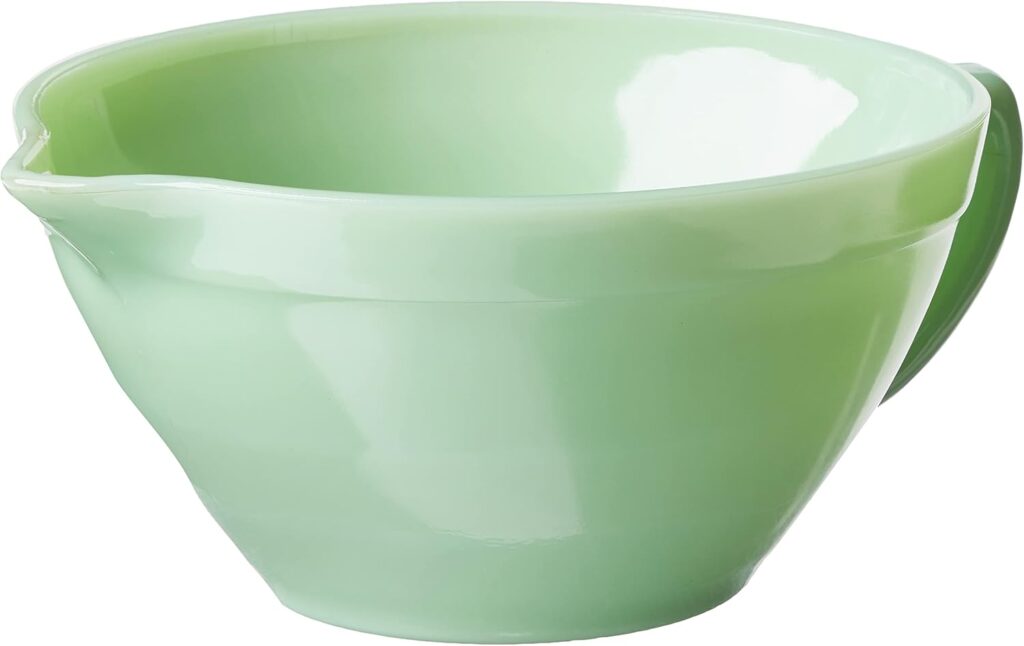
    is fire king Jadeite green glass microwave safe

    The Fire King Jadeite glass mixing bowls have a complicated relationship with microwave safety because they were developed before microwave ovens were available for domestic use.

    Therefore, we at Safekitchn recommend that you do not use it in the microwave, even though some report success with short heating times, while others recommend avoiding microwaves entirely to preserve these vintage pieces.

    If that’s the case, what’s the best use? Use them for serving or preparing/mixing small batches of your favourite recipe, like waffle mix and pancake.

    However, the fire king Jadeite glass mixing bowl is Dishwasher safe.

    IS FIRE KING AND ANCHOR HOCKING THE SAME?

    No, Fire King and Anchor Hocking are not the same thing. Fire King is a brand name used by Anchor Hocking for their heat-proof glass products. Here’s the key relationship:

    Fire King = Brand name for a specific product line
    Anchor Hocking = The company that manufactures Fire King

    The Complete Relationship

    Anchor Hocking Glass Corporation began as the Hocking Glass Company in 1905 and merged with Anchor Cap and Closure Corporation in 1937.

    In 1942, Anchor Hocking Glass began producing its famous line of ovenproof, low-expansion borosilicate glassware and branded it as “Fire King.

    Key Facts:

    • Company: Anchor Hocking Glass Corporation
    • Brand: Fire King (their heat-resistant glassware line)
    • Production Period: Original Fire King was manufactured from about 1940 to 1976, with reproductions starting in 2000
    • Current Status: Anchor Hocking still produces Fire King glass bakeware today

    Think of it this way: Fire King is to Anchor Hocking what iPhone is to Apple; it’s a specific product line created by the parent company.

    You can own Fire King glassware, but you’re actually buying from Anchor Hocking Corporation.

    This distinction matters for collectors, as authentic Fire King pieces will bear Anchor Hocking markings and represent the company’s premium heat-resistant glass line.

    HOW TO IDENTIFY MICROWAVE-SAFE FIRE KING PIECES

    Not all Fire King pieces wear their microwave credentials on their sleeve. Here’s your detective guide:

    Look for These Identifying Marks

    1. Original Labels: Some items are marked only with foil labels that say “Heat Proof Anchorglass.” They are Fire-King
    2. Manufacturer Stamps: Check the bottom for Anchor Hocking markings
    3. Glass Colour and Pattern: Authentic Fire King has distinctive colours and patterns

    The Visual Inspection Method

    Before microwaving any Fire King piece, conduct this simple safety check:

    • Cracks or Chips: Even microscopic damage can lead to catastrophic failure
    • Cloudiness: May indicate stress in the glass structure
    • Edge Condition: Sharp or damaged edges suggest compromised integrity
    Safe to MicrowaveAvoid Microwaving
    Clear, intact surfacesVisible cracks or chips
    Original markings presentMissing or damaged labels
    No cloudinessCloudy or stressed glass
    Smooth, undamaged edgesSharp or chipped edges

    THE LEAD QUESTION: UNDERSTANDING FIRE KING SAFETY

    When discussing microwave safety, we must address the elephant in the room: Is lead in Fire King glass a concern for microwave use?

    The good news for collectors is reassuring. Independent XRF testing of vintage Fire-King jadeite glassware (such as bowls) has found lead levels around 20 parts per million (ppm), which is considered “safe by all standards” for consumer goods.

    Furthermore, some vintage pieces may contain higher lead levels, particularly decorated items.

    Testing Your Collection

    For complete peace of mind, consider:

    • Lead test kits from hardware stores
    • XRF testing for professional analysis
    • UV light testing for preliminary screening.

    MICROWAVE USAGE GUIDELINES FOR FIRE KING GLASSWARE

    The Do’s and Don’ts

    DO:

    • Check for damage before each use
    • Use moderate power settings initially
    • Allow pieces to cool gradually after heating
    • Keep a microwave thermometer handy for temperature monitoring

    DON’T:

    • Use damaged pieces under any circumstances
    • Subject to extreme temperature shock (frozen to hot quickly)
    • Overheat empty containers
    • Use metal-trimmed pieces in the microwave

    Safe Heating Practices

    Fire King glassware can withstand high temperatures without cracking or shattering, making it safe to use in the microwave. Follow these professional tips:

    1. Start with 30-second intervals for testing
    2. Use oven mitts when removing heated items
    3. Place on heat-resistant surfaces after microwaving
    4. Avoid rapid cooling with cold water.

    COMPARING FIRE KING TO OTHER HEAT-RESISTANT GLASS

    Understanding where Fire King stands among heat-resistant glass options helps appreciate its unique properties:
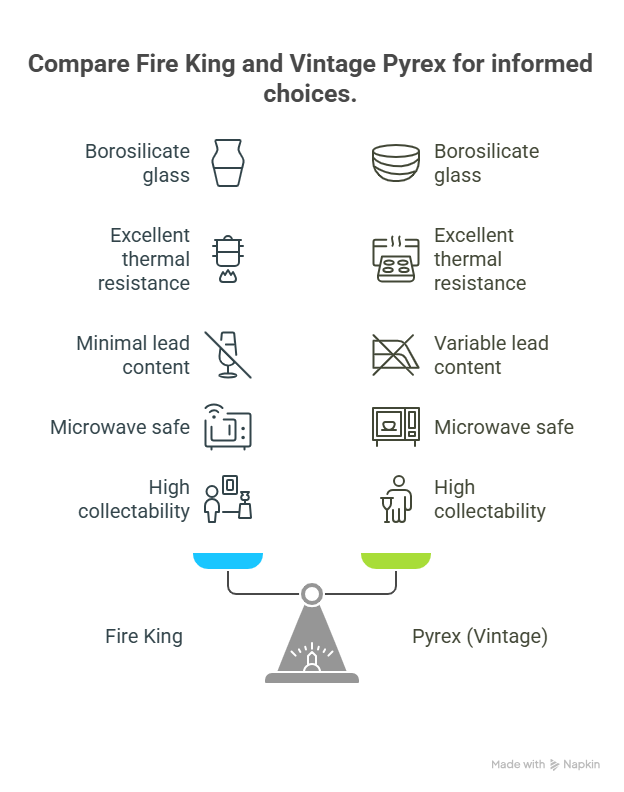
    fire king vs Pyrex vintage glass

    Fire King vs. Pyrex

    FeatureFire KingPyrex (Vintage)
    Base MaterialBorosilicate glassBorosilicate glass
    Thermal Shock ResistanceExcellentExcellent
    Lead ContentMinimal (<0.001%)Variable by era
    Microwave SafetyYes (when intact)Yes (when intact)
    CollectabilityHighHigh

    When to Choose Fire King

    Fire King excels when you need:

    • Everyday durability without compromising style
    • Microwave-to-table convenience
    • Collectible value that appreciates over time
    • Proven reliability backed by decades of use.

    OVEN SAFETY: BEYOND THE MICROWAVE

    While we’re focused on microwave safety, it’s worth noting that it’s safe to use Anchor Hocking in the oven, which extends to Fire King pieces as well.

    Suitable for oven, microwave, and dishwasher use makes Fire King incredibly versatile for modern kitchens.

    Temperature Limits to Remember

    • Microwave: Generally unlimited with proper precautions
    • Conventional Oven: Up to 425°F (220°C) for most pieces
    • Sudden Changes: Avoid extreme temperature differentials.

    CARING FOR YOUR FIRE KING COLLECTION

    Cleaning and Maintenance

    Proper care ensures your Fire King pieces remain microwave-safe for generations:

    Daily Care:

    • Hand wash with warm, soapy water
    • Avoid abrasive cleaners that could create microscopic scratches
    • Dry thoroughly to prevent water spots

    Deep Cleaning:

    • Soak in warm water with baking soda for stubborn stains
    • Use white vinegar for mineral deposits
    • Avoid harsh chemicals that could compromise the glass

    Storage Considerations

    • Stack carefully with protective padding
    • Avoid temperature extremes in storage areas
    • Display away from direct sunlight to prevent stress.

    TROUBLESHOOTING COMMON ISSUES

    When Fire King Gets Too Hot:

    If your Fire King piece becomes uncomfortably hot in the microwave:

    1. Reduce power level to 50-70%
    2. Shorten heating intervals
    3. Check for damage that might affect heat distribution
    4. Consider the contents—some foods heat containers more than others

    Identifying Stress Fractures

    Watch for these warning signs:

    • Tiny lines appearing in the glass
    • Changes in colour or clarity
    • Unusual sounds during heating
    • Uneven heating patterns.

    THE COLLECTOR’S PERSPECTIVE: VALUE AND SAFETY

    Balancing Use and Preservation:

    For serious collectors, the dilemma is real: use these beautiful pieces or preserve them? The answer lies in informed decision-making:

    High-Value Pieces:

    • Consider display-only status
    • Document condition thoroughly
    • Insure appropriately

    Everyday Pieces:

    • Enjoy regular use with proper care
    • Monitor condition closely
    • Replace when safety becomes questionable

    Investment Considerations

    Fire King values continue to appreciate, making proper care essential:

    • Condition directly affects value
    • Microwave damage is often irreversible
    • Documentation of care history adds value.

    FUTURE-PROOFING YOUR FIRE KING EXPERIENCE

    Modern Alternatives

    While vintage Fire King remains unmatched in character, consider these options:

    • Modern Fire King reproductions for daily use
    • Contemporary borosilicate alternatives for heavy-duty cooking
    • Specialized microwave-safe glass for specific applications

    Technology Advances

    Keep an eye on developing technologies:

    • Smart glass with temperature indicators
    • Enhanced borosilicate formulations
    • Microwave-optimized designs.

    EXPERT TIPS FROM GLASS ENTHUSIASTS

    Professional Recommendations:

    Heat-resistant glass experts suggest:

    1. Build gradually: Start with less valuable pieces to gain confidence
    2. Document everything: Keep records of your collection and any issues
    3. Network with collectors: Join Fire King groups for shared experiences
    4. Stay informed: Glass technology and safety standards evolve

    Community Wisdom

    The Fire King community offers invaluable insights:

    • Real-world testing trumps theoretical concerns
    • Condition matters more than age for safety
    • Documentation preserves both safety and value.

    FREQUENTLY ASKED QUESTIONS

    Can all Fire King pieces go in the microwave?

    Most Fire King pieces are microwave safe, but there are important points to keep in mind. Always check for damage and verify authenticity before use.

    How can I tell if my Fire King is genuine?

    Look for manufacturer markings, distinctive colours, and construction quality. Some items are marked only with foil labels that say “Heat Proof Anchorglass”.

    What about dishwasher safety?

    Microwave: Yes; Dishwasher: Yes, but according to most experienced collectors, hand washing preserves both safety and value.

    Should I worry about lead content?

    The lead content in fire-king jadeite glass is almost non-existent, less than 0.001%, making it safer than many alternatives.

    Can a cracked Fire King be repaired for microwave use?

    No. Any structural damage compromises microwave safety. Cracked pieces should be retired from food service.

    How do I test older pieces?

    Start with short intervals at low power, monitor for even heating, and watch for any signs of stress or damage.

    CONCLUSION

    Fire King glassware represents the perfect marriage of beauty and functionality in the world of heat-resistant glass.

    It can withstand high temperatures without cracking or shattering, making it safe to use in the microwave when properly maintained and verified.

    The key to enjoying your Fire King collection safely lies in understanding its construction, respecting its limits, and maintaining it properly.

    Whether you’re heating last night’s leftovers in a jade mixing bowl or warming milk in a delicate cup, Fire King’s legendary durability makes it a trusted companion in modern kitchens.

    Remember: condition trumps age when it comes to microwave safety. A well-maintained vintage piece often outperforms newer alternatives, proving that quality craftsmanship truly stands the test of time.

  • The Ultimate Guide to Pfaltzgraff Onion Soup Bowls

    You’ve just made the perfect French onion soup, complete with melted cheese bubbling on top.

    But when you serve it in a regular bowl, it doesn’t look quite right. The cheese slides off, the soup cools too quickly, and your guests aren’t getting that authentic restaurant experience you were hoping for.

    This is where Pfaltzgraff Onion Soup Bowls China Dinnerware come to the rescue.

    These specially designed bowls aren’t just about looks; they’re crafted to keep your soup hot longer and provide the perfect surface for that golden, bubbly cheese topping.

    Whether you’re hosting a dinner party or simply want to elevate your weeknight meals, having the right bowls makes all the difference between a good soup and an unforgettable dining experience.

    WHAT MAKES PFALTZGRAFF FRENCH ONION SOUP BOWLS SPECIAL?

    Pfaltzgraff French onion soup bowls represent the perfect marriage of American craftsmanship and French culinary tradition.

    Founded in 1811 in Pennsylvania, Pfaltzgraff has been creating quality flatware and dinnerware for over two centuries, and its onion soup bowls showcase this heritage beautifully.

    These bowls are characterized by their distinctive, wide, shallow design with sturdy handles on either side.

     Pfaltzgraff Onion soup bowls china dinnerware

    The classic cream or white glaze provides the perfect backdrop for the rich, golden-brown cheese that traditionally tops French onion soup.

    What sets Pfaltzgraff apart is its attention to detail, from the subtle rim that prevents spills to the perfectly balanced weight that feels substantial without being cumbersome.

    The Heritage Collection remains one of their most popular lines, featuring that timeless cream colour with delicate blue accents that whisper of French countryside charm.

    Meanwhile, their Naturewood and Tea Rose patterns offer more contemporary takes on the classic design.

    The Anatomy of Excellence

    What makes these bowls truly exceptional isn’t just their appearance; it’s their functional design. The wide opening allows for proper heat distribution, ensuring your soup maintains the perfect temperature throughout your meal.

    The handles aren’t merely decorative; they’re positioned at the ideal angle for comfortable handling, even when the bowl is piping hot.

    The slightly sloped sides serve a practical purpose, too. They’re designed to hold the perfect amount of soup whilst providing ample surface area for that glorious layer of melted Gruyère cheese that defines authentic French onion soup.

    ARE PFALTZGRAFF BOWLS MICROWAVE SAFE?

    Here’s where things get delightfully practical. Yes, most Pfaltzgraff bowls are microwave safe, but there’s a caveat that every sophisticated soup lover should know.

    Pfaltzgraff stoneware microwave safe Bowl

    The key lies in understanding which specific pieces you’re working with.

    Pfaltzgraff’s stoneware collections, including their popular onion soup bowls, are generally microwave safe.

    However, pieces with metallic accents or gold trim should never see the inside of your microwave unless you fancy a rather spectacular light show that’s far less amusing than it sounds.

    The Microwave Safety Checklist

    Before heating your soup, always check for:

    • No metallic accents or gold trim
    • The microwave-safe symbol on the bottom of the bowl
    • Any cracks or chips that could cause uneven heating

    When reheating soup in these bowls, use medium power settings and heat in 30-second intervals. This prevents the handles from becoming too hot to touch and ensures even warming throughout.

    CAN YOU PUT PFALTZGRAFF BOWLS IN THE OVEN?

    This is where Pfaltzgraff truly shines. Most Pfaltzgraff stoneware bowls are oven safe up to 450°F (232°C), making them perfect for that authentic French onion soup experience where you broil the cheese topping to golden perfection.

    The key to success lies in gradual temperature changes. Never place a cold bowl directly into a hot oven—this thermal shock could cause cracking.

    Instead, let your bowl come to room temperature first, or better yet, warm it slightly with lukewarm water.

    Oven Safety Guidelines

    Temperature RangeSafety LevelBest Practices
    Up to 350°F (175°C)ExcellentPerfect for most soup recipes
    350-450°F (175-232°C)GoodIdeal for cheese melting
    Above 450°F (232°C)Not recommendedRisk of thermal shock

    When using your Pfaltzgraff bowls in the oven, avoid sudden temperature changes. This means no placing hot bowls on cold surfaces or transferring them directly from oven to refrigerator.

    WHY DO ONION SOUP BOWLS HAVE LIDS?

    Ah, the eternal question that separates the casual soup sipper from the true aficionado. Traditional French onion soup bowls often feature lids, but not for the reasons you might think.

    The lid serves several crucial functions:

    Onion soup bowls with Lids

    Heat retention is paramount. French onion soup is meant to be enjoyed piping hot, and the lid traps steam and warmth, keeping your soup at the perfect temperature longer. This is particularly important given the soup’s generous cheese topping, which can quickly form a skin if exposed to cool air.

    Presentation plays a significant role, too. There’s something rather theatrical about lifting a lid to reveal that bubbling, cheese-covered masterpiece beneath. It’s dinner theatre at its finest.

    Practicality shouldn’t be overlooked either. The lid prevents splashing when transporting bowls from the kitchen to the table—a godsend when you’re carrying multiple servings of this notoriously messy soup.

    The Lid Controversy

    Not all Pfaltzgraff onion soup bowls come with lids, and this has sparked quite the debate among soup enthusiasts.

    Purists argue that authentic French onion soup should be served uncovered, allowing the cheese to form that perfect golden crust under the broiler.

    Pragmatists counter that lids offer superior heat retention and mess control.

    The truth? Both approaches have merit. Choose lidded bowls if you prioritize heat retention and formal presentation. Opt for lidless versions if you prefer the traditional broiled cheese experience.

    WHAT IS THE BEST BOWL FOR SOUP?

    Choosing the perfect soup bowl is rather like selecting the right wine; it depends entirely on what you’re serving and the experience you’re after.

    But if we’re talking about versatility, durability, and style, Pfaltzgraff onion soup bowls consistently rank among the top choices.

    The Soup Bowl Hierarchy

    Shallow, wide bowls (like Pfaltzgraff onion soup bowls) excel at:

    • Broth-based soups with toppings
    • Bisque and cream soups
    • Soups are meant to be eaten with bread

    Deep, narrow bowls work better for:

    • Hearty stews and chowders
    • Ramen and noodle soups
    • Soups you want to keep very hot

    Material Matters

    MaterialHeat RetentionDurabilityStyle Factor
    Stoneware (Pfaltzgraff)ExcellentVery HighClassic
    PorcelainGoodHighElegant
    CeramicGoodMediumVaried
    GlassPoorMediumModern

    Stoneware, like Pfaltzgraff’s offerings, provides the best balance of heat retention, durability, and aesthetic appeal. It’s thick enough to keep soup warm but not so heavy as to be unwieldy.

    WHAT ELSE CAN YOU USE FRENCH ONION SOUP BOWLS FOR?

    Your Pfaltzgraff bowls can do so much more than just serve onion soup. You’d be surprised how many different ways you can use them around your kitchen.

    Creative Uses for Your Pfaltzgraff Bowls

    French Onion Soup bowls

    Individual gratins are a natural fit. The wide surface area and oven-safe construction make these bowls perfect for personal-sized potato gratins, baked mac and cheese, or any dish that benefits from a golden, bubbling top.

    Dessert presentations take on new sophistication. Imagine serving individual bread puddings or crème brûlée in these elegant vessels. The handles make them easy to serve, and the presentation is undeniably impressive.

    Breakfast dishes get an upgrade, too. Baked eggs, individual quiches, or even oatmeal with toppings look restaurant-worthy when served in proper bowls.

    Dips and appetizers find their perfect home here. The wide opening makes them ideal for warm spinach and artichoke dip or baked brie at your next dinner party.

    The Entertaining Advantage

    Using Pfaltzgraff onion soup bowls for various dishes creates visual cohesion on your table.

    Rather than mixing and matching different serving pieces, you can create an elegant, unified presentation that speaks to your attention to detail.

    DOES PANERA HAVE SOUP IN A BREAD BOWL?

    Since we’re discussing soup bowls, let’s address the edible bowl phenomenon that’s captured so many hearts.

    Yes, Panera does indeed serve soup in bread bowls, and it’s become something of a signature offering.

    But here’s the sophisticated soup lover’s dilemma: while bread bowls are undeniably fun, they’re not exactly the pinnacle of dining elegance. They’re more comfort food theatre than refined dining.

    The Bread Bowl vs. Proper Bowl Debate

    Bread bowls offer:

    • Novelty factor – undeniably fun
    • Edible container – less washing up
    • Casual dining appeal – perfect for certain occasions

    Proper bowls like Pfaltzgraff provide:

    • Heat retention – keeps soup warmer longer
    • Portion control – proper serving sizes
    • Refined presentation – suitable for any dining occasion
    • Reusability – environmentally friendly

    The verdict? Both have their place. Bread bowls for casual lunches and fun family meals; Pfaltzgraff bowls for when you want to elevate the experience.

    CARING FOR YOUR PFALTZGRAFF ONION SOUP BOWLS

    Investing in quality Pfaltzgraff dinnerware means you’ll want to protect that investment. Proper care ensures these bowls will grace your table for decades to come.

    Cleaning and Maintenance

    Hand washing is always preferable, though most Pfaltzgraff bowls are dishwasher safe. Use gentle detergents and avoid abrasive scouring pads that could scratch the glaze.

    For stubborn stains (and onion soup can be notoriously stubborn), create a paste with baking soda and water. Let it sit for 15 minutes before gentle scrubbing with a soft brush.

    Storage matters too. Stack bowls with soft cloth or paper towels between them to prevent scratching. If you’re storing them for extended periods, ensure they’re completely dry to prevent any moisture-related issues.

    Avoiding Common Mistakes

    Thermal shock is the enemy of stoneware. Never place hot bowls directly onto cold surfaces or run cold water over hot bowls. This sudden temperature change can cause cracking.

    Microwave misuse is another pitfall. Even microwave-safe bowls can become extremely hot. Always use oven mitts when removing heated bowls, and remember that the handles may be as hot as the bowl itself.

    STYLING YOUR PFALTZGRAFF COLLECTION

    Presentation is everything when it comes to creating memorable dining experiences. Your Pfaltzgraff onion soup bowls deserve to be showcased properly.

    Table Setting Excellence

    Colour coordination is key. The classic cream and blue of Heritage Pfaltzgraff pairs beautifully with navy blue napkins and silver cutlery. For a more contemporary look, try crisp white linens with gold accents.

    Layering creates visual interest. Place your soup bowl on a slightly larger dinner plate to catch any drips and create a more formal presentation. Add a folded napkin beneath the bowl for extra sophistication.

    Lighting can make or break your presentation. Warm, soft lighting brings out the cream tones in the bowls and creates an inviting atmosphere that encourages lingering over your meal.

    Seasonal Styling

    Autumn calls for rich, warm colours. Pair your bowls with burgundy napkins, gold chargers, and perhaps a few autumn leaves as natural decoration.

    Winter presentations benefit from deeper blues and silvers, creating a cozy, sophisticated atmosphere perfect for warming soups.

    Spring and summer allow for lighter touches, perhaps pale green accents or fresh herbs as garnish that complement the soup and the bowl’s classic styling.

    BUILDING YOUR COLLECTION

    Starting a Pfaltzgraff collection is rather like building a wardrobe; you want pieces that work together while serving different purposes.

    Essential Pieces for Soup Lovers

    Four to six onion soup bowls form the foundation. This allows you to host small dinner parties whilst having backups for everyday use.

    Matching serving pieces extend your collection’s versatility. Look for large serving bowls, soup tureens, and ladles in coordinating patterns.

    Complementary pieces from the same pattern line create cohesion. Dinner plates, salad bowls, and mugs allow you to create complete table settings.

    Mixing and Matching

    Don’t feel constrained to single patterns. Heritage and Naturewood can work beautifully together, creating an eclectic yet cohesive look that speaks to your personal style.

    Colour coordination matters more than exact pattern matching. Pieces that share similar colour palettes will look intentional rather than accidentally mismatched.

    CONCLUSION

    The world of Pfaltzgraff onion soup bowls offers far more than initially meets the eye. These aren’t simply pieces of dinnerware, they’re vessels of experience, tools of hospitality, and expressions of personal style that transform ordinary meals into memorable occasions.

    From their oven-safe construction to their microwave-friendly design, from their versatile functionality to their timeless aesthetic appeal, these bowls represent the perfect marriage of form and function.

    Whether you’re serving authentic French onion soup, creative gratins, or elegant desserts, they rise to the occasion with style and sophistication.

    Your soup deserves better than a basic bowl, and your guests deserve the elevated experience that comes with proper presentation.

    Pfaltzgraff onion soup bowls offer both, wrapped in a package that speaks to your attention to detail and appreciation for quality.

  • Is Pfaltzgraff Silverware Good Quality?

    You’re standing in the kitchenware aisle, staring at a Pfaltzgraff silverware set, wondering if it’s worth your hard-earned money.

    Maybe your old forks are bent beyond repair, or you’re finally upgrading from that mismatched collection you’ve been using since university.

    The price seems reasonable, but you’ve been burned before by flatware that looked good in the shop but turned flimsy after a few washes.

    Is Pfaltzgraff silverware good quality? It’s the question that brought you here, and honestly, it’s smart that you’re asking.

    With so many options out there, from cheap sets that barely last a year to expensive ones that cost more than your monthly grocery bill, you need straight answers about what you’re actually getting.

    The good news? I’ve done the digging for you, and the answer might surprise you.

    THE PFALTZGRAFF LEGACY: MORE THAN JUST PRETTY PATTERNS

    Let’s start with the elephant in the dining room, Pfaltzgraff’s reputation. This isn’t some flash-in-the-pan brand that appeared overnight with flashy marketing.

    We’re talking about a company that’s weathered two centuries of changing tastes, economic upheavals, and evolving manufacturing standards.

    The Pfaltzgraff Co. has excellent quality ceramic products, including dinnerware vintage sets, drinkware, flatware, and other products for the home.

    Each piece is made using high-grade materials to ensure its durability. This speaks volumes about their commitment to quality across their entire product range, not just their famous stoneware.

    But longevity doesn’t automatically equal quality in today’s market. After all, there are plenty of old brands that have coasted on their reputation whilst their actual products declined.

    So, what’s the real story with Pfaltzgraff silverware?

    IS PFALTZGRAFF SILVERWARE GOOD QUALITY?  – DECONSTRUCTING PFALTZGRAFF’S MATERIAL GAME

    The Stainless Steel Spectrum

    When it comes to Pfaltzgraff stainless steel quality, you’ll encounter their signature 18/10 glossy finish and 18/0 stainless steel construction.

    Is Pfaltzgraff silverware good quality

    Now, before your eyes glaze over at the technical jargon, let’s break this down in plain English.

    The “18/0” designation refers to the steel’s composition: 18% chromium and 0% nickel. Compare this to the premium 18/10 stainless steel (18% chromium, 10% nickel) found in high-end flatware, and you might initially think Pfaltzgraff is cutting corners.

    But here’s where it gets interesting.

    Steel GradeChromium %Nickel %Key Benefits
    18/1018%10%Superior corrosion resistance, lustrous finish
    18/818%8%Good balance of quality and affordability
    18/018%0%Rust-resistant, budget-friendly, dishwasher safe

    Pfaltzgraff’s flatware sets are “Quality crafted of 18/10(stain resistant) and 18/0 stainless steel” and “constructed from superior quality stainless steel with a glossy or polished finish”, positioning them squarely in the everyday-use category( standing the rigors of daily use) rather than the luxury segment.

    Some examples of the popular Pfaltzgraff stainless steel flatware patterns/style/product lines include:

    18/10 Pfaltzgraff stainless steel Flatware

    Pfaltzgraff Providence (Glossy) 18/10 Stainless 20pc. Flatware Set

    Pfaltzgraff everyday simplicity 53 piece stainless steel flatware

    The popular Everyday simplicity 53 pcs stainless steel Flatware ( does not need polishing)

    Garland Frost Stainless Steel Flatware

    Southport Flatware

    Affordable Vienna Everyday 18/0 Stainless Steel Flatware

    Dawson Pfaltzgraff flatware

    Dawson Frost

    Pfaltzgraff mirage frost silverware 18/0 stainless steel

    Mirage Frost Everyday 18/0 Flatware

    Pfaltzgraff american bead stainless steel flatware

    Premium American Bead Flatware

    Mabel 18/0 Steel flatware

    Jasmine 30pcs Flatware

    The Sterling Silver Story

    For those seeking something more elevated, Pfaltzgraff offers “lavish sterling silverware sets” alongside their “stainless steel flatware sets.

    This dual approach is clever; they’re not abandoning their heritage customers who appreciate fine silver, whilst still catering to practical modern households.

    REAL-WORLD PERFORMANCE: WHAT USERS ACTUALLY SAY

    The Good: Durability That Delivers

    Customer feedback reveals some genuinely impressive qualities. One verified purchaser noted: “This flatware is really nice – very sturdy and washes nicely in the dishwasher.

    Bought it to replace our old set, which had bent fork tines” – a testament to the practical durability that matters in daily use.

    Another customer praised the Pfaltzgraff Pearl collection, stating: “Sturdy set of daily flatware, couldn’t beat the price, and they have a good weight.

    They are washed clean, no spotting. This hits on three crucial quality markers: structural integrity, maintenance ease, and finish durability.

    Weight and Feel Considerations

    Here’s where things get interesting. One thoughtful reviewer described their Pfaltzgraff pieces as “lighter but still substantial in terms of their weight,” highlighting a key consideration for quality utensil enthusiasts.

    Weight in flatware is a bit like thread count in sheets; it’s not everything, but it matters. Heavier pieces often feel more premium and substantial in hand, but they can also be more tiring during extended use.

    Pfaltzgraff seems to have found a sweet spot that avoids both flimsy feel and excessive heft.

    The Challenge: Durability Variations

    Not all feedback is uniformly positive, and that’s actually refreshing honesty. Some users report: “I love the design of this silverware, but as far as durability, they bend very easily.

    They are nice and lightweight, and some people may prefer that, but they aren’t very strong.

    This reveals an important truth about Pfaltzgraff silverware durability – it varies by collection and use case.

    What works brilliantly for careful everyday dining might not withstand the rigours of a busy family kitchen where utensils are used for everything from serving to impromptu can-opening duties.

    PFALTZGRAFF VS. THE COMPETITION: A HONEST COMPARISON

    Against Premium Brands

    Let’s be realistic – if you’re comparing Pfaltzgraff to brands like Christofle or Georg Jensen, Mikasa 18/10, Made in cookware flatware(18/10), you’re comparing apples to vintage wine.

    Pfaltzgraff isn’t playing in that league, and frankly, it doesn’t pretend to.

    AspectPfaltzgraffPremium BrandsMid-Range Competitors
    Steel GradePrimarily 18/0Often 18/10Mix of 18/8 and 18/10
    Design PhilosophyClassic AmericanAvant-garde/Traditional luxuryTrend-following
    WarrantyLimitedLifetime/ExtendedVariable
    Target MarketEveryday eleganceInvestment piecesAspirational dining

    The Sweet Spot Analysis

    Where Pfaltzgraff truly shines is in that often-overlooked middle ground between disposable-feeling budget flatware and intimidatingly expensive luxury pieces.

    They’re the reliable friend who might not be the most glamorous person at the party, but they’re always there when you need them.

    DESIGN PHILOSOPHY: TIMELESS OR TIRED?

    Pfaltzgraff silverware design trends towards the classic rather than the cutting-edge. This is either a feature or a bug, depending on your perspective.

    The Case for Classic

    If you’re tired of trend-driven purchases that look dated within a few years, Pfaltzgraff’s restrained aesthetic is genuinely refreshing.

    Their Simplicity and Sapphire Bay collections embody a design philosophy that prioritises longevity over novelty.

    Take their polished finish approach it’s not trying to be revolutionary. Instead, it’s banking on the idea that a well-executed classic will outlast a dozen trend-chasing alternatives. For many households, this proves absolutely correct.

    The Limitation Factor

    However, if you’re the type who delights in conversation-starting tableware or wants pieces that reflect contemporary design innovation, Pfaltzgraff might feel a bit… safe. Their design language speaks to reliability rather than excitement.

    VALUE PROPOSITION: WHERE YOUR MONEY ACTUALLY GOES

    The Price-Performance Matrix

    Let’s talk numbers, because affordable quality silverware means different things to different people. Pfaltzgraff typically prices its 53-piece sets (service for 8) not too expensive, depending on the collection and retailer.

    What you get for your investment:

    • Material quality: Legitimate 18/0 stainless steel that resists rust and maintains its finish
    • Dishwasher durability: Pieces that genuinely withstand regular machine washing without degrading
    • Complete service: Enough pieces for proper entertaining, not just basic dining
    • Brand reliability: The confidence that comes with an established company that’ll likely be around for warranty issues

    What you don’t get:

    • Premium heft: The substantial weight that screams luxury
    • Investment appreciation: These won’t become more valuable over time

    The Replacement Factor

    Here’s something worth considering: Pfaltzgraff silverware replacement availability. Because they’ve been consistent with their core designs, you can often find matching pieces years later.

    Try doing that with a trendy brand that switches patterns every season.

    PRACTICAL PERFORMANCE: THE DAILY USE TEST

    Kitchen Reality Check

    The true test of any flatware isn’t how it looks in the shop or even how it feels during the first dinner party.

    It’s how it performs during the 1,847th wash cycle, when you’re using a dinner knife to pry open a stubborn jar lid, or when someone accidentally puts a fork through the garbage disposal.

    Real-world users report positive long-term experiences: “I use them every day and put them in the dishwasher. They are perfect after months of use.

    This kind of sustained performance is what separates genuinely functional flatware from pretty pieces that don’t age well.

    The Maintenance Story

    Pfaltzgraff silverware care requirements are refreshingly minimal. The 18/0 stainless steel construction means you don’t need to baby these pieces.

    They’re genuinely dishwasher-safe, spot-resistant, and maintain their finish without special polishing routines.

    For busy households, this practical approach to maintenance is often more valuable than having pieces that require careful hand-washing and regular polishing to maintain their appearance.

    COLLECTION BREAKDOWN: FINDING YOUR PERFECT MATCH

    The Simplicity Collection

    The Simplicity line offers “graceful styling, making it perfect for any occasion” with quality 18/0 stainless steel construction. This is Pfaltzgraff’s bread-and-butter offering – competent, clean, and completely functional.

    Best for: New households, wedding registries, anyone wanting reliable everyday flatware without fuss.

    The Sapphire Bay Range

    Sapphire Bay features “superior quality 18/0 stainless steel with a “mirror polish finish” and handles with “an attractive design that will bring a contemporary touch to your tabletop”. This represents Pfaltzgraff’s attempt to add visual interest whilst maintaining their practical focus.

    Best for: Those wanting something slightly more decorative than basic patterns without venturing into ornate territory.

    Sterling Silver Options

    For special occasions and formal dining, Pfaltzgraff’s “lavish sterling silverware sets” provide a step up in both materials and presentation. These pieces require more care but offer the timeless elegance that only genuine silver can provide.

    Best for: Formal entertaining, special occasion dining, and those building a comprehensive tableware collection.

    FREQUENTLY ASKED QUESTIONS ABOUT PFALTZGRAFF SILVERWARE QUALITY

    Is Pfaltzgraff silverware dishwasher safe?

    Absolutely. Users consistently report that Pfaltzgraff pieces “wash nicely in the dishwasher” without showing damage or degradation. The 18/0 stainless steel construction is specifically designed to withstand regular machine washing cycles.

    How does Pfaltzgraff compare to other affordable flatware brands?

    Pfaltzgraff typically offers better long-term durability than ultra-budget options, whilst remaining more affordable than premium brands. Users note they “couldn’t beat the price” for the quality level provided.

    Will Pfaltzgraff silverware rust or stain?

    The 18/0 and 18/10 stainless steel construction provides good rust resistance for everyday use. Long-term users report “no spotting” even with regular dishwasher use.

    What’s the expected lifespan of Pfaltzgraff flatware?

    With proper care, expect many years of reliable service. Users report pieces remain “perfect after months of use” with daily usage and dishwasher cleaning.

    Can you buy individual replacement pieces?

    Yes, Pfaltzgraff’s established patterns and long-running collections typically allow for individual piece replacement, though availability varies by pattern and age.

    MAKING THE RIGHT CHOICE FOR YOUR TABLE

    The question isn’t whether Pfaltzgraff silverware is objectively “good quality”, it’s whether its particular type of quality matches your needs, expectations, and budget.

    Choose Pfaltzgraff if you:

    • Need reliable, everyday flatware that won’t require special care
    • Appreciate classic design that won’t look dated
    • Want complete sets at reasonable prices
    • Value brand reliability and replacement availability
    • Prefer practical performance over luxury aesthetics

    Look elsewhere if you:

    • Want investment-grade pieces that might appreciate in value
    • Seek cutting-edge design that makes a statement
    • Need the substantial weight and finish of premium materials
    • Plan to use pieces very roughly (better to invest in commercial-grade options)
    • Have an unlimited budget and want the absolute best available

    THE FINAL WORD: QUALITY THAT WORKS

    In a market flooded with extremes, either disposable-feeling basics or eye-wateringly expensive luxury pieces, Pfaltzgraff occupies a valuable middle ground.

    They’re the equivalent of a well-tailored, classic navy blazer: not flashy, not revolutionary, but dependably appropriate for a wide range of situations.

    The brand’s commitment to “high-grade materials to ensure durability” across their product range suggests this isn’t accidental; it’s a deliberate positioning strategy that serves many households well.

    For most people building their first proper flatware collection, expanding beyond mismatched pieces, or replacing worn-out sets, Pfaltzgraff delivers exactly what’s needed: quality that works, day after day, without drama or disappointment.

    Your table deserves better than random odds and ends, but it doesn’t necessarily need museum-quality pieces either.

    Sometimes, the best choice is simply the one that shows up reliably, looks appropriate for any occasion, and lets you focus on what really matters: the food, the conversation, and the people sharing your table.

  • Are Pfaltzgraff Dishes Oven Safe? The Complete Guide Every Collector Needs

    You’re hosting Sunday dinner, and your gorgeous Pfaltzgraff casserole dish is brimming with your famous shepherd’s pie.

    As you reach for the oven door, a nagging thought hits you: Are Pfaltzgraff Dishes oven safe?

    You pause, realizing you’ve never been entirely sure about the rules.

    If you’re a Pfaltzgraff enthusiast, you’ve probably faced this exact dilemma.

    These beautiful stoneware pieces have graced dining tables for generations, but understanding their oven safety can feel like navigating a maze.

    The truth is, not all Pfaltzgraff dishes are created equal when it comes to heat tolerance.

    Whether you’re dealing with vintage pieces or brand new additions to your collection, knowing which dishes can handle the heat and which ones absolutely cannot could mean the difference between a perfect meal and a kitchen disaster.

    But here’s what most people don’t know about their beloved Pfaltzgraff collection.

    ARE PFALTZGRAFF DISHES OVEN SAFE? -UNDERSTANDING PFALTZGRAFF’S OVEN SAFETY GUIDELINES

    are pfaltzgraff dishes oven safe

    The short answer to “Are Pfaltzgraff dishes oven safe?” is: It depends on the specific piece and how you use it.

    Pfaltzgraff recommends that their dinnerware can be safely warmed or heated in the oven, starting your oven no higher than 225°F for the first 10 minutes, then increasing to a temperature no higher than 350°F for their stoneware, porcelain, and earthenware pieces.

    This gradual heating process is crucial for preventing thermal shock, that heart-stopping moment when your favourite dish cracks right down the middle.

    THE GOLDEN RULES FOR PFALTZGRAFF OVEN USE

    Think of your Pfaltzgraff dishes like a delicate friendship; they need gentle treatment to last. Here’s what you absolutely must know:

    Temperature Limits:

    • Maximum safe temperature: 350°F for most dinnerware
    • Bakeware can withstand up to 500°F
    • Always start low and increase gradually

    What Never Goes in the Oven:

    • Pieces with precious metal accents (gold or silver trim)
    • Regular dinnerware, like plates, bowls, and platters, should not go in the oven
    • Any piece with visible cracks or chips
    • Never place cool dinnerware in a preheated hot oven or on a direct burner, gas, or electric range.

    PFALTZGRAFF OVEN SAFE TEMPERATURE: THE SCIENCE BEHIND THE HEAT

    When it comes to Pfaltzgraff oven-safe temperature limits, understanding the “why” behind these numbers can save your collection from disaster.

    Stoneware is inherently more heat-resistant than regular ceramic, but it’s not indestructible.

    The gradual heating process starting at 225°F allows the clay body to expand evenly, preventing stress fractures that could ruin your piece forever.

    Product TypeMaximum TemperatureGradual Heating RequiredBest Use
    Bakeware500°FNoCasseroles, baking
    Stoneware Dinnerware350°FYesWarming, reheating
    Earthenware350°FYesLight oven use
    Metal-accented piecesNot oven safeN/AServing only

    The key insight here? Unlike earthenware, porcelain, and stoneware, bakeware does not need gradual heating but is okay with a preheated oven.

    Pfaltzgraff winterberry casserole baking oven safe dish

    This makes Pfaltzgraff bakeware incredibly convenient for busy kitchens.

    HOW DO YOU KNOW IF DISHES ARE OVEN SAFE?

    Knowing whether your dishes are oven safe can save you from costly disasters and kitchen heartbreak. Here’s how to determine if any dish can handle the heat:

    Check the Bottom First

    The most reliable method is to flip your dish over and examine the bottom. Look for these telltale signs:

    • “Oven Safe” stamp or symbol – This is your green light
    • Temperature ratings (like “Oven Safe to 350°F”)
    • Manufacturer markings that you can research online
    • Material type indicators (stoneware, ceramic, etc.)

    Material Clues That Matter

    Different materials have different heat tolerances:

    Generally Oven Safe:

    • Stoneware – Usually safe up to 350-450°F
    • Cast iron – Can handle extremely high temperatures
    • Carbon steel – Excellent for high-heat cooking
    • Ceramic and porcelain – Often safe, but check for temperature limits

    Proceed with Caution:

    • Earthenware – Lower temperature tolerance, needs gradual heating
    • Glass dishes – Only if specifically marked “oven safe” (like Pyrex)

    Never Oven Safe:

    • Melamine or plastic – Will melt and release toxins
    • Dishes with metallic trim – Can spark and damage
    • Non-stick coatings – May release harmful fumes at high heat

    The Visual Inspection Test

    Even without markings, you can spot potential problems:

    • Cracks or chips – These weak points will worsen with heat
    • Uneven glaze – Indicates potential thermal stress issues
    • Very thin construction – More likely to break from temperature shock
    • Decorative elements – Gold trim, decals, or painted details often aren’t heat-safe

    When in Doubt, Test It Out

    If you can’t find clear markings, here’s a safe testing method:

    1. Start low – Begin at 200°F for 15 minutes
    2. Check for stress – Look for new cracks or changes
    3. Gradually increase – If it passes, try 250°F next time
    4. Never exceed manufacturer recommendations once you find them

    The Golden Rules

    • When uncertain, don’t risk it – Replace the dish rather than your oven
    • Avoid sudden temperature changes – Let dishes come to room temperature first
    • Research your specific brand – Manufacturer websites often have detailed care instructions

    Remember, it’s always better to use a dish you’re confident about than to gamble with one that might crack, shatter, or worse – release harmful substances into your food.

    The key is being detective-like about your dishware. A few minutes of investigation can save you from cleanup disasters and keep your kitchen adventures safely delicious!

    IS PFALTZGRAFF STONEWARE MICROWAVE SAFE?

    Here’s where things get interesting – and where many collectors breathe a sigh of relief. Yes, most Pfaltzgraff stoneware is microwave safe, but there’s a catch that could affect your vintage pieces.

    Is Pfaltzgraff stoneware microwave safe

    Pfaltzgraff dinnerware without precious metal accents is safe to use in the dishwasher and microwave. However, any dishware with metal components is not microwave-safe.

    The Vintage Warning: Older stoneware pieces might behave differently in microwaves due to changes in clay composition and firing techniques over the decades.

    If you own vintage Pfaltzgraff from the 1970s or earlier, test a small area first or avoid microwave use altogether.

    Quick Microwave Safety Check

    Before popping any Pfaltzgraff piece in the microwave:

    1. Examine for metal trim – even tiny gold or silver details disqualify it
    2. Check for chips or cracks – these can create hot spots
    3. Test with the touch method – microwave empty for 30 seconds; if it’s hot, don’t use it
    4. When in doubt, check the packaging or product details online.

    IS PFALTZGRAFF YORKTOWNE MICROWAVE SAFE?

    The beloved Pfaltzgraff Yorktowne pattern, with its charming Pennsylvania Dutch-inspired design, is indeed microwave safe.

    Pfaltzgraff Yorktowne microwave and dishwasher safe dinner plates

    The Yorktowne dinner plates, salad plates, soup bowls, and mugs are all microwave and dishwasher-safe.

    This pattern has maintained its popularity precisely because it bridges the gap between beautiful design and practical functionality.

    Yorktowne has a devoted following who love its country look, inspired by Pennsylvania Dutch folk art motifs, and thankfully, you can reheat your leftovers without worry.

    Fun fact: The soft blue and gray tones in Yorktowne aren’t just aesthetically pleasing – they’re created using microwave-safe glazes that won’t interfere with your appliance’s operation.

    Don’t forget to pair your Yorktowne dishes with quality Pfaltzgraff silverware for the complete dining experience, and consider adding Pfaltzgraff onion soup bowls to your collection for cozy winter meals.

    IS PFALTZGRAFF WINTERBERRY DISHWASHER SAFE?

    Absolutely yes – and this is fantastic news for busy households during the holiday season.

    Pfaltzgraff Winterberry dinnerware is both microwave and dishwasher-safe, making it perfect for entertaining when you need dishes that can handle heavy use and easy cleanup.

    Pfaltzgraff Winterberry microwave and dishwasher safe dinnerware set

    The Winterberry pattern, with its festive holly and berry motifs, was designed with modern convenience in mind. Each piece can handle:

    • Top rack dishwasher placement (recommended for longevity)
    • Regular dishwasher detergents (avoid harsh, gritty cleaners)
    • Heated dry cycles without damage

    Pro tip: While Winterberry is dishwasher safe, hand washing will preserve the vibrant colours and intricate details for decades longer.

    ARE PFALTZGRAFF CHRISTMAS DISHES DISHWASHER SAFE?

    The answer varies depending on which Christmas pattern you own, but most modern Pfaltzgraff Christmas dishes are dishwasher safe.

    However, here’s where collectors need to pay attention to details:

    Safe for Dishwasher:

    • Winterberry (all variations)
    • Christmas Heritage
    • Holiday Spice
    • Most patterns from 1990 onwards

    Approach with Caution:

    • Vintage Christmas patterns with gold trim
    • Limited edition pieces with metallic accents
    • Hand-painted details that might be delicate

    Since the Pfaltzgraff product line is extensive, checking the packaging or the website product detail page in the Use & Care section is highly recommended.

    THE DIFFERENCE BETWEEN DINNERWARE AND BAKEWARE

    This distinction is crucial and often misunderstood. Here’s the breakdown that every Pfaltzgraff collector should memorize:

    Pfaltzgraff Bakeware

    • Designed for cooking and baking
    • Can withstand temperatures up to 500°F
    • Safe for preheated ovens
    • Includes casserole dishes, baking dishes, and covered casseroles
    • Travels easily from oven to table

    Pfaltzgraff Dinnerware

    • Designed for serving and eating
    • Maximum temperature: 350°F with gradual heating
    • Should not go in the oven for baking purposes
    • Includes plates, bowls, mugs, and serving pieces
    • Better suited for warming rather than cooking

    Think of it this way: bakeware is the workhorse, dinnerware is the show pony. Both have their place, but knowing which is which prevents costly mistakes.

    ESSENTIAL CARE TIPS FOR YOUR PFALTZGRAFF COLLECTION

    Owning Pfaltzgraff is like maintaining a classic car – with proper care, these pieces will serve you for generations. Here are the insider secrets:

    Temperature Shock Prevention

    • Never place hot dishes on wet surfaces – this causes instant cracking
    • Do not handle hot dishes with wet cloths
    • Allow gradual cooling after oven use
    • Room temperature ingredients work best with room temperature dishes

    Cleaning and Maintenance

    • Hand washing preserves colours and extends life
    • Use soft sponges, never abrasive scrubbers
    • Dry thoroughly to prevent water spots
    • Store with protective padding between stacked pieces

    Long-term Storage

    • Climate-controlled environments prevent crazing
    • Avoid sudden temperature changes
    • Check periodically for developing cracks
    • Clean before long-term storage to prevent staining

    COMMON MISTAKES THAT RUIN PFALTZGRAFF DISHES

    Learning from others’ mishaps can save your collection. Here are the most frequent errors:

    The Thermal Shock Disaster: Putting cold dishes directly into hot ovens. This accounts for 70% of Pfaltzgraff breakage.

    The Metal Mistake: Microwaving pieces with metallic accents. This can damage both your dish and your microwave.

    The Stacking Error: Storing pieces without protection, leading to chips and scratches that compromise structural integrity.

    The Chemical Catastrophe: Using harsh cleaners that strip protective glazes and cause premature aging.

    IDENTIFYING YOUR PFALTZGRAFF PIECES

    Not sure what you have? Here’s how to identify your pieces and their capabilities:

    Check the Bottom

    • Look for the Pfaltzgraff mark and pattern name
    • Manufacturing date codes (when present)
    • “Oven Safe” or “Microwave Safe” stamps

    Examine the Glaze

    • Smooth, even glaze indicates oven safety
    • Cracked or crazed glaze suggests age and fragility
    • Metal accents rule out microwave use

    Consider the Age

    • Pre-1960s pieces: Handle with extra care
    • 1960s-1980s: Generally safe with proper precautions
    • 1990s-present: Designed for modern conveniences

    WHEN TO SAY NO: RECOGNISING UNSAFE CONDITIONS

    Sometimes the wisest choice is leaving your precious Pfaltzgraff out of the oven entirely. Here’s when to draw the line:

    Absolute No-Gos:

    • Visible cracks or chips anywhere on the piece
    • Metallic trim or accents of any kind
    • Pieces that have been previously damaged and repaired
    • Extremely old pieces with uncertain provenance

    Proceed with Extreme Caution:

    • Pieces with crazing (fine web-like cracks in the glaze)
    • Dishes that have been stored in damp conditions
    • Items with worn or faded glazes
    • Pieces that feel unusually light or thick

    MAKING THE MOST OF YOUR PFALTZGRAFF COLLECTION

    Your Pfaltzgraff collection represents more than just dishes; it’s an investment in quality, beauty, and family traditions. Here’s how to maximize that investment:

    Smart Usage Strategies

    • Reserve oven use for appropriate pieces only
    • Rotate usage to prevent overuse of favourite pieces
    • Document which pieces are oven/microwave safe for family reference
    • Consider having both “display” and “daily use” sets

    Building Your Collection Wisely

    • Focus on patterns that offer both beauty and functionality
    • Invest in quality bakeware for cooking needs
    • Complement with appropriate Pfaltzgraff silverware for complete table settings
    • Add specialty pieces like Pfaltzgraff onion soup bowls for specific culinary needs

    THE BOTTOM LINE: ENJOYING YOUR PFALTZGRAFF SAFELY

    The beauty of Pfaltzgraff lies not just in its aesthetic appeal but in its practical functionality when used correctly.

    Each piece is designed to serve your family for many years and will stand up to the rigours of everyday dining when properly cared for.

    Key Takeaways:

    • Most Pfaltzgraff stoneware is oven safe up to 350°F with gradual heating
    • Bakeware can handle higher temperatures (up to 500°F)
    • Pieces without metal accents are microwave and dishwasher-safe
    • When in doubt, check product specifications or err on the side of caution

    Remember, these dishes were created to bring families together around the dinner table. By understanding their capabilities and limitations, you ensure they’ll continue doing just that for generations to come.

    CONCLUSION: CONFIDENCE IN YOUR KITCHEN

    Armed with this knowledge, you can confidently use your Pfaltzgraff collection without fear of mishaps.

    Whether you’re warming up leftovers in your Yorktowne bowls, baking a holiday casserole in your Winterberry dish, or setting an elegant table with your Christmas collection, you now know exactly what each piece can handle.

    The next time you’re preparing that Sunday dinner, you won’t hesitate at the oven door.

    You’ll know your Pfaltzgraff pieces inside and out, understanding precisely how to treat them for a lifetime of beautiful meals and cherished memories.

  • Food Serving and Cornware Biodegradables

    Imagine hosting a dinner party where every plate, cup, and utensil could return to the earth after use, leaving no trace of waste.

    This isn’t a scene from a futuristic film—it’s the reality of cornware biodegradables revolutionising our food service industry today.

    As landfills overflow with single-use plastics and our oceans choke with non-degradable waste, the search for sustainable alternatives has never been more urgent.

    Cornware biodegradables—made primarily from cornstarch—offer a promising solution combining convenience and environmental responsibility.

    These innovative products break down naturally within months rather than the centuries required for traditional plastics.

    Ready to discover how switching to cornware could transform your dining experience whilst helping save our planet? The answers will help you.

    WHAT ARE BIODEGRADABLE FOOD CONTAINERS?

    Biodegradable food containers are packaging solutions designed to naturally decompose into non-toxic components when disposed of properly.

    eco friendly biodegrdable food containers

    Unlike conventional plastic containers that persist in the environment for hundreds of years, biodegradable alternatives break down relatively quickly through natural processes.

    These eco-friendly containers are typically made from renewable resources such as:

    Biodegradable corn starch eco friendly plates knife, fork and dinnerware sets

    Cornware specifically refers to biodegradable food service items manufactured from corn-derived materials, primarily polylactic acid (PLA) made from cornstarch.

    These products represent a significant advancement in sustainable food packaging technology.

    When examining cornware biodegradables, it’s worth noting that their manufacturing process consumes significantly less energy than traditional plastic production.

    card board paper food containers microwave and freezer safe

    Additionally, cornware products release fewer greenhouse gases during decomposition compared to petroleum-based plastics.

    THE SCIENCE BEHIND CORNWARE

    The transformation from corn to container involves several steps:

    1. Extraction of starch from corn kernels
    2. Conversion of starch into dextrose (a type of sugar)
    3. Fermentation to create lactic acid
    4. Polymerization to form polylactic acid (PLA)
    5. Processing PLA into various food service items

    The resulting material looks and functions similarly to conventional plastic but with dramatically improved environmental credentials.

    FOOD SERVING AND CORNWARE BIODEGRADABLES

    food serving and cornware biodegradables

    Food serving and cornware biodegradables are eco-friendly alternatives to traditional plastic food packaging and serving products made primarily from cornstarch.

    These items include plates, cups, utensils, and containers that function similarly to conventional plastic but decompose naturally within 90-180 days in proper composting conditions.

    Cornware biodegradables are manufactured from polylactic acid (PLA), created by processing cornstarch through extraction, fermentation, and polymerization.

    These sustainable products reduce environmental impact by using renewable resources, requiring less energy to produce, and breaking down into non-toxic components rather than persisting in landfills for centuries like traditional plastics.

    WHAT DOES IT MEAN WHEN A FOOD IS BIODEGRADABLE?

    When we describe food or food packaging as “biodegradable,” we’re referring to its ability to be broken down by natural biological processes into simple compounds like water, carbon dioxide, and biomass.

    This decomposition occurs through the action of microorganisms such as bacteria and fungi.

    For a product to be genuinely biodegradable, it must:

    • Break down completely within a reasonable timeframe
    • Decompose into non-toxic substances
    • Leave no persistent synthetic residues in the environment

    The biodegradation timeframe varies significantly depending on environmental conditions such as temperature, humidity, and the presence of appropriate microorganisms.

    Under ideal composting conditions, cornware products typically break down within 90-180 days—a remarkable improvement over conventional plastics that may persist for centuries.

    It’s important to distinguish between biodegradability and compostability. While all compostable items are biodegradable, not all biodegradable items are compostable.

    Compostable products must break down into nutrient-rich soil amendments within a specific timeframe and leave no toxic residues.

    WHAT IS AN EXAMPLE OF BIODEGRADABLE FOOD PACKAGING?

    The market for biodegradable food packaging has expanded dramatically in recent years, offering eco-conscious consumers and businesses a wide array of options.

    Here are some prominent examples:

    Cornware Products

    Cornware represents one of the most versatile biodegradable packaging solutions available today. These cornstarch-based products include:

    Disposable Biodegradable Cornstarch food serving tray
    • Plates and bowls
    • Cups and glasses
    • Cutlery sets
    • Food containers with secure lids
    • Straws and stirrers

    These items closely mimic the functionality of traditional plastic products while offering superior environmental benefits.

    Many cornware products can withstand hot foods and liquids, making them suitable for serving soups, coffee, and freshly cooked meals.

    Other Biodegradable Packaging Options

    Beyond cornware, the market offers numerous alternative biodegradable packaging solutions:

    Bagasse and Bamboo fiber Paper compostable plates
    Biodegradable Palm Leaf food serving dinnerware sets

    Each of these alternatives offers unique benefits in terms of strength, heat resistance, moisture barriers, and aesthetic appeal.

    WHAT ARE THE ADVANTAGES OF BIODEGRADABLE PLASTIC BAGS MADE FROM CORN STARCH?

    Biodegradable plastic bags made from corn starch offer several significant advantages over conventional petroleum-based plastic bags:

    Environmental Benefits

    1. Reduced Carbon Footprint: The production of cornstarch bags requires less energy and generates fewer greenhouse gas emissions compared to traditional plastic manufacturing.
    2. Natural Decomposition: When properly disposed of, these bags break down into harmless organic compounds within months rather than centuries.
    3. Renewable Resource Base: Corn is a renewable resource that can be grown annually, unlike petroleum, which is finite and non-renewable.
    4. Less Pollution: Cornstarch bags don’t release toxic chemicals during decomposition, reducing soil and water contamination.

    Practical Advantages

    1. Comparable Strength: Modern cornstarch bags offer durability similar to conventional plastic for everyday use.
    2. Versatility: Available in various sizes, thicknesses, and designs for different applications.
    3. Food Safety: Generally considered safe for food contact, making them suitable for food storage and transportation.
    4. Compostability: Many cornstarch bags are certified compostable, adding value to commercial and home composting systems.

    Economic Considerations

    While cornstarch bags typically cost more than conventional plastic bags, this price difference continues to narrow as production scales up and consumer demand increases.

    Many businesses have found that the positive brand image associated with eco-friendly packaging justifies the modest additional cost.

    TRADITIONAL CORNINGWARE VS. MODERN ALTERNATIVES

    When comparing Corningware to Corelle and modern biodegradable options, several important factors come into play.

    Traditional Corningware, known for its durability and heat resistance, represents a different approach to sustainable dining than single-use biodegradables.

    Durability and Longevity

    Traditional Corningware products were designed to last for decades with proper care. This longevity can be environmentally beneficial as it reduces the need for frequent replacements.

    However, this advantage only applies when the items remain in use rather than being discarded.

    Modern biodegradable alternatives prioritize end-of-life decomposition over durability, making them ideal for situations where washing and reuse aren’t practical.

    Material Composition and Environmental Impact

    Original Corningware was made from Pyroceram, a glass-ceramic material, while modern versions typically use stoneware or vitreous materials.

    In contrast, cornware biodegradables utilize renewable plant-based resources with a significantly lower environmental footprint.

    This table compares key aspects of traditional serveware versus biodegradable alternatives:

    FeatureTraditional CorningwareCornware Biodegradables
    Material SourceMineral-basedPlant-based (renewable)
    Expected LifespanDecadesSingle use
    End-of-LifeLandfill/Limited recyclingBiodegradation/Composting
    Energy to ProduceHighModerate
    WeightHeavyLightweight
    Heat ResistanceExcellentGood (varies by product)
    Initial CostHigherLower
    Long-term CostLower (with proper care)Higher (with repeated purchase)

    DO CORNINGWARE DISHES CONTAIN LEAD?

    The question of lead content in Corningware is important from both health and environmental perspectives.

    Modern Corningware products sold in most developed countries are required to comply with strict regulations regarding lead content.

    Lead Standards and Safety

    Contemporary Corningware products manufactured for the North American and European markets are typically lead-free or contain trace amounts well below safety thresholds.

    However, some vintage pieces produced before stricter regulations (pre-1970s) may contain higher levels of lead, particularly in decorative elements.

    Health authorities recommend:

    • Using modern Corningware products for food service
    • Avoid using heavily scratched or damaged vintage pieces for food
    • Being cautious with very old decorative Corningware items, especially with acidic foods

    Environmental Implications

    The potential presence of lead in older Corningware raises important environmental considerations.

    When improperly disposed of, lead can leach into soil and water systems, causing environmental contamination.

    This represents another advantage of modern cornware biodegradables, which are formulated without heavy metals or toxic components.

    IS CORNINGWARE RECYCLABLE?

    The recyclability of Corningware depends on its specific composition and the recycling facilities available in your region.

    Recycling Challenges

    Traditional Pyroceram Corningware poses significant recycling challenges because:

    1. It doesn’t melt at the same temperature as regular glass
    2. Its glass-ceramic composition requires specialized processing
    3. Many recycling facilities aren’t equipped to handle this material

    Most modern Corningware products made from stoneware or vitreous materials face similar recycling limitations.

    When damaged beyond repair, these items often end up in landfills despite their durability.

    Alternatives to Disposal

    Rather than sending broken Corningware to the landfill, consider:

    • Repurposing broken pieces in mosaic art projects
    • Donating intact but unwanted pieces to charity shops
    • Selling vintage pieces to collectors (more on this below)

    By contrast, properly certified cornware biodegradables offer a significant end-of-life advantage.

    When disposed of in appropriate composting facilities, they return to the natural material cycle rather than requiring complex recycling infrastructure.

    ARE CORNINGWARE DISHES WORTH ANYTHING?

    The value of Corningware dishes varies significantly based on several factors:

    Collector’s Market

    Certain vintage Corningware patterns and pieces have developed substantial collector’s markets. Particularly sought-after items include:

    • Original Blue Cornflower pattern pieces (1958-1988)
    • Limited edition designs
    • Rare promotional items
    • Discontinued patterns and shapes

    Collectors may pay hundreds or even thousands of dollars for rare, pristine examples of certain Corningware items.

    This collector’s value represents an interesting sustainability angle—products that remain desirable decades after production avoid landfill through continued use or display.

    Everyday Value

    Even non-collectible Corningware retains practical value through its:

    • Durability and resistance to thermal shock
    • Versatility for cooking and serving
    • A non-reactive surface that doesn’t absorb flavours
    • Ability to go from freezer to oven safely

    This inherent utility creates a different kind of sustainability than single-use biodegradables—one based on decades of continuous use rather than rapid return to nature.

    THE FUTURE OF FOOD SERVING: BALANCING TRADITION AND INNOVATION

    The sustainable food service landscape continues to evolve, with both traditional durable options like Corningware and innovative biodegradables like cornware playing important roles.

    Hybrid Approaches

    Forward-thinking food service operations often implement hybrid approaches:

    • Durable serveware for eat-in dining
    • Biodegradable takeaway packaging
    • Reusable container programs with deposits
    • Compostable options for events and catering

    This flexibility allows businesses to minimize environmental impact while meeting diverse customer needs.

    Emerging Technologies

    Research continues to improve biodegradable options with innovations such as:

    • Edible packaging made from seaweed or rice paper
    • Self-composting containers with embedded seeds
    • Enhanced barrier properties for longer shelf life
    • Improved heat and moisture resistance

    These advancements promise to further narrow the performance gap between traditional serveware and biodegradable alternatives.

    CONCLUSION

    The shift toward cornware biodegradables represents a significant step in reimagining our food service systems for environmental sustainability.

    These innovative products offer a compelling alternative to single-use plastics by providing similar convenience with dramatically reduced environmental impact.

    Whether you’re a restaurant owner seeking to reduce your carbon footprint, an event planner aiming for zero-waste gatherings, or a consumer making more conscious choices, cornware biodegradables deserve serious consideration.

    By embracing these plant-based alternatives alongside thoughtful use of durable options like traditional Corningware, we can collectively transform our relationship with disposable culture.

    The future of food serving lies not in a single perfect solution, but in thoughtfully combining approaches to minimize waste while maximizing functionality.

  • Dishes That Don’t Get Silverware Marks

    You’ve just finished hosting a delightful dinner party, the guests have gone home, and you’re left with a pile of dishes to clean.

    As you stack the plates, you notice those familiar grey streaks across your once-pristine dinnerware. Those pesky silverware marks have struck again!

    These unsightly scratches not only detract from your beautiful tableware but can also harbour bacteria and reduce the lifespan of your favorite dishes.

    Whether you’re tired of constantly scrubbing away at metal marks or looking to invest in new dinnerware that stands up to daily use, you’re in the right place.

    Today, we’re diving into the world of scratch-resistant dishes that will keep your table setting looking immaculate meal after meal.

    Ready to say goodbye to silverware marks for good?

    WHAT CAUSES SILVERWARE MARKS ON DISHES?

    Before we explore solutions, let’s understand the enemy. Silverware marks (also known as cutlery marks or metal marks) aren’t scratches in most cases.

    They’re tiny metal deposits left behind when your metal utensils rub against the surface of your dishes.

    The Science Behind the Marks

    When metal utensils like knives, forks, and spoons come into contact with your dishes, tiny metal particles can transfer onto the dish surface. This happens through a process similar to abrasion:

    1. Metal utensils are typically harder than many dish surfaces
    2. The friction created when cutting, scooping, or scraping causes metal particles to detach
    3. These particles then deposit onto the softer dish surface, creating those grey or black marks.

    This is why you’ll often see these marks appear after vigorous cutting or when someone scrapes their knife across a plate to gather those last bits of food.

    Factors That Increase Silverware Marking

    Several factors can make your dishes more susceptible to silverware marks:

    • Dish material hardness: Softer materials like earthenware and bone china are more prone to marking
    • Surface texture: Glossy, smooth surfaces show marks more clearly than textured ones
    • Utensil composition: Stainless steel with higher carbon content tends to leave more marks
    • Eating habits: Forceful cutting, scraping, and scooping increase the likelihood of marks.

    DOES ALL SILVERWARE LEAVE MARKS ON PLATES?

    Not all silverware is created equal when it comes to leaving marks on your dishes. Various factors determine how likely your utensils are to leave those annoying grey streaks.

    Types of Silverware That Commonly Leave Marks

    • Stainless steel utensils: The most common culprits, especially lower-quality ones with higher carbon content
    • Silver-plated utensils: Can leave marks, though typically less than stainless steel
    • Sterling silver: This genuinely leaves fewer marks than stainless steel, but it can still cause some marking.

    Silverware That Minimizes Marking

    • High-quality stainless steel (18/10 or 18/8 grade): Contains more nickel and chromium, making it more resistant to wearing down
    • Plastic or silicone-tipped utensils: Great for everyday use, as they won’t leave metal marks
    • Wooden utensils: They naturally won’t leave metal marks, though they have other limitations

    It’s worth noting that how you use your silverware matters just as much as what it’s made of.

    Gentle handling and avoiding scraping across plates can significantly reduce marking, regardless of the utensil material.

    DOES PORCELAIN GET CUTLERY MARKS?

    Dishes that don't get Silverware marks

    Porcelain is often touted as a premium dinnerware material, but how does it fare against the dreaded silverware mark?

    Porcelain’s Resistance to Marking:

    Porcelain silverware marks free dinnerware

    Porcelain is one of the better materials when it comes to resisting silverware marks. Its natural properties include:

    • Hardness: High-quality porcelain has a Mohs hardness of around 7, making it harder than most metals used in cutlery
    • Smooth glaze: The glass-like surface of well-glazed porcelain provides a barrier that metal has difficulty penetrating
    • Density: The compact structure of porcelain makes it less susceptible to surface abrasion

    That said, not all porcelain is created equal. The quality of the clay, firing temperature, and glazing process all influence how resistant your porcelain dishes will be to cutlery marks.

    Quality Matters

    High-quality porcelain dishes that are properly vitrified (fired at high temperatures until they are glass-like) will resist marks better than lower-quality options.

    Royal Doulton Porcelain that can withstand silverware marks

    Fine bone china, despite its delicate appearance, is quite resistant to cutlery marks due to its hardness and smooth surface.

    If you’re finding that your porcelain dishes are getting marked, it might be worth investing in higher-quality pieces or examining your table habits.

    CERAMIC DISHES THAT DON’T GET SILVERWARE MARKS

    Ceramic plates that won't get silverware marks

    Ceramic is a broad category that includes everything from earthenware to stoneware to porcelain. Let’s explore which ceramic options best resist those annoying silverware marks.

    Best Ceramic Options for Mark Resistance

    Vitrified Stoneware scratch resistant dinnerware
    1. Vitrified Stoneware: Fired at high temperatures (2,150-2,330°F), creating a glass-like, non-porous surface that resists marking
    2. High-fired Porcelain: As mentioned above, quality porcelain can be highly resistant to silverware marks
    3. Ceramic-Metal Composites: Some modern ceramic dishes incorporate metal particles in the glaze to increase hardness and scratch resistance.

    Ceramic Features That Enhance Mark Resistance

    • Glazing quality: Smooth, thick, properly applied glazes provide better protection
    • Firing temperature: The higher the firing temperature, the more durable and resistant the ceramic becomes
    • Additives: Some ceramics include additives like alumina or zirconia to increase hardness

    Many manufacturers have developed special glazes specifically designed to resist metal marking.

    These typically incorporate harder materials into the glaze formulation, creating a surface that’s less likely to accept metal deposits.

    BEST SCRATCH-RESISTANT DINNER PLATES

    If you’re in the market for new dinnerware that will resist silverware marks and scratches, here are some excellent options to consider:

    Premium Materials

    Corelle tempered glass mark resistant tableware
    1. Tempered Glass Plates: Brands like Duralex and Arcoroc create tempered glass plates that are incredibly resistant to scratches and marks
    2. Vitrified Stoneware: Look for brands that specifically mention “vitrified” in their description, as this indicates a higher firing temperature
    3. High-quality Porcelain: Opt for brands known for their fine porcelain, like Wedgwood, Royal Doulton, or Lenox.

    Innovative Products

    Several innovative products have been designed specifically to address the silverware mark problem:

    • Corelle Vitrelle Glass Plates: Made with a triple-layer glass construction that’s remarkably resistant to chips, breaks, and silverware marks
    • Melamine Dinnerware: Modern melamine plates (like those from Cambridge or Gibson) are far more durable than older versions and resist marking well
    • Denby Stoneware: Known for its exceptionally hard glaze that resists both scratching and marking

    When shopping for scratch-resistant plates, look for terms like “scratch-resistant,” “mark-resistant,” or “metal-mark resistant” in the product descriptions.

    ARE SCRATCHED PLATES DANGEROUS?

    Many people wonder about the safety implications of using dishes with silverware marks or scratches. Let’s address these concerns:

    Health Concerns with Scratched Plates:

    Scratched plates can indeed pose some health and safety issues:

    • Bacterial Growth: Deep scratches or cracks can harbour bacteria that regular washing might not remove completely
    • Chemical Leaching: In some cases, scratches that penetrate protective glazes might allow chemicals from the underlying materials to leach into food
    • Physical Hazards: Very deep scratches or chips might have sharp edges that could potentially cut lips or fingers.

    WHEN TO REPLACE SCRATCHED DINNERWARE

    While minor silverware marks are generally cosmetic and not dangerous, you should consider replacing dishes that:

    • Have deep scratches that catch your fingernail when you run it across the surface
    • Show crazing (a network of fine cracks in the glaze)
    • Have chips that expose the underlying material
    • Cannot be fully cleaned in scratched areas

    For dishes with light silverware marks that haven’t penetrated the glaze, there’s typically no safety concern – it’s more an aesthetic issue.

    DISHES TURNING BROWN AND OTHER DISCOLORATION ISSUES

    Beyond silverware marks, many dishes face other discoloration problems over time. Dishes turning brown is a common complaint, especially with white or light-coloured dinnerware.

    This can be caused by:

    • Tea and coffee stains that build up over time
    • Residue from acidic foods like tomatoes or citrus
    • Mineral deposits from hard water
    • Improper cleaning techniques

    Unlike silverware marks, which are metal deposits on the surface, brown discoloration often results from substances penetrating microscopic pores in the glaze or being absorbed by the material itself.

    Regular cleaning with a baking soda paste or denture cleaning tablets can help remove this brownish discoloration and restore your dishes to their original brightness.

    HOW TO CHOOSE DISHES THAT WON’T GET SILVERWARE MARKS

    When shopping for new dinnerware that will resist silverware marks, consider these factors:

    Material Selection:

    • Hardness: Choose materials with high Mohs hardness ratings (7+)
    • Surface finishing: Look for dishes with extremely smooth, well-glazed surfaces
    • Composition: Materials with added hardening agents will perform better

    Product Features to Look For:

    • Scratch-resistant technology: Many modern brands advertise specific technologies designed to resist marking
    • Commercial-grade options: Dinnerware designed for restaurants often has enhanced durability
    • Warranty protection: Some premium brands offer warranties against ordinary wear, including silverware marks.

    BRANDS KNOWN FOR MARK RESISTANCE

    Several brands have built their reputation on creating dinnerware that resists silverware marks:

    1. Corelle
    2. Fiesta
    3. Denby
    4. Mikasa
    5. Noritake (especially their BoB line – Built on Strength).

    MAINTAINING YOUR DISHES TO PREVENT SILVERWARE MARKS

    Even with the most resistant dinnerware, proper care can further reduce the likelihood of silverware marks:

    Handling Practices

    • Avoid cutting directly on plates – use cutting boards instead
    • Don’t scrape utensils across dishes
    • Consider using plastic, silicone, or wooden utensils for everyday meals
    • Stack dishes with protective layers between them

    Cleaning Techniques

    • Use non-abrasive cleaners
    • Avoid steel wool or harsh scrubbing pads
    • Clean dishes promptly after use
    • Consider dishwasher-safe options for more thorough cleaning.

    Removing Existing Marks

    If your dishes already show silverware marks, try these removal methods:

    1. Bar Keepers Friend: This mild abrasive cleaner can remove many metal marks without damaging the dish
    2. Baking soda paste: Mix with water and gently rub with a soft cloth
    3. Magic Eraser: Works well for surface marks on many materials
    4. Commercial products: Several products, like Wright’s Silver Cream, are specifically designed for this purpose.

    THE ROLE OF DURABLE AND HARDENED DINNERWARE SURFACES

    Modern manufacturing techniques have introduced remarkable advancements in creating durable and hardened dinnerware surfaces that resist silverware marks.

    These innovations include:

    • Nanotechnology coatings: Ultra-thin protective layers that enhance scratch resistance
    • Tempered and strengthened materials: Special heating and cooling processes that increase hardness
    • Composite materials: Combining different materials to achieve both strength and aesthetic appeal

    Many manufacturers now apply these techniques to create dinnerware that maintains its appearance for years, even with daily use.

    These hardened surfaces not only resist silverware marks but also tend to be more chip-resistant and durable overall.

    SUSTAINABLE OPTIONS FOR MARK-RESISTANT DINNERWARE

    For environmentally conscious consumers, several eco-friendly options also resist silverware marks:

    • Bamboo composite dishes: These combine bamboo fibers with food-safe resins to create durable, mark-resistant dishes
    • Recycled glass plates: Often tempered for strength and naturally resistant to marking
    • Biodegradable plant-based options: Newer materials made from corn, sugarcane, or rice husks with hardening agents

    These sustainable options often perform surprisingly well in terms of mark resistance while reducing environmental impact.

    CONCLUSION

    The quest for dishes that don’t get silverware marks doesn’t have to be an endless struggle.

    With the right knowledge about materials, manufacturing techniques, and proper care, you can enjoy beautiful, mark-free dinnerware for years to come.

    Whether you choose traditional porcelain, modern tempered glass, or innovative composite materials, understanding what causes silverware marks is the first step to preventing them.

    Remember that quality matters – investing in well-made dishes with proper glazing and hardness will save you frustration in the long run.

    Next time you’re shopping for dinnerware, look beyond just the pattern and color; consider the durability and mark-resistance that will keep your table setting looking pristine meal after meal.

    Your future self – the one who isn’t scrubbing away at metal marks – will thank you!